
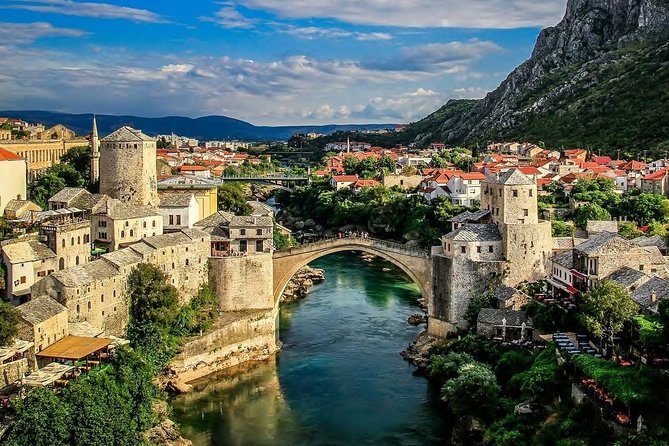
REVIEW · BLAGAJ & BUNA SPRING TOURS
Blagaj Tekija & Buna River Half-Day Tour from Mostar
Water, stone, and quiet faith meet here. This small-group outing links Mostar with Blagaj Tekija, a 16th-century Dervish monastery at the source of the Buna River. I like the mix of culture and nature: you get thoughtful background on Mostar, then see a powerful spring bursting from a cliff below the monastery.
I also like the small maximum group of seven, which gives the guide room to answer questions. Selmir is praised for clear, careful commentary and humor, while Armina is remembered for being attentive and even helping when a participant got lost. The main consideration is transportation: it is not included, so you should confirm exactly how the group moves between the meeting point and Blagaj before booking.
In This Review
- Five Details That Shape the Experience
- Why Blagaj Makes a Good Morning Trip from Mostar
- Entering Blagaj Tekija After 400 Years
- Watching the Buna Spring Push from the Cliff
- The Mostar Details Add More Than Extra Stops
- What the Guides Add to the Morning
- Is $72.09 a Fair Price?
- Timing, Meeting Point, and Comfort
- Who Will Get the Most from This Tour?
- Should You Book the Blagaj Tekija and Buna River Tour?
- FAQ
- How long does the Blagaj Tekija and Buna River tour last?
- What time and where does the tour start?
- Does the tour return to Mostar?
- Is transportation included?
- Is admission to Blagaj Tekija included?
- How many people can join the group?
Five Details That Shape the Experience
- Blagaj Tekija sits beside the Buna River source, combining Ottoman design with a striking limestone cliff.
- The Buna Spring is the natural centerpiece, with turquoise water rushing from a cavern beneath the rock wall.
- A maximum of seven people makes the tour more personal than a large bus outing.
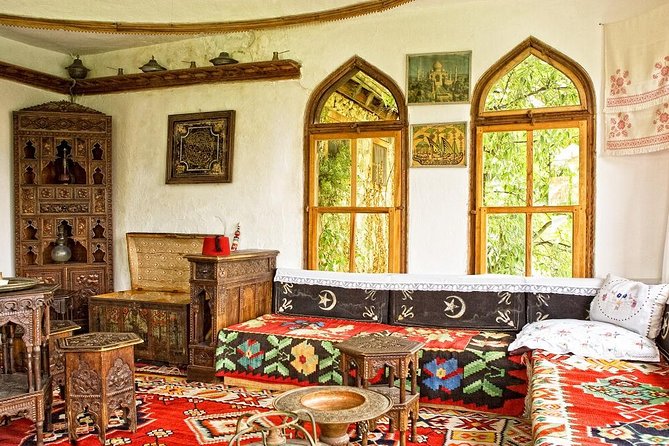
- The experience includes cultural details beyond sightseeing, including an Ottoman house, rose juice, and Mostar’s rebuilt Stone Bridge.
- The tour lasts about two to three hours, making it easy to fit into a morning in Mostar.
- The price is $72.09 per person, with the tekija entrance and an authorized guide included, but lunch and transportation excluded.
Why Blagaj Makes a Good Morning Trip from Mostar
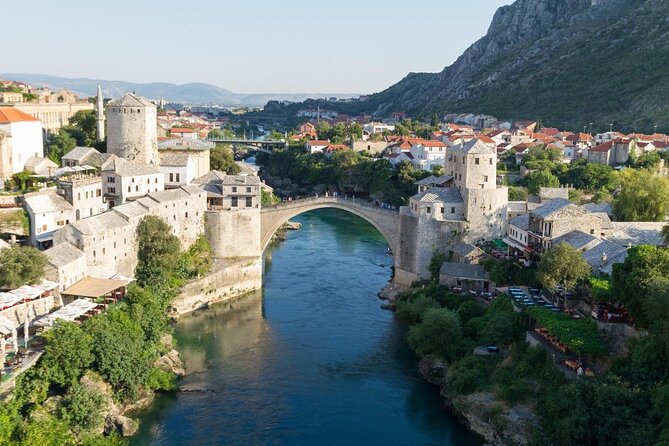
Mostar is famous for its Stone Bridge and old streets, but Blagaj gives you a different view of the area. Here, the focus shifts from urban streets to a religious site shaped by water, cliffs, and Ottoman-era architecture.
The tour begins at Španjolski trg in Mostar at 9:00 a.m. and returns to the same meeting point. The stated length is roughly two to three hours, so you are not giving up a full day. That matters if you are using Mostar as a base and still want time for the old town, a meal, or another nearby sight.
I see the strongest value in the way the outing combines several short experiences. You are not only looking at a spring or stepping into a historic building. You also get local context, a walk through scenic streets, and small cultural touches such as rose juice at an Ottoman house.
One point needs care. Transportation is not included, while the meeting point is in Mostar and the two main stops are in Blagaj. The supplied information does not spell out whether the guide walks with you, whether you arrange a taxi, or whether another transport plan applies. Ask before paying so the $72.09 price does not come with a surprise transfer cost.
More Blagaj spring visits:
- Discover Herzegovina Day Tour from Mostar: Kravice Waterfalls, Blagaj, Počitelj
★ 5.0 · 742 reviews - Herzegovina Day Tour from Mostar: Blagaj, Pocitej, Kravice falls (Join Us! :D)
★ 5.0 · 372 reviews - Full-Day Tour in Herzegovina, Blagaj, Počitelj, and Kravice
★ 5.0 · 33 reviews
Entering Blagaj Tekija After 400 Years
Blagaj Tekija is a 16th-century Dervish monastery, also called a tekke or tekija. It was built as a place connected with the Dervish religious tradition, and its position beside the Buna Spring gives it much of its visual power.
You have about 45 minutes with admission included. That is enough for a guided look and some time to take in the setting, but it is not a long, unhurried visit. If you like to photograph every detail or sit quietly for a while, you may feel the clock moving.
The building is important because it brings together two things that are easy to separate when sightseeing: religious practice and architecture. The Ottoman design is not presented as an isolated monument. It is tied to the river source, the cliff, and the village of Blagaj around it.
This is where a good guide matters most. Selmir’s explanation is described as thoughtful, educational, and thorough. Another account praises him for making the walking portion informative without losing his sense of humor. Armina receives similar praise for careful explanations and personal attention.
The site can be busy at times. That does not cancel its appeal, but it changes the mood. If you are expecting complete silence at a religious building, you may need to accept some activity around you. The benefit of a morning start is that it gives you a better chance of seeing the place before the day becomes more crowded, though the tour does not promise an empty site.
The religious background also adds weight to the visit. You are not simply checking off a pretty building beside water. You are hearing why the Dervish setting matters and how it fits into the area’s Ottoman past. One particularly strong account points to the value of understanding the Dervish tradition and the religious role of the site.
Watching the Buna Spring Push from the Cliff
After the tekija, the tour spends about 30 minutes at the River Buna Spring, known locally as Vrelo Bune. The spring rises from a cavern beneath a vertical limestone wall and forms the source of the Buna River.
This is the part that gives the morning its natural drama. The water is described as turquoise and powerful, and the spring is considered one of Europe’s strongest karst springs. You do not need a long hike or an all-day nature program to see it. The main view comes quickly, which suits a short half-day outing.
Thirty minutes is a sensible amount of time for the stop. You can look at the water, take photographs, and listen to the guide’s explanation without turning the visit into a slow expedition. On the other hand, the short window may feel limiting if you want to linger beside the river or explore more of Blagaj on your own.
Admission to the spring itself is free. That helps the overall value, since your paid entrance is focused on Blagaj Tekija rather than a series of extra charges at every stop.
I would treat the spring as more than a photo stop. Its force explains why this place was attractive as a religious retreat and settlement. The cliff gives the water a strong visual frame, while the monastery adds human history to the scene. That combination is what makes Blagaj memorable.
The Mostar Details Add More Than Extra Stops
The tour information also highlights a stroll through Mostar’s scenic old streets, a taste of rose juice at an Ottoman house, and a look at the rebuilt Stone Bridge. These details matter because they keep the experience connected to the city where you start and finish.
The Ottoman house and rose juice are especially useful touches. A drink served in a historic home gives you a small, tangible link to local tradition. It is not a full meal, and lunch is not included, but it adds a moment of hospitality that a standard monument-only tour would miss.
The Stone Bridge provides a different kind of context. Mostar’s bridge was rebuilt, and seeing its architecture with a guide can help you understand why it matters to the city. The supplied details do not give a separate time allotment for the bridge or old-city walk, so you should ask how these elements fit into the two to three-hour schedule.
That question is not nitpicking. The listed itinerary names Blagaj Tekija and the Buna Spring, while the broader highlights include Mostar’s streets, an Ottoman house, and the Stone Bridge. The tour may combine these through a walking portion, but you should confirm the order and exact scope if those city sights are your main reason for booking.
The cultural explanation can also become personal. One French-language account describes a private visit where the guide shared part of his own experience connected with the 1990s war. That kind of conversation will not necessarily happen on every departure, but it shows the potential value of having a local guide rather than simply hiring transport to Blagaj.
More half-day trips:
What the Guides Add to the Morning
The strongest praise goes to the guides, not only to the scenery. Selmir is described as gracious, informative, and funny. His commentary helped connect Mostar’s history with the places being visited, rather than treating the tour as a series of disconnected stops.
Armina is praised for being warm, attentive, and clear. She also went to look for a participant who became separated from the group. That detail suggests a hands-on approach, particularly useful in old streets where it is easy to lose sight of a small group.
The experience is offered in English, and the guide is described as a professional authorized guide. A private French-language experience is also described in the supplied material, but you should not assume that French is part of every departure. Confirm the language you need when booking.
The group limit is one of the tour’s best practical features. With no more than seven people, you have a better chance of asking about Dervish traditions, the war years, Ottoman architecture, or the spring itself. In a large group, those questions often get lost. Here, they should be easier to raise.
The small size does not guarantee a private tour. It simply caps the group at seven. If you want complete control over the pace or a long personal discussion, ask whether a private option is available and what it would cost.
Is $72.09 a Fair Price?
At $72.09 per person, this is not the cheapest way to see Blagaj. A person arranging independent transport and visiting only the free spring could spend less. The price makes more sense if you want interpretation, a planned morning, and entry to the tekija without sorting out the cultural background yourself.
You are paying for an authorized guide and the entrance fee to Blagaj Tekija. The group can include up to seven people, which is a useful middle ground between a private guide and a large coach tour.
The value depends heavily on the transportation detail. Since transport is excluded, you need to know whether you are responsible for getting to Blagaj or for moving between Mostar and the stops. If you must pay separate taxi fares, include those in your total before comparing this experience with other options.
Lunch is also excluded, but that is reasonable for a two to three-hour morning. You should not book this expecting a food tour or a full-day excursion. The rose juice is a cultural sample, not a substitute for a meal.
For someone who values explanation, the price is easier to justify. Selmir and Armina are both praised for making the experience educational and personal. If you mainly want a quick photograph of the spring, arranging your own visit may be better value.
Timing, Meeting Point, and Comfort
You meet at Španjolski trg in Mostar at 9:00 a.m. The activity ends back at that same point. The meeting location is near public transportation, which helps if you are staying elsewhere in Mostar and do not want a long walk to the start.
The confirmation arrives at the time of booking. The activity is suitable for most people, according to the supplied details, but no specific accessibility information is provided. If you have mobility needs, ask about the walking surfaces, access to the tekija, and the route at the spring before reserving.
The short length is a plus for many schedules. You can see two important sites without spending an entire day away from Mostar. It also means the pace may be fairly brisk, especially if the old-city walk and Ottoman house are included in the same morning.
Bring the attitude of a walking tour, not a sit-down excursion. The supplied highlights include streets, architecture, and outdoor scenery. Comfortable shoes are a sensible choice, even though the exact walking distance is not stated.
Free cancellation is available if you cancel at least 24 hours before the local start time. Changes or cancellations made less than 24 hours before departure are not accepted for a refund.
Who Will Get the Most from This Tour?
I would choose this for someone staying in Mostar who wants more than the Stone Bridge but does not want to plan a complicated day trip. It suits you if you enjoy a guide’s stories, religious history, Ottoman architecture, and short scenic stops.
It is also a good match if you prefer a small group. The cap of seven creates a more conversational setting, and the guide’s commentary appears to be the main reason this experience earns such strong praise.
You may want another plan if you need included transportation, a long free period, or a full meal. You should also look elsewhere if your priority is spending hours in nature rather than moving through several compact stops.
The tour works best when you treat Blagaj as a place to understand, not merely photograph. The spring is beautiful, but the Dervish monastery and the guide’s explanation give the morning its real substance.
Should You Book the Blagaj Tekija and Buna River Tour?
Book it if you want a guided, small-group introduction to Blagaj with Mostar context. The combination of the Dervish monastery, the Buna Spring, Ottoman details, and the rebuilt Stone Bridge gives you a useful sense of the area in only a few hours.
Before booking, confirm the transportation plan and ask exactly which Mostar sights are included in the morning schedule. If those details work for you, the $72.09 cost is reasonable for a group limited to seven people, an authorized guide, and tekija admission.
I would be most likely to recommend it to first-time visitors who want clear local context. The scenery gets you there, but the guides, especially Selmir and Armina, appear to be what turns the outing into something more memorable than a quick stop at a spring.
FAQ
How long does the Blagaj Tekija and Buna River tour last?
The experience lasts approximately two to three hours.
What time and where does the tour start?
It starts at 9:00 a.m. at Španjolski trg, Mostar 88000, Bosnia and Herzegovina.
Does the tour return to Mostar?
Yes. The activity ends back at the meeting point in Mostar.
Is transportation included?
No. Transportation is not included in the tour price.
Is admission to Blagaj Tekija included?
Yes. The entrance fee to Blagaj Tekija is included.
How many people can join the group?
The activity has a maximum of seven participants.
Just added around Mostar
- Private Day trip to Medjugorje from Split or Dubrovnik★ 5.0 · 3 reviews
- From Dubrovnik: Sarajevo and Mostar Private Full-Day Tour★ 4.7 · 3 reviews
- From Dubrovnik to Mostar and Kravice waterfalls★ 3.5 · 3 reviews
- From Dubrovnik: Medjugorje Private Day Tour★ 4.3 · 3 reviews
- Pocitelj City Tour★ 4.5 · 3 reviews
- Mystical Sutjeska National Park★ 5.0 · 3 reviews
- Mostar Guided Tour & Sweet Delights★ 5.0 · 3 reviews
- Private tour from Split to Dubrovnik via Mostar★ 5.0 · 3 reviews
Blagaj & Buna Spring Tours, compared.
Mostar, Konjic, Blagaj Tekke, Pocitelj & Waterfall
Read our review →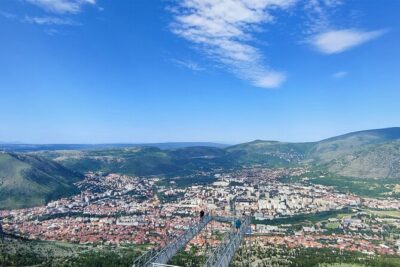
Discover Herzegovina Day Tour from Mostar: Kravice Waterfalls, Blagaj, Počitelj
Read our review →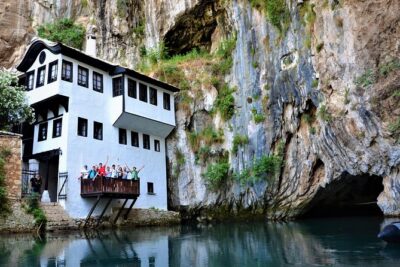
Herzegovina Day Tour from Mostar: Blagaj, Pocitej, Kravice falls (Join Us! :D)
Read our review →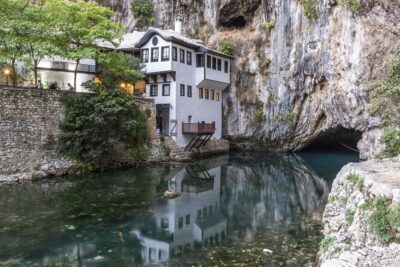
Mostar,Kravica Waterfall,Blagaj,Počitelj – Day Tour from Sarajevo
Read our review →Private Mostar, Blagaj and Kravice Waterfalls Tour
Read our review →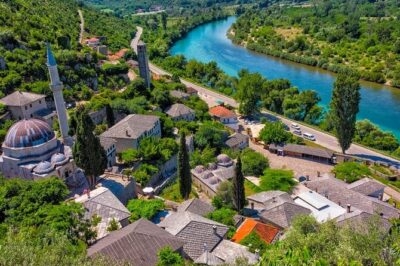
Full-Day Tour in Herzegovina, Blagaj, Počitelj, and Kravice
Read our review →
Transfer Mostar to Dubrovnik with Kravice Waterfalls, Blagaj and Počitelj tour
Read our review →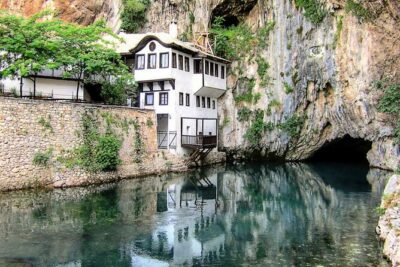
Private Tour: Kravice Waterfalls, Blagaj, Počitelj, Buna Channel, Skaywalk.
Read our review →Browse the lists this tour appears in