
REVIEW · HISTORICAL TOURS
Mostar gastro and historical treasures
Come hungry, leave with a fuller picture. This private Mostar tour joins Bosnian food with the city’s layered past, taking you from Spanish Square and wartime memorials to the Old Bridge, local beer, homemade pie, and traditional coffee. I like the way it mixes major sights with smaller stops, and I like that the guide can adapt the food for vegetarian, vegan, and gluten-free diets.
The main thing to consider is timing. The tour is advertised at about four hours, but the listed stop times add up to roughly four hours and 40 minutes before walking between sites. Food is served in several rounds, so you should not plan a tight appointment immediately afterward. The private format and the warm, entertaining style praised in the feedback, especially guide Armela’s approach, make this a strong choice for visitors who want conversation rather than a fixed group script.
In This Review
- Key points about the Mostar experience
- Why this tour works for first-time visitors to Mostar
- Starting at Spanish Square and Hrvatski Dom
- Park Zrinjevac and Mostar’s public memory
- Your first taste: homemade pie and Bosnian coffee
- The Peace Bell Tower and Mostar’s religious landmarks
- The Crooked Bridge and the meaning of the Old Bridge
- Food, beer, and a proper pause in the Old City
- Lučki most and the best photo pause
- Aleksa Šantić and the city’s literary voice
- Museum of Herzegovina and the 45-minute ethnographic visit
- Traditional desserts at Narodno Pozoriste Mostar
- Walking, timing, and the value of a private group
- Who should book Mostar Gastro and Historical Treasures?
- Should you book this Mostar tour?
- FAQ
- Where does the tour start?
- What time does the tour begin?
- Where does the tour end?
- How long does the tour last?
- Is transportation included?
- Is this a private tour?
- Is food included?
- Are drinks included?
- Can the tour accommodate special diets?
- What is the cancellation policy?
Key points about the Mostar experience
- A meal spread across the city: Homemade pie, traditional dishes, Bosnian coffee, local wine, beer, and desserts are built into the walking route.
- History from 1476 to the modern era: The route covers Mostar’s older foundations, wartime memory, religious landmarks, the Old Bridge, and local cultural figures.
- A private guide for your group: Only your party takes part, giving you more room to ask questions and discuss food preferences.
- A useful bridge viewpoint: Walking under Mostar’s Old Bridge gives you a closer sense of what the structure means to the city than a quick photo from above.
- Dietary flexibility: Vegetarian, vegan, and gluten-free arrangements are available when requested.
- A full afternoon commitment: The schedule begins at 11 a.m. at Spanish Square and ends on Maršala Tita, with food appearing at several points along the way.
Why this tour works for first-time visitors to Mostar
Mostar can be easy to reduce to one famous arch, a few photographs, and a quick lunch. This tour gives you a wider frame. You see the Old Bridge, but you also visit parks, monuments, a museum, a theater café, and places tied to the city’s more recent memory.
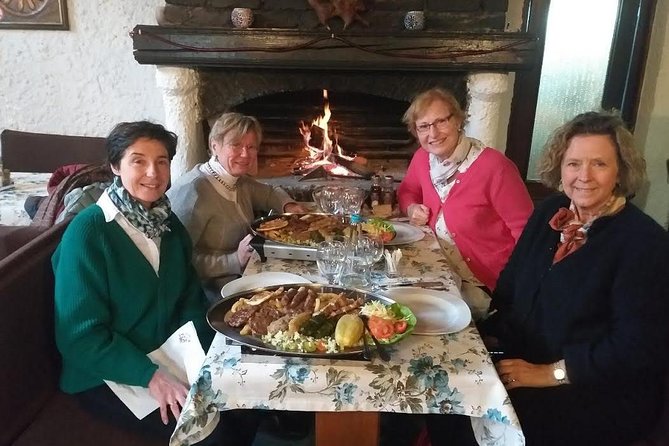
I especially like the combination of walking and eating. Food is not treated as a short tasting tacked onto a sightseeing route. Homemade pie appears early, a larger meal follows, and the day closes with traditional sweets and coffee. With wine and beer included too, the portions are intended to add up to a full meal.
The private format matters here. Mostar’s history carries political, religious, and personal weight, so you may want to ask follow-up questions rather than listen to a general speech. A private guide can also slow down at a monument, move on when your group is ready, or spend more time explaining a dish.
One published rating gives the experience five stars from six reviews, with particular praise for the amount learned about both old and new Mostar. Armela is singled out as entertaining and helpful. That is useful context, but you should still treat the timing as flexible rather than exact.
More history-first tours:
- Mostar War Heritage Walking Tour
★ 5.0 · 6 reviews - East Bosnia & West Serbia UNESCO heritage day tour from Sarajevo
★ 5.0 · 55 reviews - Sarajevo Full Day Tour: History, Culture, Nature, War & Olympics
★ 5.0 · 27 reviews
Starting at Spanish Square and Hrvatski Dom
The tour begins at Španski trg 1 at 11 a.m. Spanish Square is a practical place to start because it introduces Mostar as a city with several historical layers. The route points out an area connected with Mostar since 1476, giving you an early sense that the city’s story reaches well beyond the famous bridge.
The stop is scheduled for 20 minutes, enough for an introduction and some orientation. You may find this opening useful if you have just arrived and need help placing the old city, newer streets, and later stops on a mental map.
From there, the group moves to Hrvatski Dom for a monument to a Bosnian queen. This is a short 10-minute visit, so expect a focused explanation rather than a long look around. Because the particular queen is not identified in the tour details, you may want to ask the guide for the full background if that monument catches your attention.
This part of the route is less about checking off a major attraction and more about showing how public spaces carry different chapters of Mostar’s identity. The private setting gives you a good chance to ask what the monument means locally.
Park Zrinjevac and Mostar’s public memory
Park Zrinjevac follows, with about 10 minutes in what the tour describes as Mostar’s most beautiful park. The stop offers a change of pace from monuments and older stone streets. You get greenery, open space, and a place to take stock before the food portions begin.
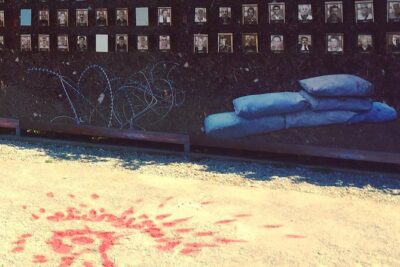
The next historical stop focuses on a monument to victims of the Second World War. Again, the visit lasts about 10 minutes. It is brief, but it adds an important reminder that Mostar’s difficult past did not begin in the 1990s.
I would pay attention to how the guide connects these memorials to the city around you. A monument can seem small when viewed alone. It becomes more meaningful when you understand why it was placed there and how local memory has changed over time.
Your first taste: homemade pie and Bosnian coffee
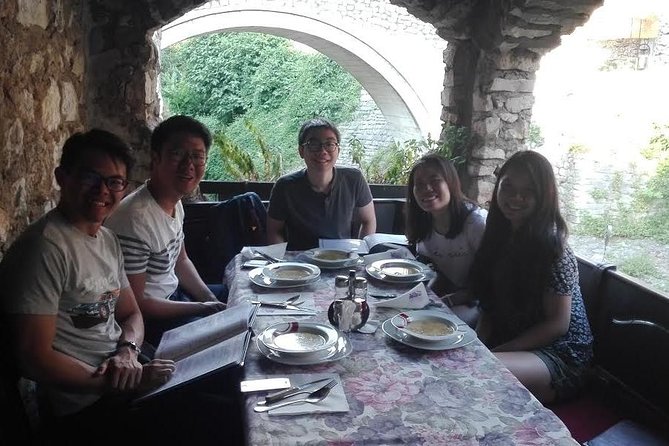
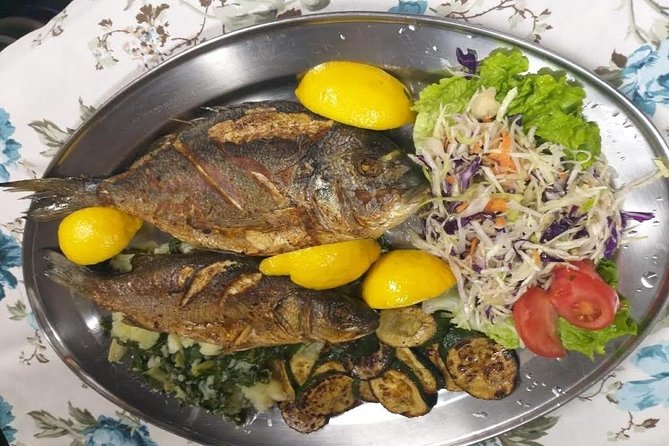
Food appears more than once, which is one of the tour’s best features. Traditional homemade pie made by your guide is included as breakfast and as a snack. Starting the food portion this way gives you a direct introduction to everyday Bosnian cooking rather than only restaurant dishes.
The exact pie is not named, so you should ask what is being served and what ingredients it contains if you have allergies or dietary restrictions. Vegetarian, vegan, and gluten-free diets can be catered to, but it is sensible to give those details when booking rather than wait until the meeting point.
Traditional Bosnian coffee and tea are also included. Bosnian coffee is a cultural experience as much as a drink, and this is a chance to pause and ask about the way it is prepared and served. Do not expect the coffee stop to function like a rushed takeaway. It is part of the social side of the tour.
The food schedule may feel generous if you have already eaten breakfast. Since the tour starts at 11 a.m. and includes lunch, snacks, dinner-style dishes, and dessert, arriving with a light appetite makes sense.
A few more of this kind worth a look:
- From Dubrovnik: Mostar and Kravica Waterfall Day Trip
★ 4.7 · 4,709 reviews - Dubrovnik: Kravica Waterfalls, Mostar and Pocitelj Day Trip
★ 4.5 · 3,045 reviews - Dubrovnik: Mostar & Kravica Waterfalls Day Trip
★ 4.8 · 1,970 reviews - Dubrovnik: Mostar and Kravice Waterfalls Small-Group Tour
★ 4.8 · 1,194 reviews
The Peace Bell Tower and Mostar’s religious landmarks

The Mostar Peace Bell Tower is scheduled for 15 minutes. The tour describes it as the location of the highest bell tower in Bosnia and Herzegovina. That makes it one of the route’s more distinctive architectural stops, even though the visit is relatively short.
The word peace is significant in a city whose recent past has been marked by conflict. The stop works best when the guide explains both the physical structure and the wider meaning attached to it. You may not spend long inside or climbing, since no such access is specified, so think of this as a viewpoint and history stop rather than a tower tour.
As with the other religious and memorial sites, respectful behavior is important. The itinerary does not promise a long interior visit, and the pace remains that of a walking tour with several food breaks.
The Crooked Bridge and the meaning of the Old Bridge
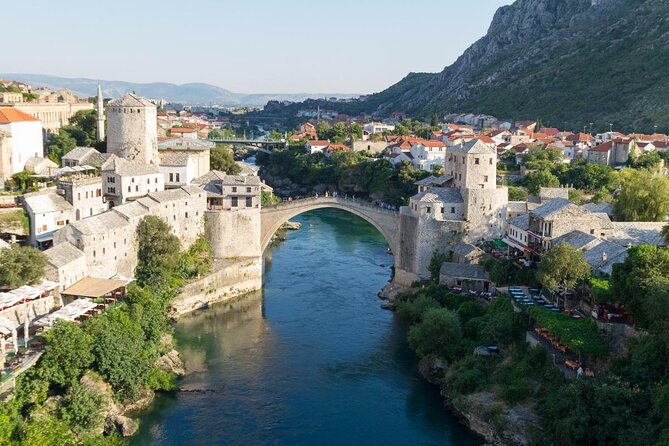
The route then reaches the Crooked Bridge in the Old Bridge area. This smaller bridge is planned as a 10-minute stop and gives you a useful comparison with the much larger Old Bridge nearby.
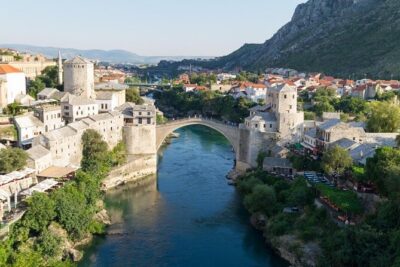
The Old Bridge itself receives two different treatments. First, you see the area around it. Later, you walk underneath the bridge to experience it in a way that locals do. I like this idea because the usual view is from above, with the arch framed against the river and stone buildings. Looking up from below changes the scale and makes the construction feel more physical.
The tour description also emphasizes what the bridge means to local people. That is a worthwhile focus. The bridge is not only a picturesque structure. It is tied to Mostar’s identity, destruction, rebuilding, and daily life.
Allow time for uneven walking and pauses for photographs. The route includes several bridge-area stops, so you are not simply stopping once for the standard postcard view. At 15 minutes under the bridge, the guide has room to explain the site and let you see it from a less common angle.
Food, beer, and a proper pause in the Old City
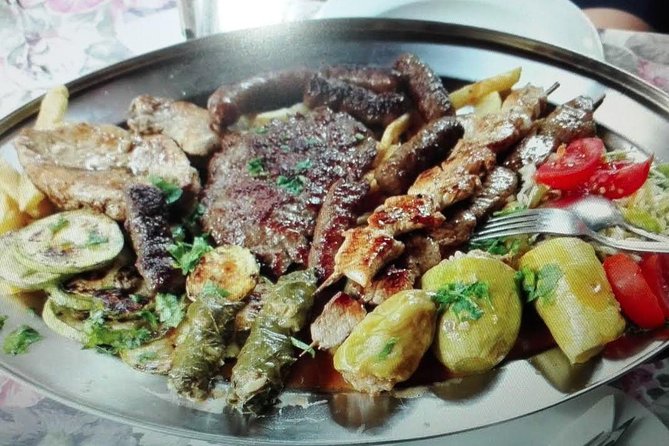
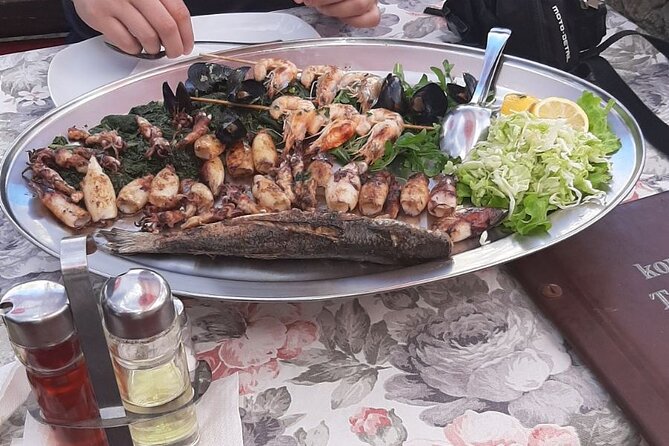
The largest food stop lasts one hour in the Old Bridge area. This is where the included lunch and dinner-style mix of traditional food are likely to make the tour feel like a complete meal rather than a sampling session.
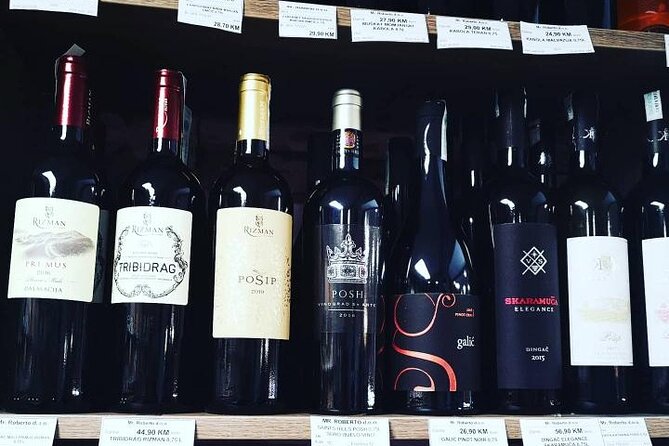
Local wine and beer are included, along with nonalcoholic coffee or tea elsewhere in the day. If you do not drink alcohol, the tour still has plenty of food value, but the supplied details do not specify substitute beverages. Ask ahead if that matters to you.
The one-hour stop is also useful because you can sit down after the earlier walking. A four-hour food-and-history tour can become tiring if every stop is standing-room only. Here, you have a proper break and time to discuss the dishes with your guide.
Portion sizes are not listed, but the experience promises enough samples for a full meal. I would treat this as the central eating period and avoid booking another restaurant reservation for the same time. The sequence of pie, main dishes, beer or wine, coffee, and dessert can add up quickly.
Lučki most and the best photo pause
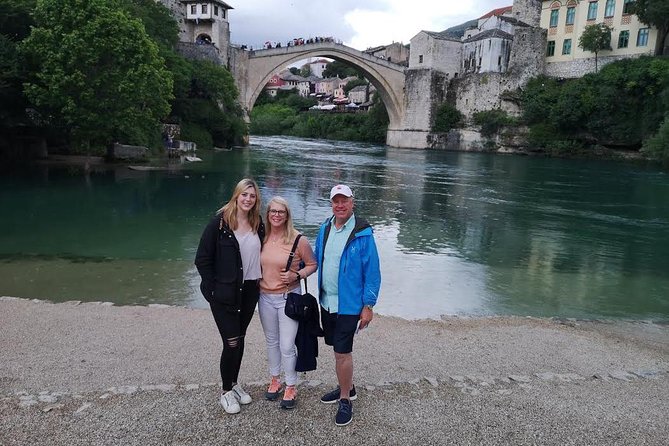
After the main Old Bridge area stop, the route pauses on Lučki most for 15 minutes. This is the designated photo stop, and the timing is generous enough for you to take pictures without being hurried through a single viewpoint.
A private tour helps here. You can ask the guide to suggest the best angle or explain which parts of Mostar you are seeing. The tour does not promise a professional photographer or special equipment, so bring your own phone or camera.
Because several stops are close together in the historic center, this bridge pause also helps link the walking route. You are not being driven from attraction to attraction. You see how the bridges, river, old city, and newer parts of Mostar connect on foot.
Aleksa Šantić and the city’s literary voice
The monument to Aleksa Šantić receives about 10 minutes. Šantić is described as Mostar’s most important poet, making this a cultural stop rather than another military or architectural marker.
This is the sort of brief visit that can easily be missed if you explore alone. You may not recognize the name before arriving, but the monument opens a window onto Mostar’s literary life. Ask the guide why Šantić matters locally and how his work connects with the city.
The short timing keeps the tour moving, though it also means you should not expect a full literary lecture. Think of it as an introduction, with the option to learn more later if the subject interests you.
Museum of Herzegovina and the 45-minute ethnographic visit
The longest single sightseeing stop is the Museum of Herzegovina, where you visit an ethnographic exhibition for 45 minutes. This is an important counterweight to the outdoor landmarks. Bridges and monuments show you public symbols, while an ethnographic display can provide a closer look at ordinary life, clothing, tools, customs, and domestic traditions.
The museum admission is included. No separate museum ticket is needed according to the tour details.
This stop may appeal most if you like context and objects rather than only scenic views. It also gives you shelter and a slower pace during the middle or later part of the route. The exact exhibition contents are not specified, so your guide’s explanation will shape how much you get from it.
I would not rush this stop. Forty-five minutes is enough time to look carefully, ask questions, and connect what you see with the food served earlier. That connection is one of the tour’s better ideas: cuisine makes more sense when you see the household and regional traditions behind it.
Traditional desserts at Narodno Pozoriste Mostar
The final scheduled stop is Narodno Pozoriste Mostar, where you visit a café and taste traditional desserts. The 30-minute café stop brings the tour back to food after its historical and museum visits.
Dessert and coffee make a comfortable finish, especially after the larger meal near the Old Bridge. The café setting also offers a chance to sit, talk, and ask for final recommendations. The tour ends on Maršala Tita, so you finish in Mostar rather than returning to the starting point.
The itinerary labels the final food as traditional desserts but does not name them. If you have dietary limits, repeat them to the guide before ordering. The tour can handle vegetarian, vegan, and gluten-free diets, but ingredients in sweets can vary.
Walking, timing, and the value of a private group
There is no private transportation included. That means you should expect to walk between the stops. This is a plus if you want to understand Mostar’s layout, but it may be tiring in hot weather or for anyone who prefers a vehicle-based tour.
The route has many short visits, from 10-minute monument stops to the 45-minute museum and one-hour meal. The published stop times total about 280 minutes, or roughly four hours and 40 minutes, before allowing for movement between locations. Since the overall duration is given as approximately four hours, I would confirm the expected finish time before booking another activity.
The starting point is near public transportation, and most people can participate. The tour is private, so only your group joins. That makes it a better value for families, couples, and small groups who want personal attention, especially when the food needs to be adjusted.
No price is provided in the available details, so I cannot judge the exact cost. The value depends on how much you would otherwise spend on a guide, museum entry, multiple food stops, coffee, dessert, beer, and wine. If you planned to pay separately for all of those, the package could be convenient. If you mainly want a quick Old Bridge visit, it may be more than you need.
Who should book Mostar Gastro and Historical Treasures?
I would recommend this tour to you if you want Mostar’s story explained while you eat. It suits first-time visitors, people who prefer private tours, and anyone who likes learning through local dishes rather than only through monuments.
It is also a good fit for guests with vegetarian, vegan, or gluten-free requirements, provided those needs are arranged in advance. The private setup makes dietary communication easier than it can be in a large group.
You may want a different plan if you dislike long meals, do not enjoy walking, or have only a short window in Mostar. The route is full, and its many stops reward curiosity more than speed.
The strongest praise focuses on the history of both old and new Mostar and on Armela’s entertaining guiding style. That combination is the reason I would choose this tour over a basic bridge-focused walk. You get the famous sights, but you also get the city’s food, memorials, museum, poetry, coffee, and conversation.
Should you book this Mostar tour?
Book it if you want a private, food-filled introduction to Mostar and have enough time for a relaxed half-day. The homemade pie, traditional coffee, local beer and wine, main meal, and desserts give the tour real substance, while the museum and memorial stops keep it from becoming a simple restaurant crawl.
Before booking, confirm the expected duration, share every dietary requirement, and check whether the walking pace suits your group. Free cancellation is available up to 24 hours before the 11 a.m. start time. Poor weather or failure to meet the minimum group size can also lead to a new date or a full refund.
FAQ
Where does the tour start?
It starts at Španski trg 1, Mostar 88000, Bosnia and Herzegovina.
What time does the tour begin?
The start time is 11 a.m.
Where does the tour end?
The tour ends on Maršala Tita in Mostar.
How long does the tour last?
The stated duration is approximately four hours. The listed stop times add up to about four hours and 40 minutes before walking time, so confirm the expected finish when booking.
Is transportation included?
No. Private transportation is not included, so the experience takes place on foot between the listed stops.
Is this a private tour?
Yes. Only your group participates in the activity.
Is food included?
Yes. Included food includes homemade traditional pie, a mix of traditional dishes, snacks, lunch-style food, dinner-style food, and traditional desserts.
Are drinks included?
Traditional Bosnian coffee or tea, local wine, and local beer are included.
Can the tour accommodate special diets?
Yes. The tour can be adapted for vegetarian, vegan, and gluten-free diets. Share your requirements when booking.
What is the cancellation policy?
You can cancel at least 24 hours before the start time for a full refund. Cancellations or changes made within 24 hours are not refunded or accepted. If poor weather or an insufficient minimum group size cancels the tour, you will be offered another date or a full refund.
Just added around Mostar
- Private Day trip to Medjugorje from Split or Dubrovnik★ 5.0 · 3 reviews
- From Dubrovnik: Sarajevo and Mostar Private Full-Day Tour★ 4.7 · 3 reviews
- From Dubrovnik to Mostar and Kravice waterfalls★ 3.5 · 3 reviews
- From Dubrovnik: Medjugorje Private Day Tour★ 4.3 · 3 reviews
- Pocitelj City Tour★ 4.5 · 3 reviews
- Mystical Sutjeska National Park★ 5.0 · 3 reviews
- Mostar Guided Tour & Sweet Delights★ 5.0 · 3 reviews
- Private tour from Split to Dubrovnik via Mostar★ 5.0 · 3 reviews
Historical Tours, compared.
East Bosnia & West Serbia UNESCO heritage day tour from Sarajevo
Read our review →
Sarajevo Full Day Tour: History, Culture, Nature, War & Olympics
Read our review →
Sarajevo genuine walking tour: Steps through history
Read our review →
SARAJEVO STREET ART TOUR (art, history & mystery) – sARTajevo!
Read our review →
BOSNIAN PYRAMIDS TOUR (nature, history & archeology)
Read our review →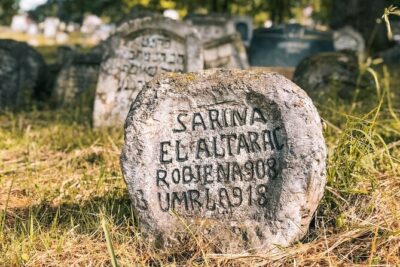
Browse the lists this tour appears in