
REVIEW · BOSNIAN WAR HISTORY TOURS
Sarajevo Full Day Tour: History, Culture, Nature, War & Olympics
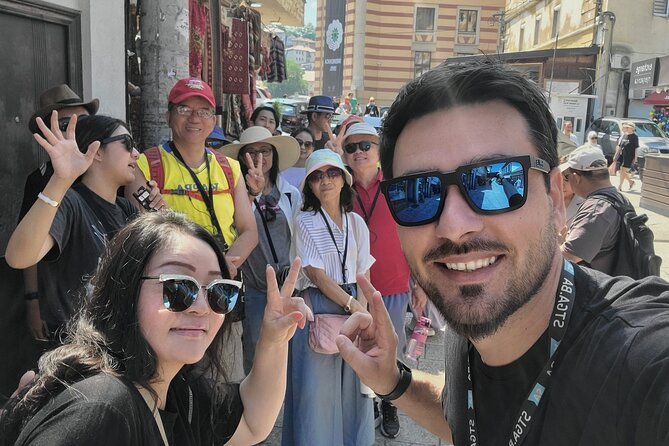
Sarajevo reveals its layers quickly. This 6 to 7 hour small-group tour links the Bosna River Springs, the 1984 Olympic sites, the Siege of Sarajevo, and the Old Town, giving you a useful first look at a complicated city. I especially like the mix of nature and history, plus the personal wartime stories guides such as Ahmed, Enes, Elvis, Edis, and Adnan have shared with visitors. Lunch, hotel pickup, water, coffee, and two entrance fees are included, though the packed schedule can feel rushed and lunch timing has not always been clear.
I also like that you do not spend the whole day inside a vehicle. You get mountain views, a short Old Town walk, important religious buildings, and time at the Tunnel Museum. The main drawback is the sheer number of stops: many are brief photo or explanation points rather than full visits, and several Old Town sights require additional admission if you want to enter.
In This Review
- Key points at a glance
- Why this is a smart first day in Sarajevo
- Vrelo Bosne brings nature into the history lesson
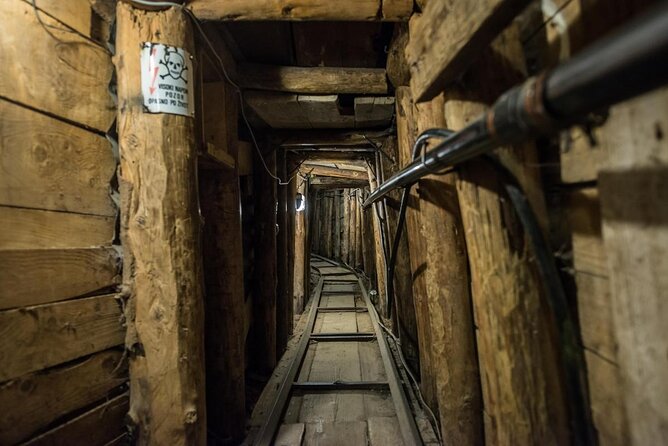
- The Tunnel Museum makes the siege personal
- The Olympic track shows Sarajevo before and after war
- Yellow Fortress and the Jewish Cemetery explain the city from above
- Sniper Alley puts wartime geography on city streets
- Sarajevo City Hall links imperial design with wartime memory
- Baščaršija begins the Ottoman heart of the city
- Morica Han is the coffee pause you need
- Ottoman, Jewish, Catholic, and Orthodox Sarajevo in one walk
- Latin Bridge connects Sarajevo to World War I
- Lunch, transport, and the real value of $114.45
- Who should book this Sarajevo tour?
- Final call: a strong overview with a quick pace
- FAQ
- How long does the Sarajevo Full Day Tour last?
- What time does the tour begin?
- Where does pickup take place?
- How many people can join the tour?
- Is lunch included?
- Are entrance fees included?
- Is Bosnian coffee included?
- Can I cancel for a full refund?
Key points at a glance
- Bosna River Springs begins the day outdoors: Vrelo Bosne gives you a calm introduction to the river that gave Bosnia its name.
- The Tunnel Museum adds personal wartime context: Guides explain the Siege of Sarajevo and may connect the story to their own childhood experiences.
- The Olympic bobsleigh track is a striking contrast: An abandoned 1984 venue later caught in the war tells two very different stories.
- The Old Town walk crosses religious and cultural lines: You see Ottoman, Jewish, Catholic, and Serbian Orthodox landmarks in a compact area.
- Hotel pickup and lunch simplify a busy day: The air-conditioned vehicle matters because the tour covers sites around the city and in the hills.
- The group is capped at 15 people: That is small enough for questions, though the actual feel depends on the day’s group size.
Why this is a smart first day in Sarajevo
Sarajevo is not a city you understand by seeing only one quarter. Its story runs from Ottoman trade and Islamic scholarship to Austro-Hungarian rule, Jewish life, the assassination that helped trigger World War I, the 1984 Winter Olympics, and the long siege of the 1990s.
This tour gives you a quick route through all of those chapters. I would consider it especially useful at the start of a Sarajevo stay, when you want a map in your head and enough background to make later independent visits more meaningful.
The route combines driving with short walks. That saves time, but it also means you should not expect a slow museum tour or an afternoon spent lingering over every monument. The strength is range. In one day, you get the countryside, hills, wartime sites, and the center of the city.
Guides are a major part of the experience. Ahmed, Enes, Alan, Adnan, Elvis, and Edis have each been praised for clear explanations, humor, patience, and personal stories. Guide assignments can vary, but the strongest accounts describe guides who answer questions rather than simply reciting dates.
More war history tours:
- Fall of Yugoslavia, Sarajevo War Tour with Tunnel of Hope Museum and Frontlines
★ 5.0 · 1,314 reviews - ROSES OF SARAJEVO (Official WAR + CITY tour)- Story of a Survivor
★ 5.0 · 770 reviews - Tunnel Museum: Bosnian & Yugoslav Wars Tour with War Veteran
★ 5.0 · 551 reviews
Vrelo Bosne brings nature into the history lesson
The first stop is Vrelo Bosne, the spring park of the Bosna River. Admission is included, and you get about 40 minutes there.
This is a good opening. Before the heavy subjects begin, you see the source of the river that gave the country its name. The park offers a quieter setting than central Sarajevo, with water, trees, and open space. I like the symbolism: the tour starts with the physical source of Bosnia before moving into the human stories that shaped the capital.
Forty minutes is enough for a taste, not a long walk through the park. If you want extended time in nature, this stop will feel short. Still, it provides a welcome change of pace and gives the day some breathing room before the war museums and city traffic.
The Tunnel Museum makes the siege personal
The Sarajevo War Tunnel, often called the Tunnel of Hope, is one of the day’s most important stops. Your entrance is included, and the visit lasts about 40 minutes.
The museum explains how the tunnel connected besieged Sarajevo with the outside world during the war. The value here is not just the engineering story. It helps you grasp how ordinary life continued under extreme conditions, and why a narrow underground passage became so important.
This is also where the guide’s own experience can change the tone of the visit. Ahmed has described living through the siege as a child, while other guides, including Edis and Enes, have shared family memories and explained how the conflict still affects Bosnian society. Those accounts make the history less abstract, but they can also make this a difficult stop emotionally.
I would listen carefully and allow yourself a quiet pause afterward. The 40-minute visit is focused, but the subject deserves attention. This is not a light sightseeing stop.
The Olympic track shows Sarajevo before and after war
The Sarajevo Olympic Bobsleigh and Luge Track receives about 40 minutes of the tour. There is no admission charge.
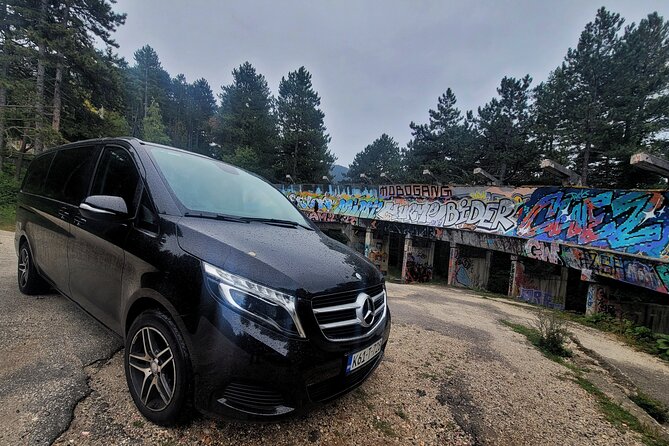
The track was built for the 1984 Winter Olympics, a moment when Sarajevo welcomed international attention for a very different reason. Later, the site was abandoned and located on the front line during the war. That contrast gives the stop its power.
You are not simply looking at a sports relic. You are seeing how a place designed for celebration became linked with conflict and damage. The setting in the hills also gives the tour a different view of Sarajevo from the built-up city center.
The visit is mainly about seeing the track and hearing its story. Do not expect an operating Olympic attraction or a long formal museum visit. Its appeal is visual and historical, and the guide’s explanation supplies much of the meaning.
More history-first tours:
- East Bosnia & West Serbia UNESCO heritage day tour from Sarajevo
★ 5.0 · 55 reviews - Sarajevo genuine walking tour: Steps through history
★ 5.0 · 22 reviews - SARAJEVO STREET ART TOUR (art, history & mystery) – sARTajevo!
★ 5.0 · 18 reviews - BOSNIAN PYRAMIDS TOUR (nature, history & archeology)
★ 5.0 · 17 reviews
Yellow Fortress and the Jewish Cemetery explain the city from above
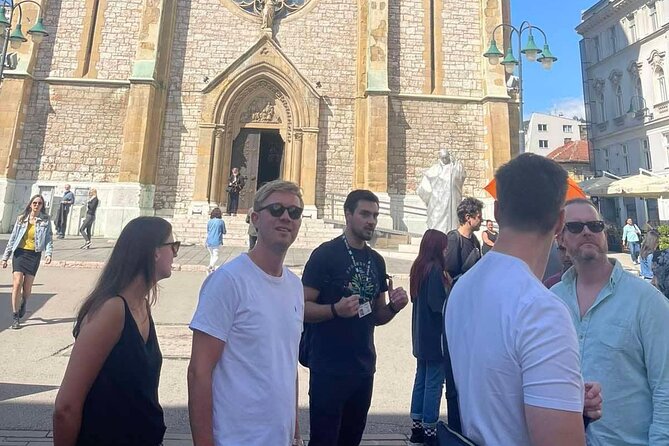
At Yellow Fortress, you get about 30 minutes for a broad view over Sarajevo. It is one of the best photo stops on the route, and the elevated position helps you understand how tightly the city sits between the surrounding hills.
The view is not just scenic. The hills also help explain why Sarajevo’s wartime geography mattered so much. Your guide can connect the visible slopes and neighborhoods to the siege, giving the panorama a serious edge.
The Jewish Cemetery follows, with another 30-minute stop. Here you learn about Jewish heritage in Sarajevo and see a place associated with sniper positions during the war. The combination of heritage and conflict is typical of this tour: one location often carries several layers of memory.
These stops are useful, but they are not full cemetery or fortress tours. You will get an explanation, time for photographs, and a chance to look around. If you prefer long, quiet visits at historic sites, the schedule may feel brisk.
Sniper Alley puts wartime geography on city streets
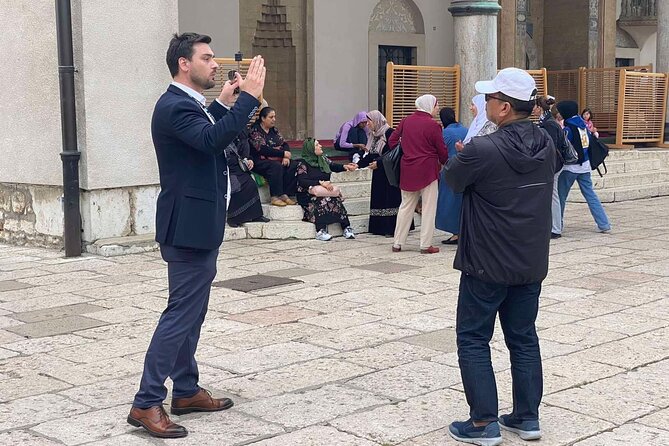
The next section lasts about an hour and focuses on what became known as Sniper Alley. Your guide points out the War Hotel, the Bosnian Rome and Juliette Bridge, and places connected with United Nations forces, journalists, and international support during the siege.
This part works because it brings the war into the modern city rather than keeping it behind museum walls. You see streets that function as normal urban routes today, then hear how dangerous they once were. That contrast is hard to understand from a textbook alone.
The guide may also explain how outside observers and aid workers experienced the siege. Personal stories from guides who were children at the time add a human scale to the political and military background.
Expect much of this stop to involve looking from the vehicle or making short stops rather than walking every stretch of the avenue. The hour allows for a solid explanation, but traffic and timing can affect how long you stand at each point.
Sarajevo City Hall links imperial design with wartime memory
The tour then visits Sarajevo City Hall inside, with about 30 minutes allocated to the building. The entrance fee is not included, so confirm the current charge before you go.
The building is a reminder of Austro-Hungarian rule and the city’s European architectural turn. Its ornate design makes a sharp visual change from the Ottoman streets nearby. It also carries wartime meaning, so the visit fits the tour’s larger effort to connect architecture with Sarajevo’s political past.
Thirty minutes is enough for a focused look, especially if you are already seeing many sites. If you want to study every interior detail, you may prefer to return independently. Bring some local currency or a payment method suitable for the admission desk, since the ticket is outside the tour price.
Baščaršija begins the Ottoman heart of the city
The Old Town portion is a walking tour through the compact center of Sarajevo. You first see Kazandžiluk, the copper-smith street, for about 10 minutes.
The street preserves one of the city’s most recognizable crafts. Copper coffee sets, trays, and other objects give the area a practical connection to Sarajevo’s Ottoman commercial past. Ten minutes is brief, but it is enough to understand why the street matters and to browse if something catches your eye.
At Baščaršija Square and the Sebilj fountain, you reach the symbolic heart of the Old Town. This was a place of trade and public life, and it remains a natural orientation point. Your guide can explain how the market quarter fits into the city’s older street plan.
The square is also where the tour may feel busiest and most social. Keep an eye on your meeting point and listen for instructions, since the group moves through a popular public area rather than a controlled attraction.
Morica Han is the coffee pause you need
Morica Han is a former caravanserai, a lodging place for merchants during the Ottoman period. You spend about 20 minutes here, and Bosnian coffee is included.
This is one of the tour’s best small experiences. After several war and political sites, sitting in an old trading courtyard with coffee gives you a chance to slow down. The coffee itself is part of local culture, not just a drink supplied between stops.
You may want to treat this as a tasting rather than a full café break. The scheduled time is short, and lunch is also included elsewhere in the day. Still, it is a useful pause and a good moment to ask your guide about daily life in Sarajevo.
Ottoman, Jewish, Catholic, and Orthodox Sarajevo in one walk
The Old Town route continues to Gazi Husrev-beg Mosque, Sarajevo’s largest mosque in the center. The guide explains the role of Gazi Husrev-beg, who invested his wealth in the city. Entry is not included, and the scheduled visit is about 10 minutes.
You then pass the Old Sarajevo Clock Tower, which shows lunar time. The stop lasts only five minutes, but the detail is unusual and helps show how Ottoman religious and civic life shaped the center.
Gazi-Husrev Beg’s Bezistan is a covered Ottoman market, with about 10 minutes for the visit. Like Kazandžiluk, it connects the city’s past to trade and craft rather than only to rulers and battles.
At the Sarajevo Meeting of Culture, you see the point where East meets West, with about five minutes here. It is a quick visual marker, but it neatly sums up the city’s position between cultural traditions.
The Jewish Museum of Bosnia and Herzegovina follows for about 15 minutes. Admission is not included. The museum covers Jewish life in Bosnia from the 16th century to the present, adding a vital chapter that can easily be missed on a standard Ottoman-focused walk.
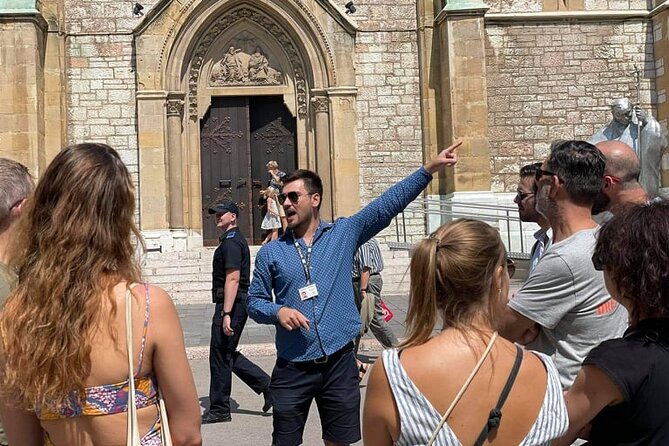
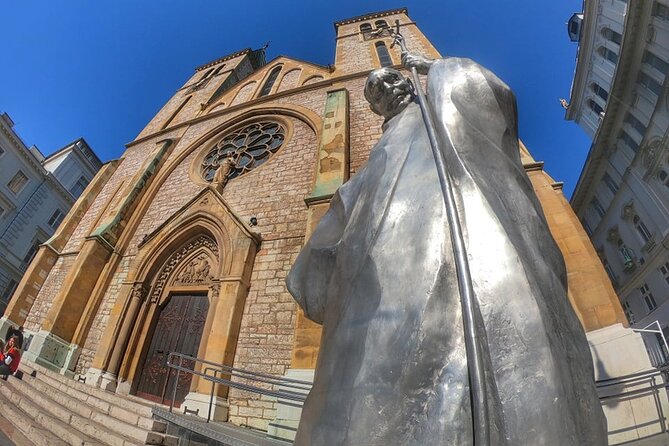
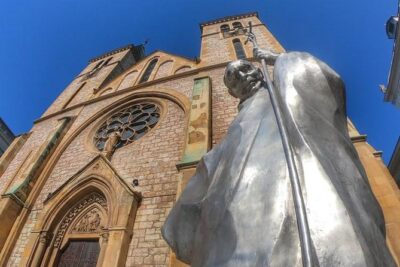
The route then includes the Catholic Cathedral, Katedrala Srca Isusova, for about 10 minutes, and the Serbian Orthodox Cathedral for another 10 minutes. Seeing these religious buildings close together gives you a clear sense of Sarajevo’s mixed religious identity.
Do not expect a full guided tour inside every building. Several stops are short, and admission is extra at the mosque and Jewish Museum. The benefit is the side-by-side view. In a small area, you move among Islamic, Jewish, Catholic, and Orthodox sites without turning the city into a single-story history lesson.
Latin Bridge connects Sarajevo to World War I
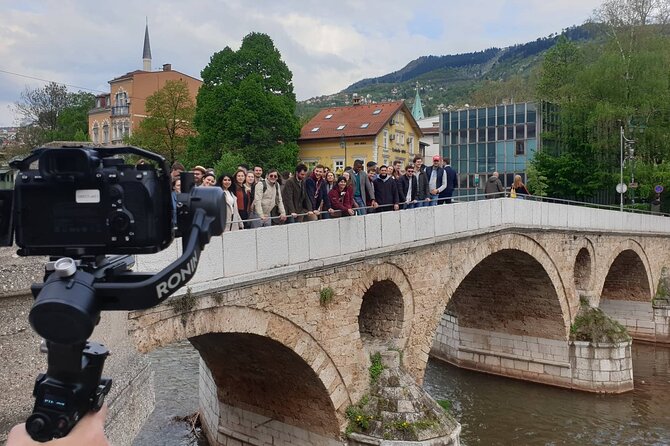
At Latin Bridge, you spend about 15 minutes. This is the site associated with the assassination that helped trigger World War I.
The stop is short, but the historical importance is large. Your guide can place the event within Sarajevo’s streets rather than leaving it as a distant date in a European history book. It is also a useful point for noticing how ordinary the surroundings feel today.
That contrast is part of Sarajevo’s character. Major events happened in places that remain woven into daily urban life. I appreciate that the tour includes this stop alongside the war sites, since it shows that Sarajevo’s past cannot be reduced to the 1990s.
Lunch, transport, and the real value of $114.45
At $114.45 per person, this is not the cheapest way to see Sarajevo. The value depends on how much you want done in one day.
The price includes an air-conditioned vehicle, hotel pickup, bottled water, a guide, lunch, Bosnian coffee, admission to Vrelo Bosne, and admission to the Tunnel Museum. That bundle matters because the route reaches the springs, tunnel, mountain sites, and central landmarks. Arranging all of that independently would require more planning and transport decisions.
The group can have up to 15 people. That is still modest compared with a large coach, and it gives you a fair chance to ask questions. A smaller actual group will feel more personal, while a full group may make the short Old Town stops less flexible.
Lunch deserves a practical note. It is listed as included, but earlier scheduling caused one visitor to reach midafternoon hungry before the meal. The provider later added lunch as part of the tour, so the situation may have improved, but I would still ask at pickup when and where lunch will happen. One account also expected a horse-and-carriage ride that did not take place. Since that ride is not part of the stated inclusions, do not count on it unless it is specifically confirmed.
Who should book this Sarajevo tour?
I would choose this tour if you have one full day in Sarajevo, want a strong historical base, and prefer having transport arranged for the outer sites. It suits first-time visitors, couples, families, and anyone who wants both the city and nearby nature without building a route from scratch.
It is also a good fit if personal storytelling matters to you. Guides such as Ahmed, Enes, Elvis, Edis, and Adnan have been praised for warmth, humor, clear explanations, photography help, and firsthand family memories. The guide makes the difference, so I would arrive ready to ask questions.
You may want another plan if you dislike a busy schedule, need long museum visits, or want to choose your own lunch hour. Several stops last only five to 15 minutes, and extra admission is needed at City Hall, Gazi Husrev-beg Mosque, and the Jewish Museum.
Pickup begins at 9:00 a.m. from your hotel lobby or another location in Sarajevo. Confirmation is provided when you book, and free cancellation is available until 24 hours before the start time. The tour needs suitable weather and a minimum number of participants, with another date or a refund offered if the operator cancels.
Final call: a strong overview with a quick pace
I would book this tour for an initial Sarajevo visit, especially if you have limited time. The combination of Vrelo Bosne, the Tunnel Museum, the Olympic track, Yellow Fortress, Sniper Alley, and the Old Town gives you a useful picture of the city’s nature, culture, and painful recent past.
The best reason to book is the guide-led context. Sarajevo’s sites are powerful, but their meaning is not always obvious from a plaque. A good guide can connect the Ottoman market, the Jewish Museum, the Olympic ruins, and the siege into one understandable story.
Just confirm lunch timing, ask which admissions you may want to pay for, and accept that the schedule favors breadth over lingering. If that tradeoff suits you, $114.45 buys a very efficient and unusually varied day.
FAQ
How long does the Sarajevo Full Day Tour last?
The tour lasts approximately 6 to 7 hours.
What time does the tour begin?
Pickup begins at 9:00 a.m.
Where does pickup take place?
Pickup is available from the lobby of your hotel or another location in Sarajevo.
How many people can join the tour?
The maximum group size is 15 people.
Is lunch included?
Yes. Lunch is included in the tour price.
Are entrance fees included?
Admission to Vrelo Bosne and the Sarajevo Tunnel Museum is included. Admission to Sarajevo City Hall, Gazi Husrev-beg Mosque, and the Jewish Museum of Bosnia and Herzegovina is not included.
Is Bosnian coffee included?
Yes. Bosnian coffee is included, and it is served during the visit to Morica Han.
Can I cancel for a full refund?
Yes, if you cancel at least 24 hours before the experience begins. Cancellations or changes made less than 24 hours before the start time are not refunded or accepted.
More full-day trips
- From Sarajevo: Full-Day Hike to Lukomir Village
★ 5.0 · 59 reviews - Sarajevo to Belgrade Full Day Tour one-way
★ 4.5 · 9 reviews - Private Full Day Safari Tour
★ 5.0 · 8 reviews - Best of Sarajevo – Ultimate Full-Day Experience
★ 5.0 · 7 reviews
Just added around Sarajevo
- Srebrenica Genocide Tour from Sarajevo★ 4.5 · 3 reviews
- Mountain Village Lukomir Full Day Adventure Tour★ 5.0 · 3 reviews
- MTB Bjelasnica – Lukomir★ 5.0 · 3 reviews
- Herzegovina Tour from Sarajevo: Mostar, Počitelj, Blagaj, Kravice★ 5.0 · 3 reviews
- Sarajevo Under Siege: A City’s Struggle & Survival Tour★ 5.0 · 3 reviews
- Beautiful Bosnia 8 Days Tour Package★ 5.0 · 3 reviews
- Bosnian Kingdom Capitals: Travnik & Jajce Tour from Sarajevo★ 5.0 · 3 reviews
- Walking Tour in Sarajevo★ 5.0 · 3 reviews
Bosnian War History Tours, compared.

Fall of Yugoslavia, Sarajevo War Tour with Tunnel of Hope Museum and Frontlines
Read our review →
ROSES OF SARAJEVO (Official WAR + CITY tour)- Story of a Survivor
Read our review →
Tunnel Museum: Bosnian & Yugoslav Wars Tour with War Veteran
Read our review →
Sarajevo War Tour: A Veteran’s Story of the Siege (fees included)
Read our review →
Break-up of Yugoslavia & The War in Mostar: Life Under Siege
Read our review →
Sarajevo Grand Tour: Old Town, War Tunnel, Olympic Sites & More
Read our review →Browse the lists this tour appears in