
REVIEW · MOSTAR TOURS
Traditional Bosnian Cooking Class in Mostar with Lunch and Drinks
Come hungry, leave with new skills. This three-hour class offers a friendly way to understand Mostar through food, from rolling pastry for burek to preparing stuffed vegetables and sharing a home-cooked meal. I especially like the hands-on format, where you take part in the kneading, stirring, seasoning, and shaping rather than simply watching a demonstration.
I also like the personal touch. Amina is repeatedly praised for her patience, clear instruction, and easy manner, while the class can lead naturally into conversations about Bosnian customs and the country’s difficult past. The main consideration is timing: one participant received the wrong start time and missed part of the class, so confirm your departure time before setting out.
In This Review
- What makes this Mostar cooking class special
- A Bosnian meal that begins with conversation
- Rolling dough and shaping traditional dishes
- The menu: mezze, japrak, dolma, and hurmasice
- A meal that carries more than recipes
- Why Amina is central to the experience
- Morning or evening: choosing the right session
- Is $90.11 a fair price?
- Who should book this class?
- Booking details and cancellation
- Should you book the Mostar cooking class?
- FAQ
- Where does the cooking class begin?
- Where does the experience end?
- How long does the cooking class last?
- What time does the class start?
- Is the class offered in English?
- What food will I prepare?
- Are drinks included?
- Is hotel pickup included?
- What is the cancellation policy?
What makes this Mostar cooking class special
- You prepare genuine Bosnian dishes: Expect specialties such as dolma, japrak, burek, stuffed peppers, stuffed kale leaves, and traditional pastries.
- Amina teaches every step: She encourages you to knead, roll, stir, season, and shape the food yourself.
- The meal is part of the lesson: You eat what you prepare, along with a Bosnian mezze platter and dessert.
- Drinks add local flavor: The experience includes a rakija welcome drink and local wine or beer with the meal. Morning sessions may also include coffee, elderberry drink, and small snacks.
- It suits families and small groups: The minimum age is 9, and the group can include up to 20 people, though smaller sessions may feel more personal.
- It runs from a central Mostar kitchen: You meet and finish at Food House Mostar on Rade Bitange Street, with no hotel transport included.
A Bosnian meal that begins with conversation
The experience starts at Food House Mostar, at Rade Bitange 12. The meeting point is also the end point, so you do not need to arrange a taxi or follow a complicated route between several locations. The class lasts about three hours.
The published start time is 5:00 pm, making this a useful evening activity after a day around Mostar’s old town. Morning or afternoon departures may also be available, and past participants have attended a morning session. Because times can vary, I would check the confirmed start time carefully after booking.
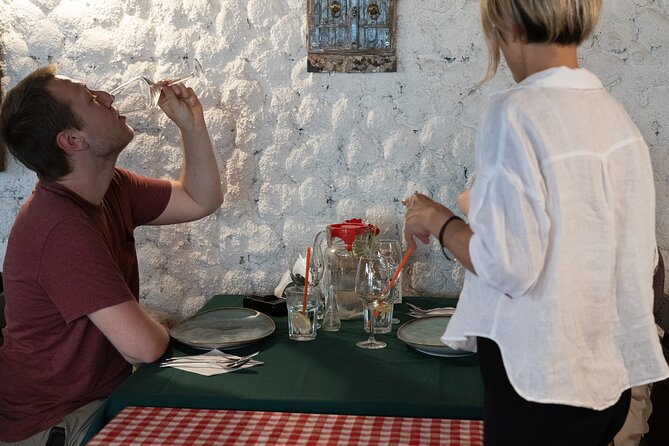
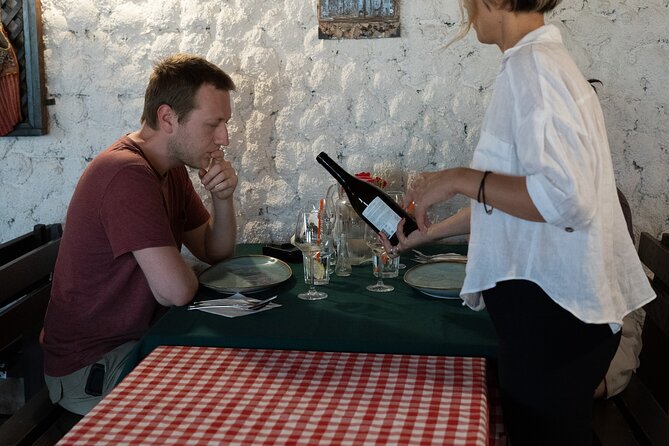
The opening is relaxed. You begin with an introduction, a welcome drink of rakija, and a chance to settle in. Rakija is a strong fruit brandy found across the Balkans, so take a small sip rather than treating it like a casual soft drink. Additional drinks are not included, but the class does include local wine or beer with the three-course meal.
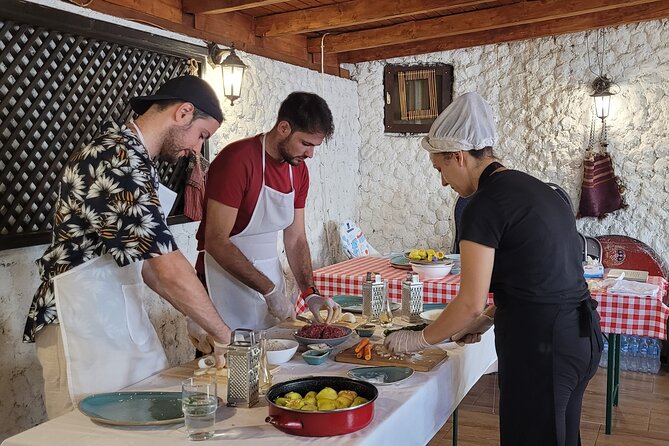
The atmosphere matters here. This is not a hurried restaurant demonstration where you stand at the edge of a kitchen and watch someone else do the work. The setting is a commercial kitchen with the needed tools, spices, and ingredients, but the tone is described as warm and informal. One morning group received coffee and a board of snacks before cooking, with an elderberry drink becoming a favorite part of the meal. Those extras may depend on the session, but they give you an idea of the welcome.
More cooking classes:
- Bosnian Cooking Lessons
★ 5.0 · 269 reviews
Rolling dough and shaping traditional dishes
The cooking lesson is the heart of the experience. The exact menu can vary, but the advertised sample includes a Bosnian mezze platter, japrak, dolma, and hurmasice. You may also prepare burek, stuffed peppers, stuffed kale leaves, or a savory pastry spiral.
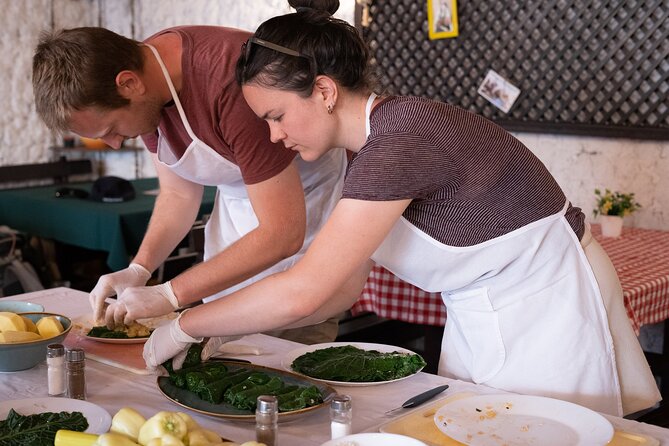
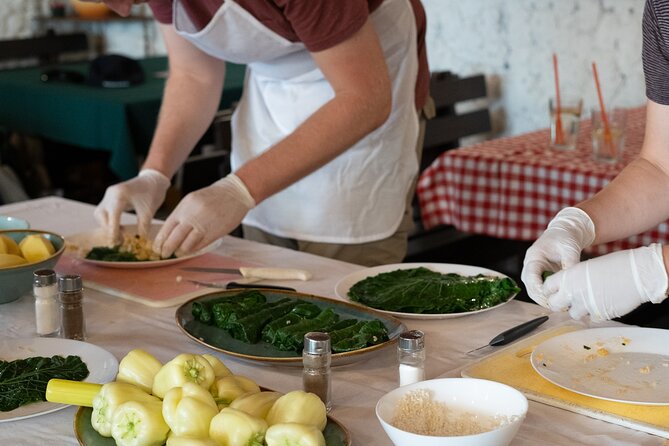
Dolma refers to vegetables filled with a seasoned mixture, while japrak uses leaves as the wrapper. These dishes are simple in concept but require care. You need to spread the filling evenly, fold or roll the leaves neatly, and avoid packing them so tightly that the filling cannot cook properly. That is where an instructor adds real value.
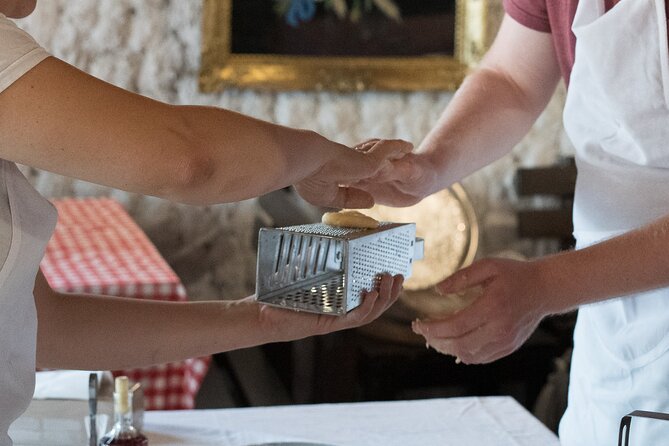
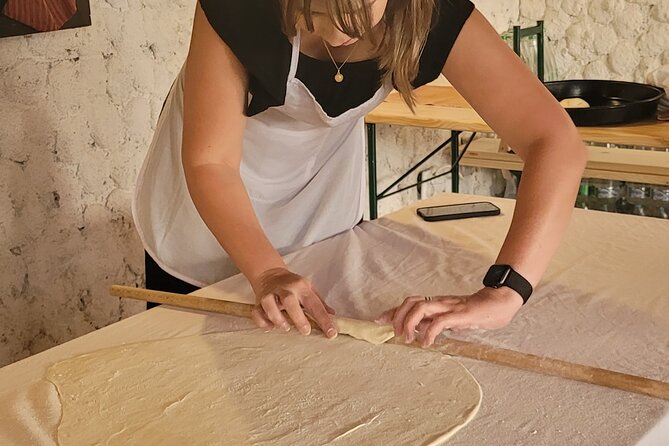
Burek brings a different skill. The pastry is rolled with a long, thin Bosnian rolling pin, a memorable tool that gives the lesson a strong local character. Rolling the dough thin enough takes practice, and the class is designed to let you try rather than watch Amina perform the difficult part for you.
That hands-on approach is one of the strongest reasons to book. Amina is praised for being patient with beginners and for giving every person a turn at each stage. You do not need previous cooking experience. In fact, imperfect pastry rolling is part of the fun, and the finished dish does not need to look like it came from a professional kitchen to taste good.
The class also gives you useful food context. You learn how Bosnian dishes are assembled, which spices are used, and how pastry and stuffed vegetables fit into home cooking. You may not leave with a full recipe book, since that is not promised, but you should leave with a better sense of how these foods are made and why they matter at the table.
The menu: mezze, japrak, dolma, and hurmasice
The sample menu begins with a Bosnian mezze platter. Mezze offers small tastes before the main cooking is finished, and it helps turn the lesson into a social meal rather than a single dish followed by a quick goodbye. It is also useful if your cooking takes time and you need something to enjoy while waiting.
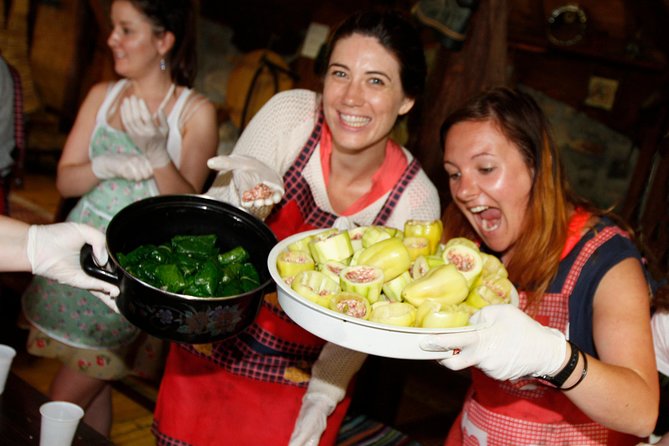
The advertised main dishes are japrak and dolma. Depending on the session, these may appear as stuffed leaves, peppers, or other vegetables. Past classes have included stuffed peppers and kale leaves, showing that the food is not limited to one fixed presentation.
Burek is another likely highlight. This flaky pastry is one of Bosnia and Herzegovina’s best-known foods, and learning to roll its dough with a traditional pin gives you a skill you can remember long after the meal. The class may also include a savory spiral, a butternut squash pie, or another pastry preparation.
Dessert is listed as hurmasice, a Bosnian sweet made with a soft pastry and syrup. Other sessions have included sweet lemon-vanilla cookies. The changing dessert is worth noting: the experience centers on traditional Bosnian cooking, but the exact dishes may depend on the day and the kitchen’s plan.
The meal is described as three-course, though the sample menu lists a starter, two main dishes, and dessert. In practical terms, expect a generous spread of dishes rather than a strict restaurant-style sequence. Several people enjoyed enough food to take leftovers away for later meals, so I would not schedule a heavy dinner immediately afterward.
A meal that carries more than recipes
The cooking class works best because the food opens a door to conversation. The experience is not presented as a formal history lecture, but there is room to ask about Bosnian culture, family cooking, and Mostar’s past.
Amina has been especially appreciated for answering questions about the war with honesty and personal experience. That does not turn the class into a somber tour. Instead, it gives you a chance to understand that Bosnian food is tied to family, memory, hardship, hospitality, and rebuilding.
This is one of the most useful parts of the evening. Mostar is often reduced to its famous bridge and attractive old streets. A cooking class lets you meet the city through ordinary food and conversation. You get a more personal view of Bosnia and Herzegovina, without the pressure of a formal museum visit.
The tone remains light as well. You cook, eat, drink, and laugh together. The class has been described as relaxed, including on a day when only one couple had booked. That matters if you worry about being lost in a large group. A maximum of 20 people is allowed, but a small booking can become almost private in feel.
More hands-on workshops:
Why Amina is central to the experience
The instructor can make or break a cooking class, and Amina receives the strongest praise here. She is described as kind, attentive, easygoing, patient, and thorough. She does not simply explain the recipe and take over. You are encouraged to work through each step yourself.
That teaching style suits people who want more than a meal. You learn by handling the ingredients, testing your pastry technique, and correcting small mistakes as you go. Amina’s patience is particularly helpful with dough, which can be frustrating on a first attempt.
Her role also extends beyond cooking. She creates an atmosphere where you can ask questions about food traditions and Bosnia’s past. If you are curious about culture, the class gives you a natural setting for those conversations.
The activity is offered in English. A multilingual guide may be arranged on request, but you should ask about that before booking if you need instruction in another language. The standard experience is suitable for English speakers, and one German-speaking couple specifically found the English class easy to follow.
Morning or evening: choosing the right session
The listed start time is 5:00 pm, which places the class in the evening and pairs well with a relaxed day in Mostar. You can spend the earlier hours sightseeing, then finish with a substantial meal.
Morning departures are also offered or have been available for some bookings. The morning format may include coffee and a small board of snacks before the main lesson. It can work well if you prefer to cook before sightseeing or want an early meal that leaves the rest of the day free.
The only real timing warning is the possibility of an incorrect departure time in booking information. One person arrived with the wrong time and missed the beginning, although the hosts apologized and handled the problem kindly. I would confirm the exact local start time within your booking details and contact the provider if anything looks unclear.
Allow the full three hours. The class includes an introduction, food preparation, cooking, eating, and a farewell. You are not just stopping in for a quick recipe lesson.
Is $90.11 a fair price?
At $90.11 per person, this is not the cheapest meal in Mostar. You are paying for more than food, though. The price includes the cooking instruction, English-speaking guide, commercial kitchen access, ingredients, spices, tools, rakija welcome drink, local wine or beer, and a three-course lunch or dinner.
The value is strongest if you want an activity that combines dinner with cultural contact. A regular restaurant meal may cost less, but it will not teach you how to make burek or stuffed vegetables, and it will not give you the same chance to talk with a local instructor.
The value is also better for people who enjoy participation. If you prefer to sit back and eat, you may find the cost harder to justify. If you like food classes, small-group activities, and practical cultural experiences, the fee is more reasonable.
Additional beverages cost extra, and hotel pickup and drop-off are not included. Since the class starts and ends at the same Mostar address, those omissions are easy to manage if you are staying near the center.
Who should book this class?
I would recommend it to couples, families with children aged 9 or older, and anyone who wants an evening that feels more personal than a standard restaurant meal. Children have enjoyed the food, and the hands-on work can keep older children interested.
It is also a good fit for cooks of all levels. Experienced home cooks may enjoy learning a regional pastry technique, while beginners can rely on Amina’s patient guidance. You do not need to be good at rolling dough. The class is built for practice.
Food-focused visitors will get the most from it, especially if you are curious about dolma, japrak, burek, and other Bosnian dishes. People interested in modern Bosnian culture may value the conversation about the country’s past just as much as the recipes.
I would think twice if you have a very restricted diet unless you contact the provider in advance. Specific dietary needs should be shared at booking, but the available information does not promise that every request can be met. I would also avoid booking it right before another large dinner because the meal can be substantial.
The group limit is 20 people. That is large enough to affect the intimacy of the class if fully booked, though the personal teaching style and occasional small sessions can make the experience feel much closer.
Booking details and cancellation
You need at least two people per booking, and the minimum age is 9. The minimum drinking age is 18, so younger participants can join the cooking and meal but should not receive alcoholic drinks.
Confirmation is sent within 48 hours, subject to availability. Because the activity requires a minimum number of participants, it can be canceled if that number is not reached. In that case, you are offered another date or experience, or a full refund.
Free cancellation is available up to 24 hours before the start time. Changes or cancellations made less than 24 hours before the experience are not accepted for a refund. The cut-off follows Mostar local time.
Should you book the Mostar cooking class?
Yes, if you want to eat Bosnian food and learn how it is made. The best reasons are the active cooking, Amina’s patient teaching, the chance to discuss Bosnia beyond the usual sights, and the generous meal afterward.
The price is fair for a three-hour food-and-culture activity, though not a bargain if you only want dinner. Confirm the start time, mention dietary requirements, and arrive hungry. For many visitors, this can become one of the most memorable parts of a short stay in Mostar because you leave with more than a full stomach. You leave knowing how the meal came together.
FAQ
Where does the cooking class begin?
It begins at Food House Mostar, Rade Bitange 12, Mostar 88104, Bosnia and Herzegovina.
Where does the experience end?
The activity ends back at the meeting point at Food House Mostar.
How long does the cooking class last?
The experience lasts approximately three hours.
What time does the class start?
The listed start time is 5:00 pm. Morning and afternoon departures may also be available, so confirm your assigned time after booking.
Is the class offered in English?
Yes. The standard experience is offered in English. A multilingual guide may be available on request.
What food will I prepare?
The sample menu includes a Bosnian mezze platter, japrak, dolma, and hurmasice. Sessions may also include burek, stuffed peppers, stuffed kale leaves, savory pastry spirals, butternut squash pie, or sweet lemon-vanilla cookies.
Are drinks included?
A rakija welcome drink and local wine or beer with the three-course meal are included. Additional beverages are not included.
Is hotel pickup included?
No. Hotel pickup and drop-off are not included. You meet and finish at Food House Mostar.
What is the cancellation policy?
You can cancel up to 24 hours before the experience for a full refund. Cancellations or changes made less than 24 hours before the start time are not accepted for a refund.
More trips with lunch included
- Understanding Srebrenica Genocide Tour + Lunch with Local Family Included
★ 5.0 · 123 reviews - Lukomir Nomad Village Hiking from Sarajevo – Local Lunch Included
★ 5.0 · 21 reviews
Just added around Mostar
- Private Day trip to Medjugorje from Split or Dubrovnik★ 5.0 · 3 reviews
- From Dubrovnik: Sarajevo and Mostar Private Full-Day Tour★ 4.7 · 3 reviews
- From Dubrovnik to Mostar and Kravice waterfalls★ 3.5 · 3 reviews
- From Dubrovnik: Medjugorje Private Day Tour★ 4.3 · 3 reviews
- Pocitelj City Tour★ 4.5 · 3 reviews
- Mystical Sutjeska National Park★ 5.0 · 3 reviews
- Mostar Guided Tour & Sweet Delights★ 5.0 · 3 reviews
- Private tour from Split to Dubrovnik via Mostar★ 5.0 · 3 reviews
Mostar Tours, compared.
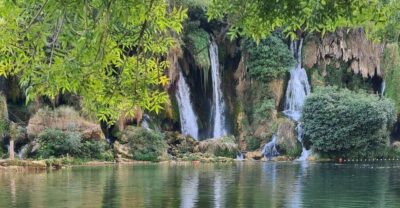
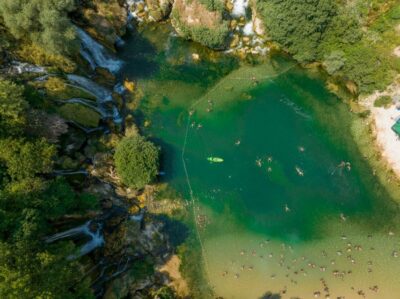
Kravica Waterfalls, Mostar and Pocitelj Day Trip
Read our review →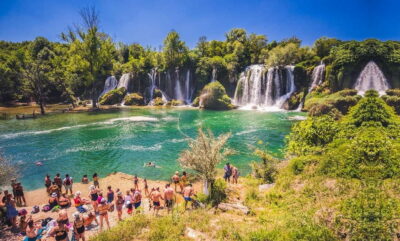
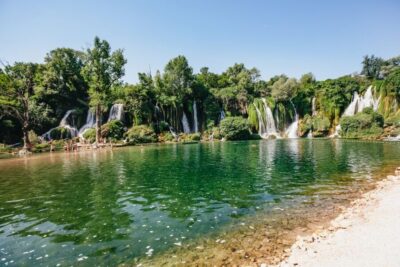
Mostar and Kravice Waterfalls Small-Group Tour
Read our review →
Discover Herzegovina Day Tour from Mostar: Kravice Waterfalls, Blagaj, Počitelj
Read our review →
Browse the lists this tour appears in