
REVIEW · BOSNIAN WAR HISTORY TOURS
Break-up of Yugoslavia & The War in Mostar: Life Under Siege
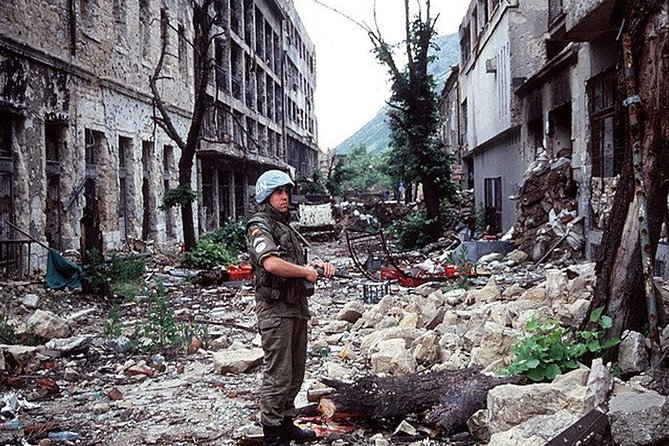
Mostar’s scars still tell a story. This three-hour tour connects the city’s recent past to places you can actually see, from a secret Yugoslav aircraft hangar to damaged buildings and old front-line bunkers. I especially like the small group size, capped at eight, and the way guides such as Esmer, Harun, and Vedad explain a tangled conflict in plain language. The personal stories make the subject human, not just political.
I also like that the tour does not stop at the headline events of the 1992 to 1995 Bosnian War. You’ll hear how Mostar remains divided today, walk along the former line between Bosnian and Croatian forces, and learn how local people are trying to live with the past. The main consideration is that this is an emotionally heavy, information-packed morning, and the sights are more sobering than pretty.
In This Review
- Key points to know before booking
- Why this Mostar war tour matters
- The secret hangar south of Mostar
- Making sense of Yugoslavia at the Mostar War Museum
- Walking the former front line through Mostar
- A local guide makes the difference
- What the three-hour format is really like
- Is $42.33 good value?
- Who should book this experience?
- Should you book the Mostar war tour?
- FAQ
- How long does the Mostar war tour last?
- What language is the tour offered in?
- Is hotel pickup available?
- What is the maximum group size?
- What is included in the price?
- What places does the tour visit?
- Is the tour suitable for children?
- Can most people participate?
- What is the cancellation policy?
Key points to know before booking
- A secret Yugoslav aircraft hangar: See the abandoned mountain hangar built to protect Tito’s fighter jets from attack and public view.
- Personal accounts from a local guide: Esmer and other guides explain how Mostar families experienced the siege and its aftermath.
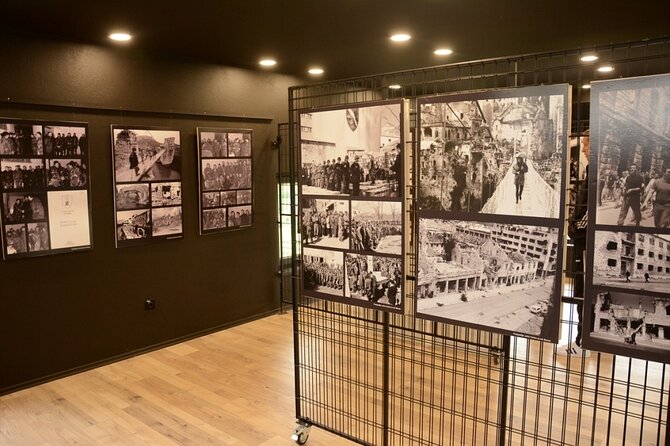
- A clear explanation of a difficult war: Maps, timelines, photographs, and street-level evidence help make the breakup of Yugoslavia easier to follow.
- Former front lines in the city center: Walk through Šantića Street toward Spanish Square and Boulevard Street, where bunkers and war damage remain.
- A useful small-group format: With no more than eight people, you have room to ask direct questions.
- Hotel pickup in Mostar: Transport in an air-conditioned vehicle keeps the morning simple, especially if your accommodation is outside the Old Town.
Why this Mostar war tour matters
Mostar is easy to enjoy at surface level. You cross the famous bridge, browse copper shops, eat ćevapi, and take photographs over the Neretva River. All of that is worthwhile, but it leaves out the event that shaped the modern city.
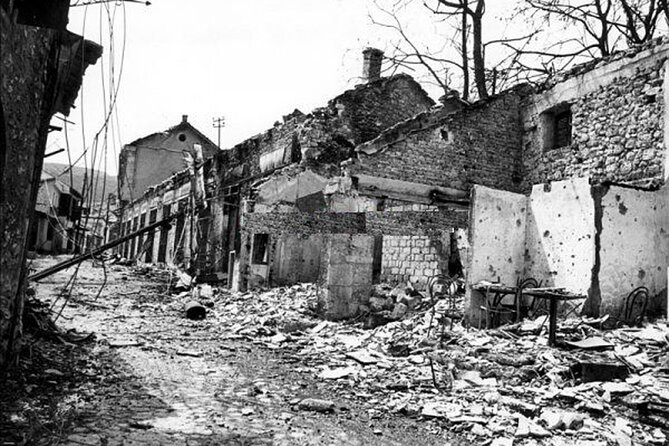
The war is not an old chapter here. Buildings still show damage. Communities remain politically and socially divided. The former front line passes through areas where people now walk, shop, and go about daily life.
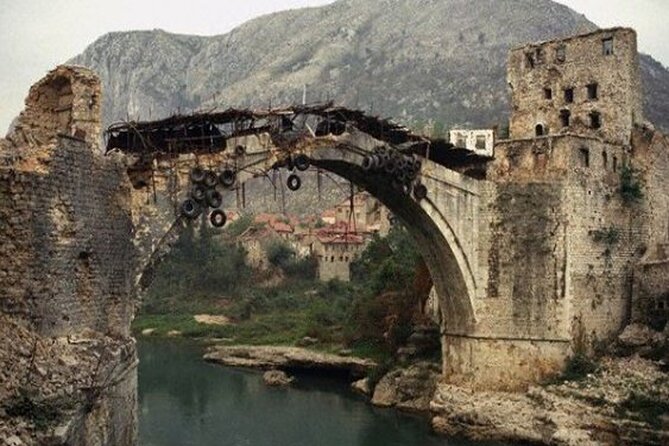
This experience gives you a way to read the city more carefully. Instead of seeing only a beautiful Ottoman-era center and postcard views, you begin to notice gaps, repaired facades, abandoned structures, and the uneasy border between Mostar’s two sides.
The guide is central to the experience. Esmer receives the strongest praise for explaining the war with warmth, precision, and a willingness to discuss difficult questions. Harun, Huran, and Vedad are also named as strong guides. The guide you receive may vary, but the format is designed around local interpretation rather than a detached lecture.
More war history tours:
- Mostar War Heritage Walking Tour
★ 5.0 · 6 reviews - Fall of Yugoslavia, Sarajevo War Tour with Tunnel of Hope Museum and Frontlines
★ 5.0 · 1,314 reviews - ROSES OF SARAJEVO (Official WAR + CITY tour)- Story of a Survivor
★ 5.0 · 770 reviews
The secret hangar south of Mostar
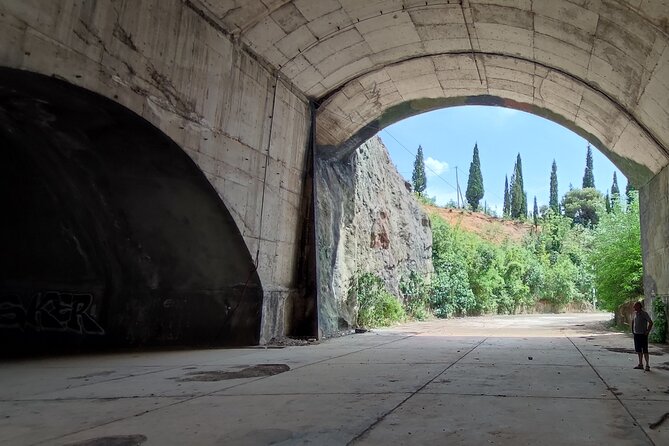
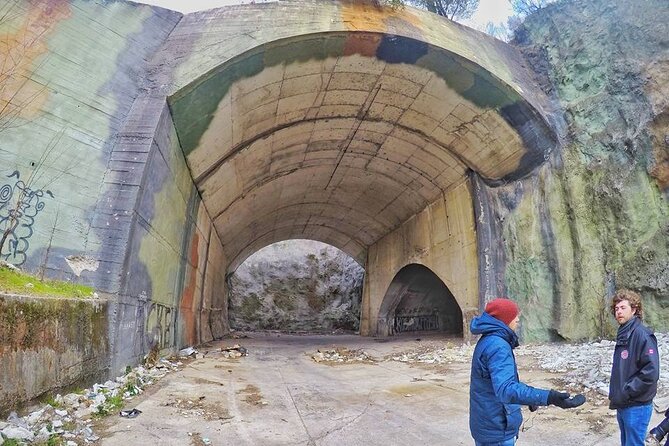
The first stop is an abandoned aircraft hangar about five minutes south of Mostar. It was built during Yugoslavia under Josip Broz Tito, with fighter jets stored deep inside the mountain.
The site’s purpose becomes clear once you see it. The mountain offered a natural shield against air attack and kept the military installation away from ordinary citizens and foreign spies. It is a striking reminder of how much secrecy and military planning shaped Yugoslavia during the Cold War.
You’ll spend about 50 minutes here, with no separate admission fee. The setting is unusual, but it is not polished for sightseeing. Expect an abandoned structure rather than a restored museum, and keep your attention on the military story and the atmosphere of the place.
This stop works best when the guide explains why the hangar was built and how it fits into the former Yugoslav system. On your own, you might see a large empty space in a cliff. With context, it becomes evidence of a state preparing for threats that most citizens never saw.
It is also a good early stop because it broadens the subject beyond the Bosnian War. The tour is not simply about destruction in the 1990s. It begins with the political and military world that existed before Yugoslavia broke apart.
Making sense of Yugoslavia at the Mostar War Museum
The second stop is the Mostar War Museum on Gojka Vukovića. Here, the guide shifts from military infrastructure to the experience of civilians and local fighters during the war.
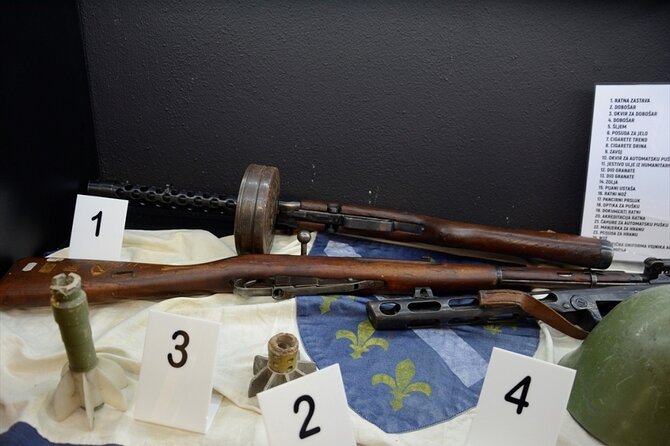
You’ll hear about the siege of Mostar, daily life during bombardment, and the difficulty of living in a city split by conflict. The museum is associated with families of Bosnian soldiers who fought in the war, adding a local connection to the material on display.
One of the most useful parts is the guide’s map and timeline. The breakup of Yugoslavia involved changing alliances, several armed groups, shifting front lines, and political goals that are hard to follow in a short book or news article. A guide can draw the former country, point out the main areas involved, and show how events affected Mostar.
That visual explanation matters. You can ask a question as soon as a name or location becomes confusing. Guides are encouraged to discuss the subject openly, and the experience is suited to visitors who want more than a simplified account of good sides and bad sides.
Esmer’s presentation is particularly personal. He was a child during the war, so his stories are not those of a soldier, but he explains what his family and neighbors endured and how the siege affected ordinary life. That distinction is important. He offers first-hand family experience alongside a broader account of the political causes and military events.
The tone is also notably measured. The guide does not avoid the suffering of civilians, yet he can acknowledge wrongdoing by different sides. That approach gives you a more useful understanding than a one-sided patriotic story.
Plan for about 50 minutes here. The museum stop is information-heavy, and you may leave with more questions than answers. That is not a flaw in this case. The breakup of Yugoslavia cannot be reduced to a neat chain of events, and a serious guide should leave room for uncertainty and discussion.
Walking the former front line through Mostar
The final section takes you through Šantića Street and toward Spanish Square and Boulevard Street. This was the area where Bosnian and Croatian forces fought at close range.
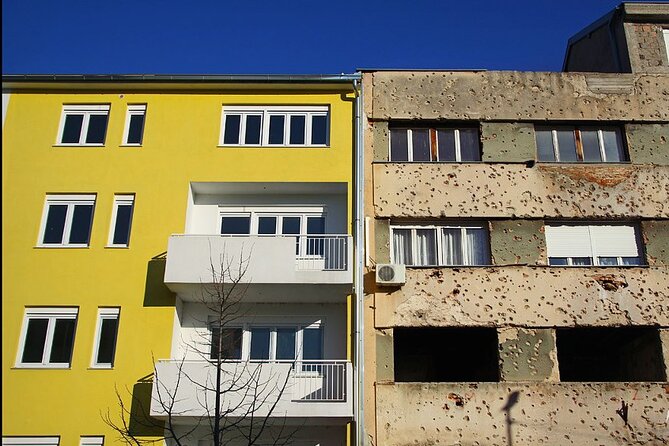
The most powerful feature is the contrast between the ordinary city around you and the evidence of combat. Some bunkers remain inside or beside damaged buildings. Streets that now look like part of a normal urban route once marked opposing positions.
The guide uses old photographs to compare places as they looked during the war with how they appear today. This is one of the most useful ways to understand Mostar’s recovery. A modern facade can conceal a violent past, while a ruined building makes the damage obvious.
The route also follows what is now an unofficial dividing line between two parts of the city. It may not look like a border. There is no dramatic gate or checkpoint described here. Instead, the division is social, political, and visible through the guide’s explanation of how people live after the fighting ended.
This walk lasts about 50 minutes. Wear comfortable shoes, since you’ll be walking through city streets and stopping to examine remains and photographs. The experience is not built around scenic views, though one guide has also taken visitors to a nearby mountain viewpoint for a broader look at Mostar. That addition may depend on the guide and the day.
By the end, the Old Bridge carries a different meaning. You may already admire its Ottoman design and dramatic setting. After learning about its destruction and the city’s separation, you can also see it as a symbol of loss, rebuilding, and the possibility of bringing communities together.
More Yugoslav-era history tours:
- The Death of Yugoslavia Tour in Mostar
★ 5.0 · 102 reviews - Tunnel Museum: Bosnian & Yugoslav Wars Tour with War Veteran
★ 5.0 · 551 reviews - Sarajevo Grand Tour: Old Town, War Tunnel, Olympic Sites & More
★ 5.0 · 73 reviews - Utopia of Tito’s Yugoslavia, Tito’s Bunker & Siege of Sarajevo
★ 5.0 · 35 reviews
A local guide makes the difference
This tour succeeds or fails on the person leading it. The subject is too complicated for a memorized speech delivered without care.
Esmer receives repeated praise for his passion, calm manner, and ability to explain complicated events without losing the group. He has also shared practical parts of local life, including how Bosnian coffee is traditionally approached and where to find good ćevapi. In one case, he took a hungry group to a small bakery when other shops were closed. In another, he pointed out a tiny coffee place away from the main tourist flow.
Those details matter because they connect the war story to Mostar as a living city. You are not only studying what happened in the 1990s. You are meeting someone who still lives with its effects and is thinking about the city’s future.
Guides have also shared links to documentaries and local videos after the tour. That can be useful if the morning leaves you wanting more background. The guide may even offer a small magnet at the end, a minor touch but a pleasant one.
The information can be emotional. Stories about civilians being targeted and families surviving the siege have brought some visitors to tears. If you prefer light sightseeing before lunch, this is not the right choice. If you want to understand Mostar honestly, the emotional weight is part of its value.
What the three-hour format is really like
The advertised duration is about three hours, divided into roughly 50 minutes at each stop. In practice, the tour can run longer. Esmer has continued for close to four hours when questions and discussion kept going.
That flexibility is good if you want depth, but it matters for your schedule. Do not place a tight bus departure immediately after the tour. Hotel pickup and drop-off in Mostar make the start and finish easier, but you should still allow extra time.
The group limit is eight people. That is small enough for direct conversation, yet large enough to create a group discussion when the subject becomes difficult. Some departures may effectively become private tours if only one booking is made, and the experience has continued rather than being canceled because attendance was low.
The vehicle is air-conditioned, useful during Mostar’s hotter months. Pickup is offered from your hotel if that option is selected. If your accommodation is not listed, you need to provide its address in Mostar.
The tour is offered in English, and most people can participate. Children must be accompanied by an adult. Since the content concerns wartime violence and civilian suffering, parents should decide if the subject is suitable for younger children.
Is $42.33 good value?
At $42.33 per person, this is not the cheapest way to spend three hours in Mostar. You can walk through the Old Town for free, and many of the surviving war traces can be seen without paying for a guide.
The value comes from access to interpretation. You are paying for hotel transport if selected, an air-conditioned vehicle, entry to the War Museum, and, most importantly, a local guide who can connect separate places into one story.
The hangar would be difficult to understand without an explanation. The bunkers and damaged buildings might look like random ruins. The map at the museum can save you hours of trying to sort out the conflict alone.
For me, the price makes sense if Mostar is part of a wider Croatia, Montenegro, and Bosnia trip. You get a concentrated lesson in the region’s recent past without giving up a full day. It is especially useful if you have already seen the Old Bridge and want to understand why the city feels different on either side.
The value is lower if you only want scenic photographs or a relaxed city tour. This is not a food walk, a standard architecture tour, or a broad introduction to every attraction in Mostar.
Who should book this experience?
I would recommend it to adults, older teenagers, students of modern European history, and anyone who feels they know too little about the Bosnian War. It is also a strong choice for visitors moving between Split, Mostar, and Dubrovnik who want to make their stop in Bosnia more meaningful.
It suits you if you:
- Want local accounts rather than a general audio guide
- Prefer asking questions to following a fixed script
- Are willing to spend several hours on a serious subject
- Want to understand the breakup of Yugoslavia
- Care about how war still affects daily life and politics
- Have already seen Mostar’s main sights and want more context
You may want to skip it if your time in Mostar is extremely short, if you dislike emotionally difficult material, or if your main aim is a light sightseeing morning.
Book at least a day ahead if your schedule is fixed. The experience is often reserved well in advance, with an average booking lead time of about 67 days. Free cancellation is available up to 24 hours before the start time, but changes or cancellations inside that window are not refunded.
Should you book the Mostar war tour?
Yes, if you want to understand Mostar rather than simply photograph it.
The abandoned hangar is unusual, the front-line walk is sobering, and the museum gives the tour a clear center. But the strongest reason to go is the guide. Esmer, Harun, Huran, or Vedad can turn a confusing regional conflict into a human story while still acknowledging that the truth is complicated.
Leave room afterward for a quiet coffee or meal. You may want time to think about what you heard before rushing to your next stop. For a short visit, this is one of the most useful ways to see the city’s recent past and its uncertain hope for the future.
FAQ
How long does the Mostar war tour last?
The tour lasts approximately three hours. Each of the three main stops is scheduled for about 50 minutes, though the tour may run longer if the group has many questions.
What language is the tour offered in?
The tour is offered in English.
Is hotel pickup available?
Yes. Hotel pickup and drop-off are offered in Mostar if that option is selected. If your accommodation is not listed, provide its address.
What is the maximum group size?
The tour has a maximum of eight participants.
What is included in the price?
The experience includes a professional guide, an air-conditioned vehicle, and entrance to the Mostar War Museum. Hotel pickup and drop-off are included if that option is selected.
What places does the tour visit?
The tour visits an abandoned Yugoslav aircraft hangar south of Mostar, the Mostar War Museum on Gojka Vukovića, and the former front-line area around Šantića Street, Spanish Square, and Boulevard Street.
Is the tour suitable for children?
Children may participate, but they must be accompanied by an adult. The subject includes war, civilian suffering, and the siege of Mostar, so adults should consider the content before bringing younger children.
Can most people participate?
Yes. The tour information states that most people can participate and that it is near public transportation.
What is the cancellation policy?
You can cancel up to 24 hours before the experience starts for a full refund. Cancellations or changes made less than 24 hours before the start time are not accepted for a refund.
Just added around Mostar
- Private Day trip to Medjugorje from Split or Dubrovnik★ 5.0 · 3 reviews
- From Dubrovnik: Sarajevo and Mostar Private Full-Day Tour★ 4.7 · 3 reviews
- From Dubrovnik to Mostar and Kravice waterfalls★ 3.5 · 3 reviews
- From Dubrovnik: Medjugorje Private Day Tour★ 4.3 · 3 reviews
- Pocitelj City Tour★ 4.5 · 3 reviews
- Mystical Sutjeska National Park★ 5.0 · 3 reviews
- Mostar Guided Tour & Sweet Delights★ 5.0 · 3 reviews
- Private tour from Split to Dubrovnik via Mostar★ 5.0 · 3 reviews
Bosnian War History Tours, compared.

Fall of Yugoslavia, Sarajevo War Tour with Tunnel of Hope Museum and Frontlines
Read our review →
ROSES OF SARAJEVO (Official WAR + CITY tour)- Story of a Survivor
Read our review →
Tunnel Museum: Bosnian & Yugoslav Wars Tour with War Veteran
Read our review →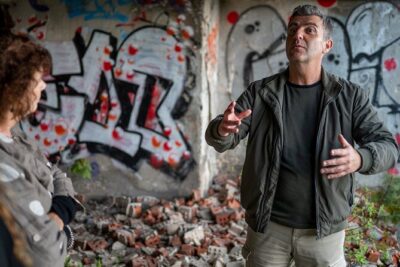
Sarajevo War Tour: A Veteran’s Story of the Siege (fees included)
Read our review →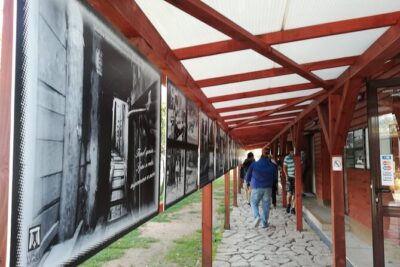
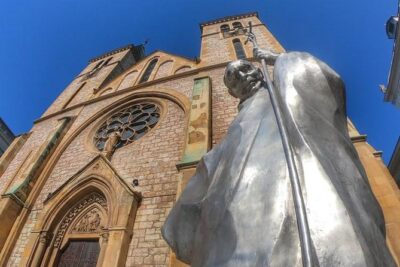
Sarajevo Grand Tour: Old Town, War Tunnel, Olympic Sites & More
Read our review →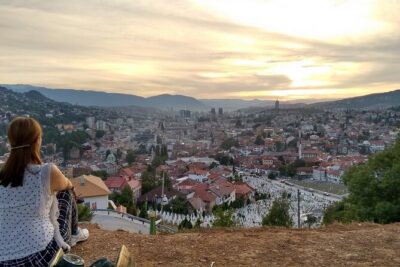
War Times Experience in Sarajevo – Half Day Tour
Read our review →Browse the lists this tour appears in