
REVIEW · YUGOSLAVIA & OLYMPIC HISTORY TOURS
The Death of Yugoslavia Tour in Mostar
History gets real in abandoned places. The Death of Yugoslavia Tour takes you beyond Mostar’s famous bridge to four lesser-known sites tied to Tito’s Yugoslavia, the Cold War, and the Bosnian War. I like the local storytelling, especially when guides such as Marko, Marco, Miran, Marin, Dario, and Sebi connect major events with family memories and everyday life. I also like the music presentation, which helps explain the changing mood of Yugoslav society. The main drawback is clear: the sites are not polished attractions, and some may look neglected or unimpressive if you expect grand monuments.
This is a small-group experience, capped at 16 people, with round-trip transport from the iHouse Travel office in central Mostar. At $47.17 per person for about two and a half hours, the price pays mostly for the guide’s interpretation, not admission tickets or picture-perfect sights. If you want a serious introduction to modern Bosnian history, it is a strong use of an afternoon. If you prefer scenic viewpoints and restored landmarks, choose another outing.
In This Review
- Key points to know before booking
- Why Mostar needs more than its famous bridge
- Meeting at iHouse Travel at 5 p.m.
- Chapter One: Cold War fear at Gornje Gnojnice
- Chapter Two: Tito and daily life in Rodoč
- Chapter Three: The breakup at Španski trg
- Chapter Four: Bosnia and Herzegovina today at Partisan Cemetery
- How good is the $47.17 price?
- What the guides do best
- Who should book this Mostar history tour?
- FAQ
- Where does The Death of Yugoslavia Tour begin?
- What time does the tour start?
- How long does the tour last?
- Does the tour include hotel pickup?
- How many sites does the tour visit?
- Can I cancel for a full refund?
- Should you book it?
Key points to know before booking
- Four secret locations: The exact sites are kept undisclosed until the tour, making the outing feel less predictable and helping you focus on their meaning.
- A four-part history lesson: The route covers Cold War paranoia, ordinary life under Tito, the breakup of Yugoslavia, and Bosnia and Herzegovina today.
- Guides make the difference: Marko, Marco, Miran, Marin, Dario, and Sebi are praised for clear explanations, humor, personal stories, and strong presentation skills.
- Music adds another layer: Songs and popular culture help show how attitudes changed from the postwar socialist years through the 1970s, 1980s, and wartime period.
- Small group, simple transport: The maximum group size is 16, and the tour begins and ends at iHouse Travel, with hotel pickup available only if you select that option.
- Best for history-minded visitors: This is an educational tour about difficult subjects, not a relaxed sightseeing loop.
Why Mostar needs more than its famous bridge
Mostar is often introduced through the Old Bridge, stone lanes, and river views. Those are worth your time, but they tell only part of the city’s story. This tour uses Mostar and its surroundings to explain the political choices, social hopes, and violent collapse that shaped modern Bosnia and Herzegovina.
The focus begins before the 1990s war. You hear about World War II, the creation of socialist Yugoslavia, Josip Broz Tito, the Cold War, industrial growth, music, cars, sport, and youth programs. Only then does the tour move into the breakup of the country and the consequences still visible in Bosnia and Herzegovina.
That order matters. If you know only that Yugoslavia broke apart in the 1990s, the events can seem like a blur of leaders, borders, and military campaigns. The guide builds a timeline so you can see why Yugoslavia once seemed stable, why many people felt proud of it, and why its political system eventually failed.
I also appreciate that the tour does not treat history as a collection of dates. The guides explain how politics reached ordinary homes, workplaces, schools, and popular culture. Personal stories from guides who grew up during Yugoslavia add a human scale that a textbook cannot provide.
More Yugoslav-era history tours:
- Break-up of Yugoslavia & The War in Mostar: Life Under Siege
★ 5.0 · 136 reviews - Fall of Yugoslavia, Sarajevo War Tour with Tunnel of Hope Museum and Frontlines
★ 5.0 · 1,314 reviews - Tunnel Museum: Bosnian & Yugoslav Wars Tour with War Veteran
★ 5.0 · 551 reviews
Meeting at iHouse Travel at 5 p.m.
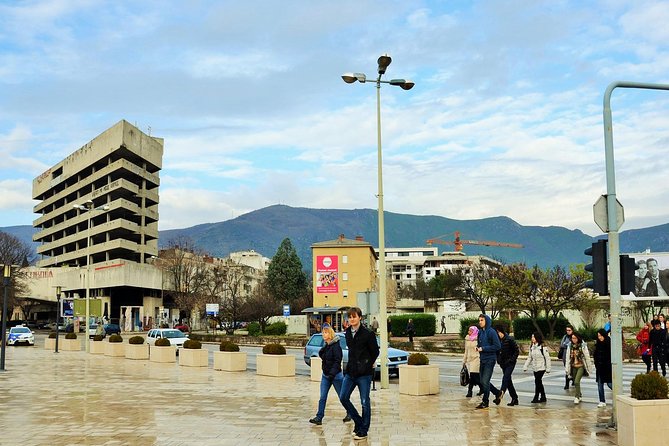
The tour starts at iHouse Travel, at Onešćukova 25 in Mostar, at 5 p.m. It returns to the same meeting point at the end. That makes the outing easy to fit into a day of sightseeing, especially if you spend the morning around the Old Bridge and want a focused afternoon activity.
Transport is part of the experience. You travel between the four locations by vehicle while the guide talks through the next chapter. This saves you from trying to find obscure sites on your own, and it also lets the story continue during the drives rather than stopping and restarting at every location.
Hotel pickup and drop-off are not included unless you choose that option. If you are not using pickup, arrive at the office with enough time to find the address. Confirmation is provided when you book, and the experience is offered in English.
The group limit is 16 people. That is not a private tour, but it is small enough for the guide’s voice and personality to carry the experience. The small format also suits the subject. This is a discussion-based outing, not a large coach tour with a script delivered from a microphone.
One practical point deserves attention. The experience requires at least two people to operate. The provider’s response to one booking explains that a solo participant may face a single supplement. Ask about the final price before committing if you are booking alone.
Chapter One: Cold War fear at Gornje Gnojnice
The first location, Gornje Gnojnice, introduces the political tensions that shaped early socialist Yugoslavia. During the drive, the guide covers World War II and the rise of the new state. At the site, the focus turns to the break between Tito and Stalin and the period known as Informbiro.
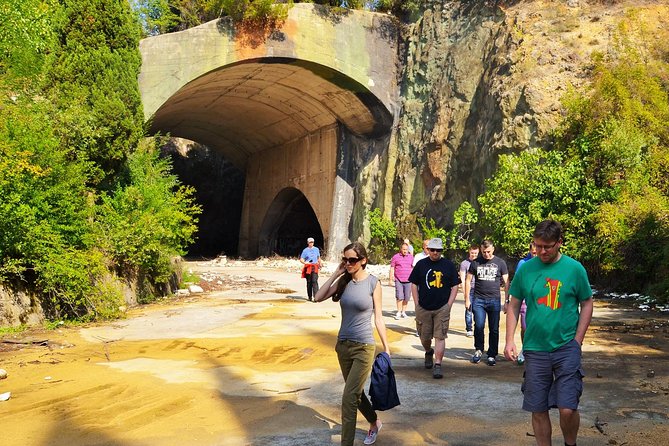
This is where the tour begins to feel different from a standard city excursion. The location is secret until arrival, and it is not presented as a neat museum with labels and display cases. Instead, the setting helps you picture a time when Yugoslavia feared pressure from the Soviet Union and began expanding its military preparations.
The guide explains how that split affected Yugoslavia’s direction. The country did not simply follow Moscow, but neither did it become a Western-style democracy. The result was a distinct socialist model, shaped by suspicion, self-protection, and the need to prove its independence.
The stop lasts about 30 minutes. Expect the guide to do most of the work here. The site itself may be abandoned or decaying, and that is worth understanding before you book. You are not coming for restored architecture. You are coming to consider what a forgotten Cold War place can tell you about fear, state power, and political memory.
The first stop is especially useful if you have little background in Yugoslav history. It provides the political foundation for everything that follows. Without it, Tito’s later popularity and Yugoslavia’s special position between East and West are harder to grasp.
Chapter Two: Tito and daily life in Rodoč
The second stop, in Rodoč, shifts from government policy to ordinary life. On the way, the guide discusses Tito’s private life, political achievements, and effort to create a form of socialism suited to Yugoslavia rather than copied directly from another country.
This section asks a practical question: What did the system feel like for an ordinary person? The answer is more complicated than a simple story of oppression or success. The guide covers Youth Work Actions, industrial growth in the 1950s and 1960s, and the hopes many people attached to education, employment, and national progress.
You also hear about Yugoslav popular culture in the 1970s and 1980s. The discussion includes brands, music, cars, and lifestyle. Those details may sound light compared with Cold War politics or war, but they are essential. They show how people experienced their country through familiar products, songs, entertainment, and shared habits.
This is one of the tour’s strongest sections because it avoids reducing Yugoslavia to a political experiment. The country was also home, and for many people it represented their youth, friendships, work, and aspirations. A guide who grew up there can explain that attachment in a way that feels personal rather than abstract.
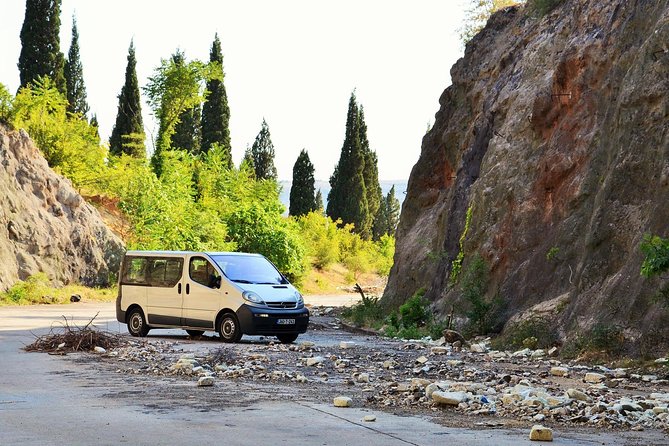
The stop lasts about 30 minutes. The site itself is not necessarily visually impressive. The value comes from the connection between place and story. You might find the location rough around the edges, but the guide uses it to discuss the gap between official ideals and daily realities.
Music is an important part of the presentation. It helps mark changes in public mood and popular taste, and it gives you a better sense of why nostalgia for Yugoslavia remains strong for some people. At the same time, the guide does not present nostalgia as the whole truth. The tour keeps the achievements and weaknesses of the system in view.
A few more of this kind worth a look:
- From Dubrovnik: Mostar and Kravica Waterfall Day Trip
★ 4.7 · 4,709 reviews - Dubrovnik: Kravica Waterfalls, Mostar and Pocitelj Day Trip
★ 4.5 · 3,045 reviews - Dubrovnik: Mostar & Kravica Waterfalls Day Trip
★ 4.8 · 1,970 reviews - Dubrovnik: Mostar and Kravice Waterfalls Small-Group Tour
★ 4.8 · 1,194 reviews
Chapter Three: The breakup at Španski trg
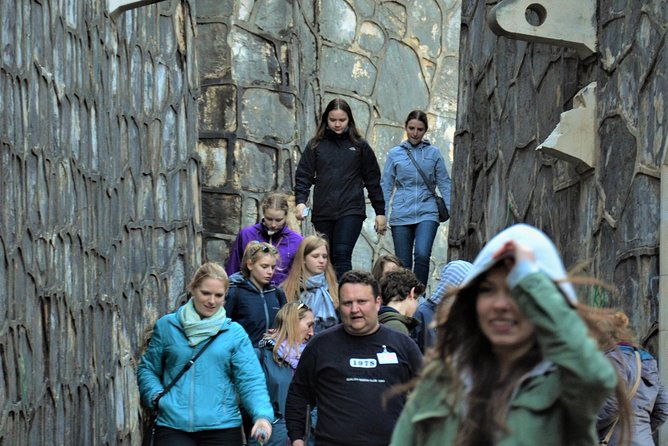
At Španski trg, the story reaches the 1980s and the collapse of Yugoslavia. The drive introduces the 1984 Sarajevo Winter Olympics and the period many people remember as the golden era of Yugoslav socialism.
This is a useful pause before the difficult material. The Olympics represent a moment when Yugoslavia projected confidence, modernity, and unity. The guide then explains how economic problems and growing nationalisms weakened that image.
From there, the discussion moves to the wars in Slovenia and Croatia, followed a year later by the war in Bosnia and Herzegovina. The guide explains how the conflict reached its most painful stage in Bosnia, and how the breakup brought destruction, displacement, and loss of life.
This part requires attention. It is not a quick list of battles, and the tour does not pretend that a few minutes can explain every political faction or military event. Instead, it offers a structured overview and places Bosnia within the wider breakup of Yugoslavia.
The guide’s communication skills matter most here. Marko and Marco receive repeated praise for making complicated history understandable, while Marin is singled out for passionate storytelling. That combination of clarity and personal commitment can help you follow a subject that is emotionally heavy and politically sensitive.
The final portion of this stop asks what the Yugoslav dream was and how it dissolved. That question gives the tour a thoughtful center. You are not asked to choose between a romantic picture of Yugoslavia and a purely negative one. You are encouraged to consider both the appeal of unity and the costs of a system that could not survive its political and economic pressures.
Chapter Four: Bosnia and Herzegovina today at Partisan Cemetery
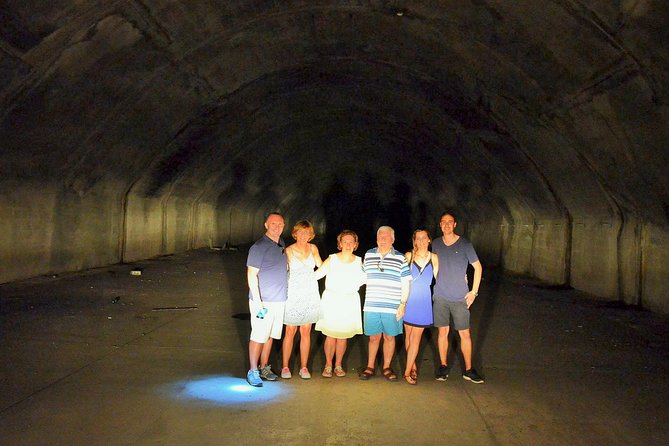
The last stop is Partisan Cemetery, where the tour turns from the past to present-day Bosnia and Herzegovina. The drive covers the country’s political structure, its current difficulties, and the challenges that remain at the beginning of the 21st century.
This is an important ending because history here is not sealed away. The war changed institutions, communities, and political relationships, and those effects continue. The guide discusses the country’s possible future inside the European Union and the need for economic, cultural, and political recovery.
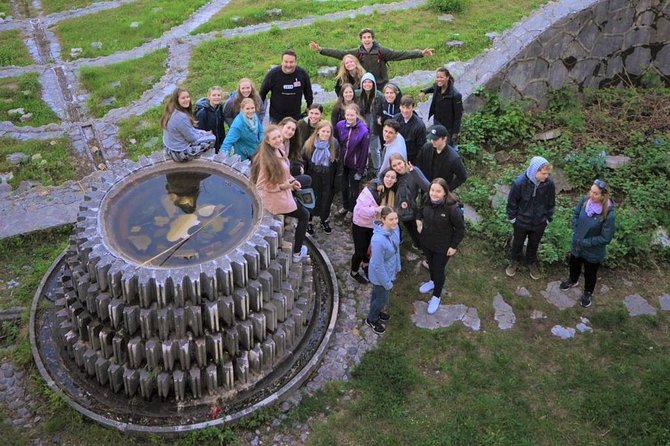
Partisan Cemetery also brings the tour back to memory. Walking through a place connected with the anti-fascist struggle and Yugoslavia’s earlier ideals, you encounter the contrast between a proud shared past and a complicated present. The final site is not simply a photo stop. It asks you to think about what should be remembered, what has been damaged, and what kind of future Bosnia and Herzegovina can build.
The official timing is about 30 minutes, though one guide reportedly extended the overall experience beyond the two-and-a-half-hour estimate. That is a pleasant bonus if you enjoy discussion, but plan your evening with some flexibility. The tour is scheduled to return to iHouse Travel, but the exact finishing time may vary.
How good is the $47.17 price?
At $47.17 per person, this is not the cheapest way to spend two and a half hours in Mostar. There are no food or drink inclusions, and admission tickets are not the main product because the sites are free. You are paying for transport, organization, and the guide’s ability to connect difficult subjects into one understandable story.
That makes the value depend on your interests. If you already know Yugoslav history and want famous monuments, the price may feel high. One dissatisfied participant considered the locations poor value, even while praising the guide.
I see the price differently for the right audience. You could not easily reach these secret locations or understand their significance on your own. The guide adds the context, music, personal memories, and historical sequence that turn neglected places into meaningful stops.
The tour is also capped at 16 people and includes taxes, fees, local taxes, and a driver-guide. For a specialist history experience with transport, that is a fair price, provided you understand that the attractions are raw and largely unpolished.
What the guides do best
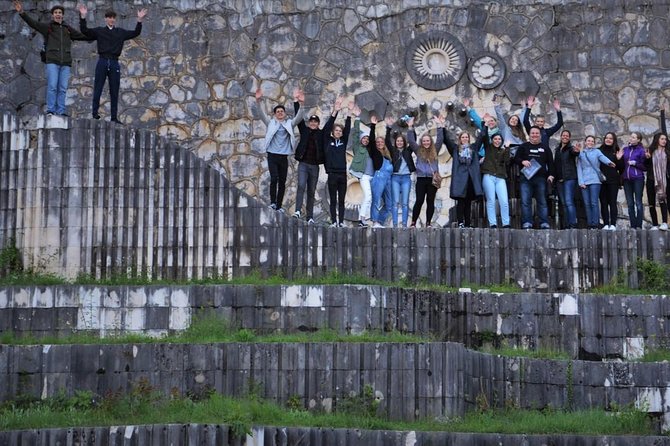
The strongest part of the experience is the guide. Sebi is praised for combining humor, information, and practical advice about Bosnia and Herzegovina. Marko and Marco receive repeated approval for their communication and storytelling, while Miran is noted for explaining Bosnian history clearly.
Dario is described as enthusiastic and able to make a complicated period easier to follow. Marin brings strong passion and personal connection to the subject. Another guide, identified as Myran, is praised for linking the sites with the broader story and selecting music that fit each period.
Those details matter because the locations alone may not carry the tour. A neglected military or industrial site can seem like an empty shell without explanation. With a strong guide, it becomes evidence of changing political priorities, lost ambitions, or the everyday texture of a vanished country.
Guide quality can vary on any group tour, but the consistent strength across the available comments is presentation. Expect humor, music, personal recollections, and a clear effort to make the material accessible. The best guides do not simply recite facts. They show how politics affected ordinary people.
Who should book this Mostar history tour?
I would recommend it most strongly to you if you:
- Want context for the Bosnian War before visiting other parts of the country
- Have an interest in Tito, Cold War politics, or socialist societies
- Prefer unusual historical sites to standard sightseeing attractions
- Enjoy personal stories, music, and discussion
- Are comfortable visiting abandoned or decaying places
- Want to understand Bosnia and Herzegovina beyond its postcard views
Families can participate, but children must be accompanied by an adult. The material includes war, political violence, destruction, and loss of life, so parents should decide if the subject suits their children.
I would be cautious if you want a scenic tour, a museum-style presentation, or a polished attraction at every stop. The locations are intentionally kept secret and may not look impressive. The experience asks you to listen and think more than simply take photographs.
The tour is offered in English and most people can participate. Free cancellation is available up to 24 hours before the 5 p.m. start time. Cancellations or changes made less than 24 hours ahead are not accepted for a refund.
FAQ
Where does The Death of Yugoslavia Tour begin?
It begins at iHouse Travel, Onešćukova 25, Mostar 88000, Bosnia and Herzegovina.
What time does the tour start?
The scheduled start time is 5 p.m.
How long does the tour last?
The tour lasts approximately two hours and 30 minutes. The actual duration may run slightly longer, depending on the guide and the discussion.
Does the tour include hotel pickup?
Hotel pickup and drop-off are not included unless you select that option when booking. The standard meeting point is iHouse Travel.
How many sites does the tour visit?
The tour visits four locations connected with Yugoslavia, the Cold War, the Yugoslav wars, and Bosnia and Herzegovina today. The locations are kept secret until the tour.
Can I cancel for a full refund?
Yes. You can cancel at least 24 hours before the experience start time for a full refund. Cancellations and changes made less than 24 hours before the start are not accepted.
Should you book it?
Book this tour if you want Mostar’s difficult modern story, not just its beautiful center. The guides are the main attraction, and the best parts are the clear timeline, personal memories, music, and access to places you would probably never find alone.
Do not book it expecting grand monuments or a tidy museum route. The sites may be abandoned, plain, or decaying. That roughness is central to the experience, but it will not suit everyone.
For history-minded visitors, I consider the $47.17 fee reasonable. You receive transport, a small group setting, and a thoughtful explanation of how Yugoslavia was built, lived in, and lost. Give yourself a flexible evening afterward, listen closely, and you will leave Mostar with a far better sense of the country behind the scenery.
Just added around Mostar
- Private Day trip to Medjugorje from Split or Dubrovnik★ 5.0 · 3 reviews
- From Dubrovnik: Sarajevo and Mostar Private Full-Day Tour★ 4.7 · 3 reviews
- From Dubrovnik to Mostar and Kravice waterfalls★ 3.5 · 3 reviews
- From Dubrovnik: Medjugorje Private Day Tour★ 4.3 · 3 reviews
- Pocitelj City Tour★ 4.5 · 3 reviews
- Mystical Sutjeska National Park★ 5.0 · 3 reviews
- Mostar Guided Tour & Sweet Delights★ 5.0 · 3 reviews
- Private tour from Split to Dubrovnik via Mostar★ 5.0 · 3 reviews
Yugoslavia & Olympic History Tours, compared.

Fall of Yugoslavia, Sarajevo War Tour with Tunnel of Hope Museum and Frontlines
Read our review →
Tunnel Museum: Bosnian & Yugoslav Wars Tour with War Veteran
Read our review →
Break-up of Yugoslavia & The War in Mostar: Life Under Siege
Read our review →
Sarajevo Grand Tour: Old Town, War Tunnel, Olympic Sites & More
Read our review →
Utopia of Tito’s Yugoslavia, Tito’s Bunker & Siege of Sarajevo
Read our review →
Olympic Mountains and Spring of Bosna River Tour
Read our review →
Experience Snowshoeing in Olympic Mountain Bjelašnica
Read our review →Browse the lists this tour appears in