
REVIEW · BOSNIAN WAR HISTORY TOURS
Utopia of Tito’s Yugoslavia, Tito’s Bunker & Siege of Sarajevo
Sarajevo keeps its secrets underground. This full-day trip links Tito’s enormous nuclear bunker near Konjic with the Sarajevo War Tunnel, Olympic ruins, mountain battle sites, and the city’s Jewish Cemetery. I like the small group of eight and the way the tour joins Yugoslavia’s Cold War fears to Sarajevo’s more recent wartime story. I also like that hotel pickup, transport, museum admissions, and an English-speaking guide are included.
The main drawback is the pace. Ten hours covers a lot of ground, and several stops are brief or outdoors. You will spend much of the day in a vehicle, and lunch is not included. Still, for a first visit to Sarajevo, this is one of the strongest ways to connect the city’s Olympic past, Yugoslav politics, and the 1992 to 1995 siege.
In This Review
- Key points about this Sarajevo history tour
- Why this tour works as a history lesson
- Konjic Bridge and the road to ARK D-0
- Inside Tito’s 6,500-square-meter nuclear bunker
- Igman’s Olympic ruins and wartime scars
- The Sarajevo War Tunnel and the fight to keep a city alive
- Dobrinja and Trebević: seeing the siege from above
- Walking the 1984 bobsleigh track
- The Jewish Cemetery and the final view of Sarajevo
- Price, group size, and what the day really includes
- Who should book this 10-hour experience?
- Should you book it?
- FAQ
- How long does the tour last?
- Is hotel pickup available?
- What admissions are included?
- Is lunch included?
- How many people can join the tour?
- What is the cancellation policy?
Key points about this Sarajevo history tour
- Tito’s bunker is the day’s headline stop: The ARK D-0 facility covers 6,500 square meters and was built to shelter about 350 Yugoslav leaders and military commanders.
- You see two very different wartime sites: The Sarajevo War Tunnel tells the story of daily survival, while the bunker shows Cold War planning on a massive scale.
- The group is limited to eight people: That makes conversation easier and gives your guide room to answer questions.
- Olympic sites appear in unexpected places: You visit Igman, Dobrinja, and Trebević, including the abandoned bobsleigh track from the 1984 Winter Olympics.
- The mountain views explain the siege: From Trebević, you can see Sarajevo’s position and better understand how the surrounding heights shaped the fighting.
- The price includes the important admissions: At $101.85 per person, the tour covers the bunker, War Tunnel, driver, air-conditioned vehicle, taxes, and pickup from Sarajevo.
Why this tour works as a history lesson
Sarajevo’s past can feel scattered if you visit sites one at a time. One museum explains the siege. Another place shows the Olympics. A separate excursion takes you to Tito’s bunker. This tour ties those pieces together in one long day.
I especially like the contrast between the two main underground sites. The bunker was built in secret to protect Yugoslavia’s ruling class from a nuclear strike. The War Tunnel was built in great urgency to help ordinary people keep Sarajevo alive during the siege. One reflects state power and fear. The other reflects survival with very limited means.
Your guide also provides the political bridge between those stories. The tour discusses the former Yugoslavia, Cold War military planning, the reasons behind the country’s collapse, and the consequences that followed. The subject is serious, but the small group format helps keep it conversational rather than turning the day into a long lecture.
Guides named in past tour experiences include Hamza, Emir, Ahmed, Salem, Amir, Agnar, and Mustafa. Their approaches may differ, but the strongest guiding style here is personal and direct. Ahmed, for example, was praised for sharing his own experience of living through the period. That kind of first-person connection can give the wartime stops more meaning than a string of dates ever could.
More war history tours:
- Fall of Yugoslavia, Sarajevo War Tour with Tunnel of Hope Museum and Frontlines
★ 5.0 · 1,314 reviews - ROSES OF SARAJEVO (Official WAR + CITY tour)- Story of a Survivor
★ 5.0 · 770 reviews - Tunnel Museum: Bosnian & Yugoslav Wars Tour with War Veteran
★ 5.0 · 551 reviews
Konjic Bridge and the road to ARK D-0
The day begins at 8 a.m. from the Funky Tours office in Sarajevo’s old town, with pickup available from your hotel. The drive toward Konjic takes you out of the city and into a different part of Bosnia and Herzegovina.
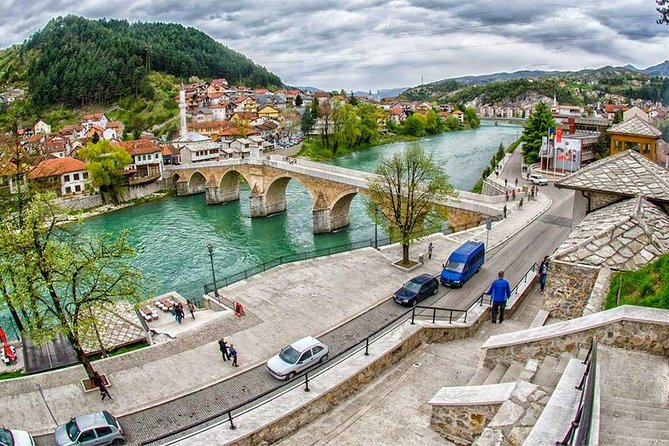
Konjic is known for its old center and its six-arch bridge from the 17th century. You get about 30 minutes here, enough for photographs and a short walk around the old part of town. The bridge crosses the Neretva River, whose turquoise water adds a striking visual pause before the bunker visit.
Do not expect a long town tour at this point. Konjic functions mainly as an introduction to the area and a quick look at an important local landmark. The short stop is useful because it breaks up the drive, but anyone hoping for a detailed exploration of Konjic may want to return separately.
The town’s other claim to fame is much less visible. Hidden nearby is ARK D-0, also called Tito’s Nuclear Bunker or the Atomic War Command. The secrecy of the project is part of its appeal. From the outside, it is easy to miss the scale of what was built inside the mountain.
Inside Tito’s 6,500-square-meter nuclear bunker
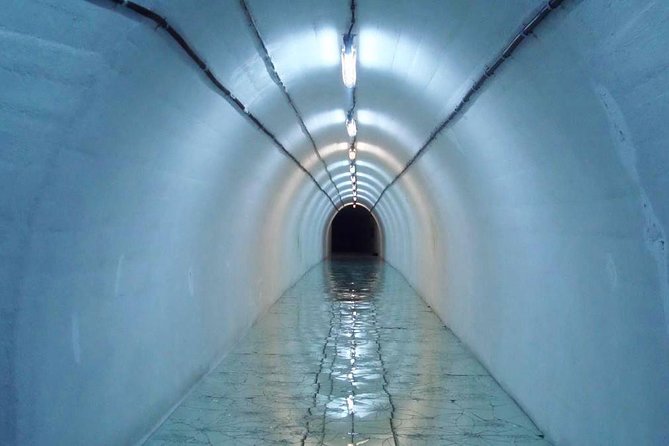
The bunker is the tour’s most unusual stop. Construction took 26 years, and the facility was designed to shelter and support roughly 350 senior Yugoslav leaders and army generals during a nuclear war.
The numbers help explain why this is not simply a military tunnel. ARK D-0 was a complete command facility, with the goal of allowing the country’s leadership to keep directing the armed forces after a nuclear attack. It was reportedly one of the Yugoslav army’s three most expensive military projects, with spending estimated at about $4.6 billion.
Inside, you walk through a maze of rooms, corridors, offices, and support areas. The bunker’s scale makes the Cold War feel physical. You are not just hearing that governments feared nuclear conflict. You are seeing the money, labor, engineering, and secrecy devoted to preparing for it.
The visit lasts about 90 minutes, and the entrance fee is included. That matters because the bunker is the part of the day most difficult to arrange as an independent visitor. You also receive a local tour inside the facility, while your main guide provides the wider Yugoslav context.
Today the bunker also serves as a venue for a biennial of contemporary art. That unusual use adds another layer to the visit. A place built for military command and political survival now hosts art, even while its original rooms and Cold War atmosphere remain intact.
The bunker is not polished into a simple tourist attraction. Its maze-like design, plain interiors, and sense of secrecy are central to the experience. If you enjoy political history, military sites, architecture, or places that reveal how governments think under pressure, this will likely be your favorite stop.
Igman’s Olympic ruins and wartime scars
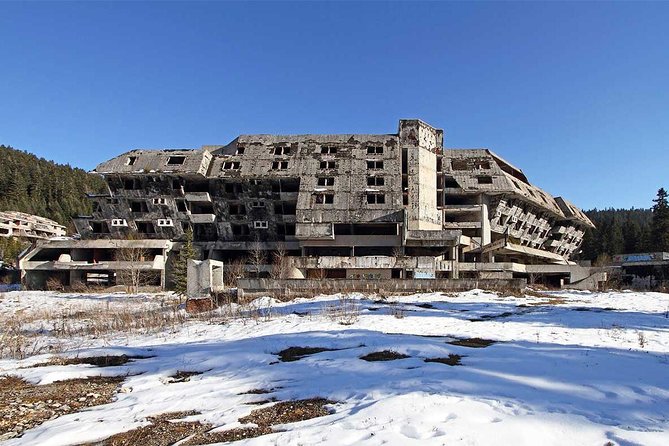
After Konjic, the route turns back toward Sarajevo and the story changes sharply. At Igman mountain, you see reminders of the 1984 Winter Olympics alongside structures damaged during the Balkan War.
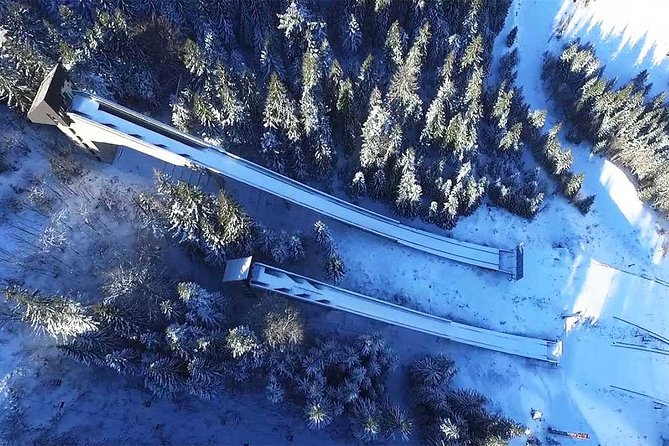
The stop lasts about an hour. You can photograph the Olympic ski jumps and, according to the day’s conditions, climb the ski jump structures. The point is not only the view. Your guide helps you picture the optimism surrounding the 1984 Games, when Sarajevo presented itself as a place of unity and international cooperation.
The Igman Olympic Hotel offers the harder contrast. Built for the Games, it was once a symbol of mountain comfort and modern Yugoslav confidence. During the war, it was badly damaged along with much of Sarajevo. The remains show how quickly an event built around peace and teamwork could be overtaken by violence.
This stop is especially effective because the Olympic sites are not treated as a separate subject. You see how the same facilities moved from international celebration to wartime use and damage. The shift is difficult to miss, even without a long explanation.
Outdoor conditions may affect how much time you want to spend here. Comfortable shoes and weather-appropriate clothing are sensible. The itinerary includes mountains, ruins, and walking, so this is not a day for staying inside the vehicle.
More Yugoslav-era history tours:
- Sarajevo Grand Tour: Old Town, War Tunnel, Olympic Sites & More
★ 5.0 · 73 reviews - Sarajevo: Olympic Mountains and Spring of Bosna River Tour
★ 5.0 · 25 reviews - Cable Car Olympic Tour With Museum
★ 5.0 · 17 reviews - Experience Snowshoeing in Olympic Mountain Bjelašnica
★ 5.0 · 7 reviews
The Sarajevo War Tunnel and the fight to keep a city alive
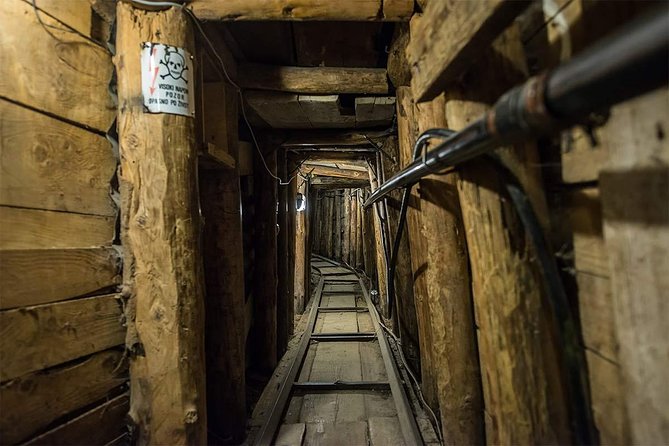
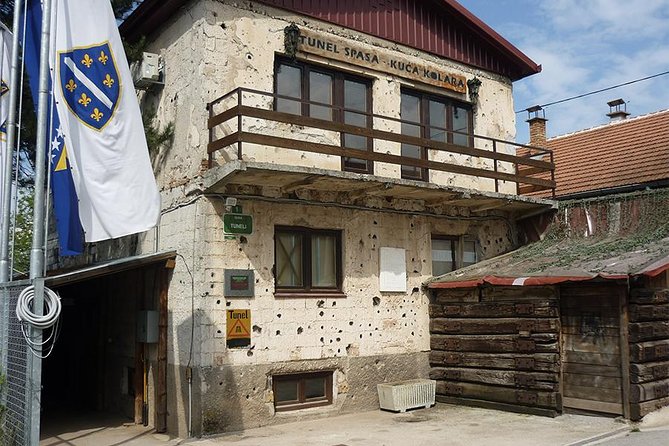
The Sarajevo War Tunnel, often called the Tunnel of Hope, brings the siege down to human scale. You first visit the museum exhibition, view objects connected with the siege, and watch a short film about why the tunnel had to be built. Then you walk through the remaining section of the tunnel itself.
The visit takes about 90 minutes, and admission is included. The tunnel was an essential underpass beneath the airport area, giving the besieged city a narrow link to the outside world. The museum helps explain the urgency behind its construction before you enter the confined passage.
This is a powerful counterpoint to Tito’s bunker. ARK D-0 was designed over decades with vast state resources. Sarajevo’s tunnel was a practical response to an immediate crisis. The comparison is not forced, but it is one of the reasons this combined tour works so well.
Expect the tunnel section to be basic and cramped. That is part of its meaning, not a flaw to be hidden. You are seeing only a portion of the original passage, but even that short walk helps you understand the physical limits placed on movement, supplies, and communication during the siege.
The War Tunnel is also where a strong guide matters most. The objects and film provide information, but a guide who can explain Sarajevo’s daily reality makes the visit far more personal. Several guides connected with this tour have been praised for passion and for making the history feel real rather than distant.
Dobrinja and Trebević: seeing the siege from above
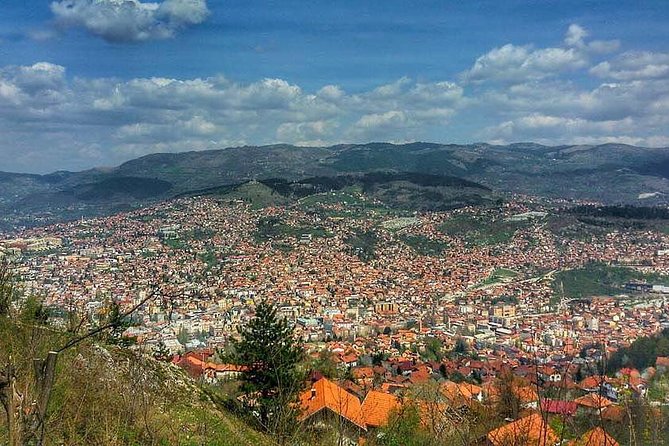
After the tunnel, the route passes through Dobrinja, an Olympic village that also became a besieged neighborhood during the war. This part of the day adds a residential setting to the story. You are not only looking at military positions or museum displays. You are considering what it meant for a neighborhood to be trapped inside a trapped city.
Trebević mountain then gives you a wider view. During the siege, much of the mountain formed part of the front line and saw repeated fighting. From the viewpoint, Sarajevo spreads below you, and the surrounding heights help explain the military advantage held by forces positioned around the city.
The view is valuable because it turns an abstract map into something you can read with your own eyes. You can see why the city was vulnerable and why control of the mountains mattered. The tour also points out areas such as Zlatište and Osmice, along with traces of bunkers, trenches, tank tracks, minefields, bullet damage, and grenade fragments.
Some remains have not been restored. You may see abandoned or damaged structures left in place rather than turned into a tidy memorial. That can feel unsettling, but it also shows how close the war remains in the physical setting.
The Trebević portion combines scenery with difficult subject matter. You get broad views over Sarajevo, but the same mountain was once a place of danger. That contrast is one of the day’s most memorable features.
Walking the 1984 bobsleigh track
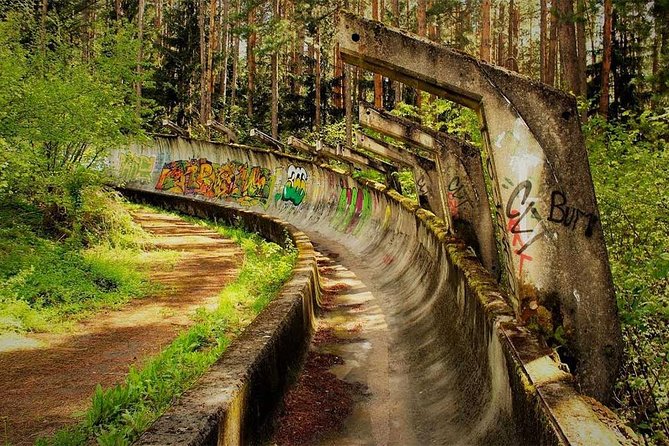
The Sarajevo Olympic Bobsleigh and Luge Track is one of the tour’s most atmospheric walks. You spend about 45 minutes moving down the famous track, which now carries layers of graffiti and street art.
The track is a striking example of a place with two identities. It was built for the 1984 Winter Olympics, then damaged and used in the wartime setting around Trebević. Today, its curved concrete walls and artwork make it a popular place for photographs, but the military scars remain part of its story.
Wear shoes suitable for walking on an uneven route. The stop is not a ride on a bobsled. It is a walk along the abandoned track, with time to look at the structure and its artwork.
I like this stop because it gives the day a change of rhythm. After museums, political history, and battlefield traces, you get a more open, visual experience. The graffiti does not erase the site’s past. It shows how later generations have claimed a damaged Olympic space for their own expression.
The Jewish Cemetery and the final view of Sarajevo
The final stop is the Jewish Cemetery, one of Europe’s largest Jewish cemeteries. You spend about 20 minutes here, looking over an area that became a front line and sniper position during the siege.
The cemetery overlooked what became known as Sniper Alley. Its location made it militarily important, but that fact sits uneasily beside its original purpose as a place of remembrance. The site brings together Sarajevo’s Jewish heritage and the geography of the 1992 to 1995 conflict.
This is a short stop, so do not expect a full cemetery history tour. Its value comes from the setting and the explanation of how a historic burial ground became part of the fighting. It is a fitting final view of a city where different periods of history often occupy the same ground.
Price, group size, and what the day really includes
The price is $101.85 per person. For a roughly 10-hour excursion, I consider that a fair price, especially because the two key admissions are covered: Tito’s Bunker costs 10 euros for an adult, and the War Tunnel costs 5 euros for an adult. The fee also includes the driver and professional English-speaking guide, air-conditioned transport, taxes, and hotel pickup from Sarajevo.
You still need to pay for lunch. The schedule is long, so plan on eating during the day, but no meal is included in the price. The tour ends back at the Sarajevo meeting point, and the office is at Besarina čikma 5 in the old town.
The maximum group size is eight. That is a major advantage on a day built around sensitive subjects. You can ask questions without competing with a large coach group, and the guide has a better chance to adjust explanations to your interests.
The tour is offered in English and uses a mobile ticket. Confirmation is sent within 48 hours of booking, subject to availability. Free cancellation is available up to 24 hours before the start time, but changes or cancellations inside that window are not accepted for a refund.
Who should book this 10-hour experience?
I would choose this tour if you want Sarajevo’s major war and Yugoslav sites explained together rather than visited as disconnected attractions. It is a particularly good fit for anyone interested in Cold War politics, the breakup of Yugoslavia, military history, architecture, or the 1984 Olympics.
It also suits solo visitors and couples who value a small group. One solo participant had the good fortune of having a guide to themselves, but the tour can still operate with up to eight people. Guides such as Salem, Mustafa, and Ahmed have been praised for warmth, personal stories, and strong explanations.
You should think twice if you dislike long driving days, mountain stops, or emotionally heavy subjects. The itinerary is full, and the combination of war ruins, sniper positions, siege history, and damaged Olympic sites can feel intense.
The tour is designed for most people, and service animals are allowed. Still, you will walk at the bunker, tunnel, cemetery, mountain sites, and bobsleigh track. Anyone with mobility concerns should ask the operator for current details before booking, since the provided information does not describe every surface or step.
Should you book it?
Yes, if you have one full day in Sarajevo and want more than a city-center overview. The bunker is the rare stop you cannot easily replace, while the War Tunnel, Trebević views, Olympic ruins, and Jewish Cemetery give the city’s recent past a clear physical setting.
The best reason to book is the connection between the sites. You see Yugoslavia’s grand Cold War plans, Sarajevo’s Olympic promise, the siege’s brutal geography, and the city’s efforts to live with its damaged places. At $101.85, with admissions and transport included, the value is strong.
Book it if you want a serious, active history day with a guide who can explain difficult events in human terms. Skip it if you want a relaxed sightseeing outing with plenty of free time. This is a packed route, but it offers an unusually clear way to understand Sarajevo.
FAQ
How long does the tour last?
The tour lasts approximately 10 hours. It begins at 8 a.m. and ends back at the meeting point in Sarajevo.
Is hotel pickup available?
Yes. Pickup can be arranged from any hotel in Sarajevo, or you can meet the group at the Funky Tours office in Sarajevo’s old town.
What admissions are included?
Admission to Tito’s Nuclear Bunker and the Sarajevo War Tunnel is included. The tour also includes all fees and taxes.
Is lunch included?
No. Lunch is not included in the tour price.
How many people can join the tour?
The tour has a maximum of eight travelers.
What is the cancellation policy?
You can cancel up to 24 hours before the experience starts for a full refund. Cancellations or changes made less than 24 hours before the start time are not accepted for a refund.
Just added around Sarajevo
- Srebrenica Genocide Tour from Sarajevo★ 4.5 · 3 reviews
- Mountain Village Lukomir Full Day Adventure Tour★ 5.0 · 3 reviews
- MTB Bjelasnica – Lukomir★ 5.0 · 3 reviews
- Sarajevo Under Siege: A City’s Struggle & Survival Tour★ 5.0 · 3 reviews
- Herzegovina Tour from Sarajevo: Mostar, Počitelj, Blagaj, Kravice★ 5.0 · 3 reviews
- Beautiful Bosnia 8 Days Tour Package★ 5.0 · 3 reviews
- Bosnian Kingdom Capitals: Travnik & Jajce Tour from Sarajevo★ 5.0 · 3 reviews
- Walking Tour in Sarajevo★ 5.0 · 3 reviews
Bosnian War History Tours, compared.

Fall of Yugoslavia, Sarajevo War Tour with Tunnel of Hope Museum and Frontlines
Read our review →
ROSES OF SARAJEVO (Official WAR + CITY tour)- Story of a Survivor
Read our review →
Tunnel Museum: Bosnian & Yugoslav Wars Tour with War Veteran
Read our review →
Sarajevo War Tour: A Veteran’s Story of the Siege (fees included)
Read our review →
Break-up of Yugoslavia & The War in Mostar: Life Under Siege
Read our review →
Sarajevo Grand Tour: Old Town, War Tunnel, Olympic Sites & More
Read our review →Browse the lists this tour appears in