
REVIEW · BOSNIAN WAR HISTORY TOURS
ROSES OF SARAJEVO (Official WAR + CITY tour)- Story of a Survivor
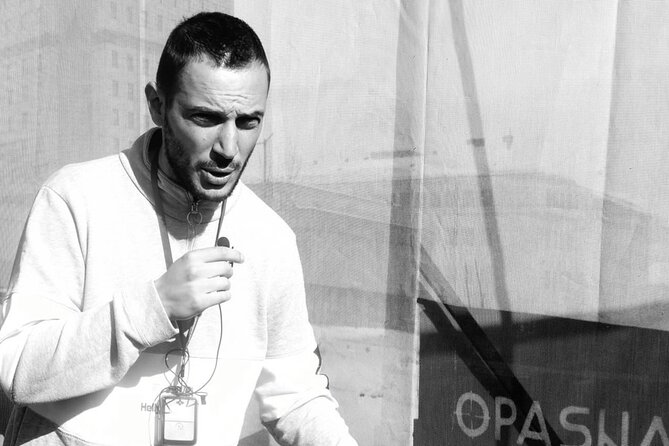
History becomes personal here. The Roses of Sarajevo tour combines the Tunnel of Hope, wartime front lines, Olympic sites, and Sarajevo’s old city with a survivor’s account of the siege. I especially like the way it connects famous sights to ordinary streets, and I value the guide’s clear explanation of Bosnia’s tangled political system. The main drawback is emotional: four hours of war stories, sniper positions, minefields, and civilian deaths can feel heavy.
This is also a practical way to cover a lot of Sarajevo. You ride in an air-conditioned minivan, get out at major viewpoints and historic sites, and return to the same central meeting point. Guide Mak receives especially warm praise for combining painful personal memories with humor and warmth, while Alen is also praised for careful explanations. The Tunnel of Hope entry fee, €10 per person, is extra.
In This Review
- Key points to know before booking
- Why this tour helps you understand Sarajevo
- The drive to the Tunnel of Hope
- Inside the Tunnel of Hope and War Museum
- Dobrinja and the survivor’s childhood
- East Sarajevo and the divided country
- Trebević viewpoints and the Olympic bobsleigh track
- The city center, Sniper Alley, and wartime scars
- Jewish Sarajevo and the European Jerusalem
- Bridges, assassination, and the City Hall
- Yellow Fortress and the final panorama
- Price, group size, and practical value
- Who should book the Roses of Sarajevo tour?
- Should you book it?
- FAQ
- How long does the Roses of Sarajevo tour last?
- Where does the tour start and finish?
- Is the Tunnel of Hope admission included?
- Is Yellow Fortress included in the tour price?
- What language is the tour offered in?
- Is transportation provided?
- How many people can join the tour?
- Can children join the tour?
- Can I cancel for a full refund?
Key points to know before booking
- The tour is led by a Sarajevo survivor: Mak’s childhood memories give the 1992 to 1995 siege a human scale that maps and dates cannot provide.
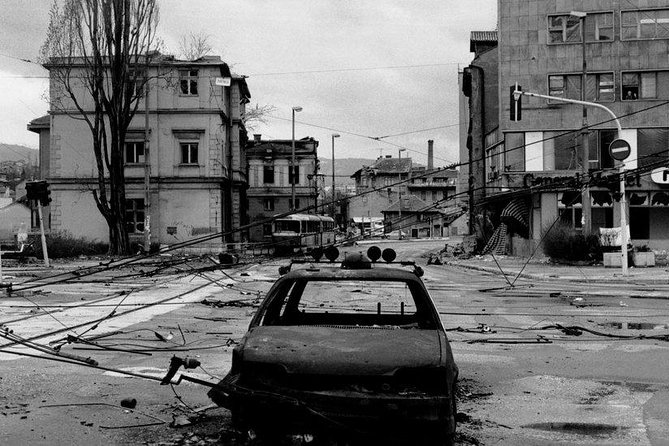
- You see Sarajevo from the ground and the hills: The route visits Sniper Alley, Dobrinja, Trebević Mountain, Urijan Dedina, and the Jewish Cemetery.
- The Tunnel of Hope is the central wartime stop: You watch a 17-minute, 44-second film, see a war house and minefields, then walk through the surviving tunnel section.
- It covers more than the war: Ottoman, Austro-Hungarian, Yugoslav, Olympic, Jewish, and modern political history all appear during the drive.
- The group stays fairly small: One guide can handle up to eight people, while the total tour capacity is listed as 15.
- The best finish is at Yellow Fortress: You get a broad Sarajevo panorama and an introduction to the city’s Ottoman past.
Why this tour helps you understand Sarajevo
Sarajevo can be confusing at first. Ottoman mosques, Austro-Hungarian facades, Yugoslav apartment blocks, Olympic structures, war damage, and newer construction all share the same compact city. The tour gives you a framework before the details blur together.
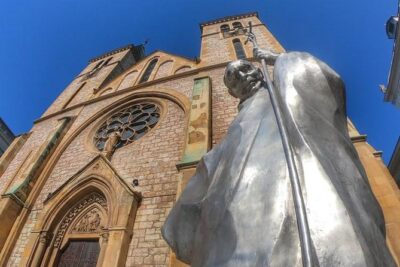
I like that it begins with the Sacred Heart of Jesus Cathedral, a Catholic landmark near the old center. This helps explain why Sarajevo is often called the European Jerusalem. The city has long brought together Muslim, Catholic, Orthodox, and Jewish communities, and the route returns to that theme at the Jewish Cemetery and Ashkenazi Synagogue.
The guide also introduces Sarajevo’s old nickname, Little Yugoslavia. It is a useful starting point for understanding the city’s mixed population and its place in socialist Yugoslavia. You will hear about the country’s breakup, the war, and Bosnia and Herzegovina’s current political structure, including its two entities.
This is not just a sightseeing loop. You are repeatedly asked to connect a monument, street, or building with the people who lived through the changes around it.
More war history tours:
- Fall of Yugoslavia, Sarajevo War Tour with Tunnel of Hope Museum and Frontlines
★ 5.0 · 1,314 reviews - Tunnel Museum: Bosnian & Yugoslav Wars Tour with War Veteran
★ 5.0 · 551 reviews - Sarajevo War Tour: A Veteran’s Story of the Siege (fees included)
★ 5.0 · 326 reviews
The drive to the Tunnel of Hope
The minivan portion matters because Sarajevo’s story is spread across the valley and surrounding hills. As you leave the center, the guide points out more than 20 monuments from the Ottoman, Austro-Hungarian, and Yugoslav periods.
That makes the driving time useful rather than wasted. You see how the city changed under different empires and governments before reaching the wartime sites. The guide also explains the large Sarajevo Rose, a mortar scar in the pavement filled with red resin to mark a place where people died. These marks are among the city’s most direct memorials, turning an ordinary sidewalk into a reminder of the siege.
The tour also covers the number of victims in 1994 and 1995. This part can be difficult, but it helps place individual memories within the wider scale of the conflict.
Inside the Tunnel of Hope and War Museum
The Tunnel of Hope Museum is the tour’s main admission stop. The entry fee is not included, so budget €10 per person. The listed visit lasts about two hours, though the overall activity runs roughly four hours and 15 minutes.
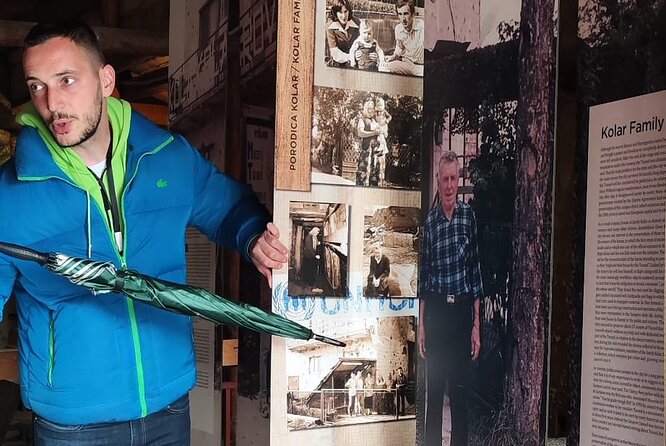
You begin with the Kolar family war house, a site connected to the tunnel entrance. The area includes minefields and displays from the 1992 to 1995 Sarajevo War Museum. You also see a war room and a place connected with wartime journals.
A 17-minute, 44-second film plays during the visit. It provides background before you walk through the tunnel itself. The surviving passage is short, but its importance is much larger than its length. During the siege, this narrow route connected Sarajevo with territory outside the encirclement and helped bring in food, medicine, fuel, and other supplies.
You get about 10 to 15 minutes of free time after the guided portion. I would use it to look closely at the displays rather than rush for photographs. The material is sobering, and the stop works best when you allow yourself time to think.
One practical point: the tunnel is not a polished museum attraction. Its power comes from its plainness and from the wartime conditions it represents. If you want a light historical outing, this part may be too intense. If your aim is to understand the siege, it is essential.
Dobrinja and the survivor’s childhood
The tour then reaches Butmirska cesta, described as a survival path and a route into free Bosnian territory. The stop lasts about 10 minutes and has no extra admission fee.
At Dobrinja, the personal element becomes even stronger. The guide was born near one of the main front lines and explains what it was like to grow up in that part of Sarajevo before, during, and after the war. This is where the experience moves beyond military history.
Mak is praised for sharing his childhood and his family’s experience in a direct but thoughtful way. His story reportedly includes escaping the city, finding refuge in Switzerland, and facing difficulties after returning home. You should not expect a detached lecture. The guide’s own life is part of the explanation.
That approach will not suit every mood, but I think it gives the tour its purpose. Sarajevo’s siege was not only about positions on a map. It shaped schooldays, family decisions, movement through the city, and life long after the shelling stopped.
A few more of this kind worth a look:
- Sarajevo: Mostar, Konjic, Blagaj Tekke, Pocitelj & Waterfall
★ 4.9 · 1,335 reviews - Sarajevo: Mostar, Konjic, Sufi House, Pocitelj & Kravice Falls
★ 5.0 · 1,179 reviews - Sarajevo: Mostar, Konjic, Počitelj, Sufi House, & Waterfalls
★ 4.9 · 572 reviews - Sarajevo: 2 Hours Old Town Walking Tour With Local Guide
★ 5.0 · 505 reviews
East Sarajevo and the divided country
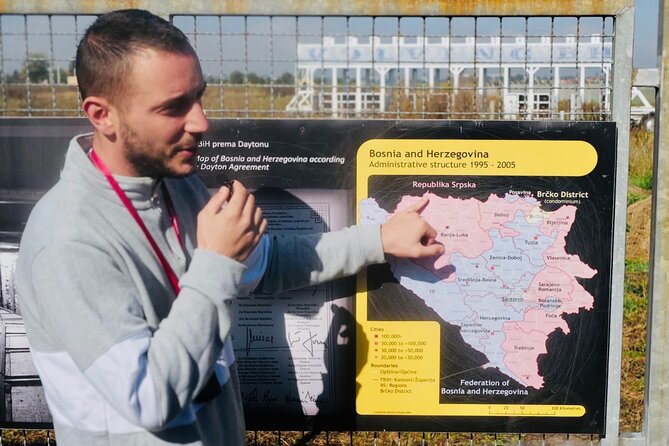
The route continues into East Sarajevo, which lies in the Republika Srpska entity of Bosnia and Herzegovina. The guide explains the differences between the country’s two entities and discusses ethnic diversity and the current political system.
This is valuable because Bosnia and Herzegovina’s government structure is famously difficult to grasp. The tour does not treat politics as a separate classroom subject. Instead, you see the physical setting and hear how the postwar division affects the country today.
You also see current war murals in East Sarajevo. These are not simply old battlefield remains. They show how memory and identity are still presented in public spaces.
Expect this part to raise questions. The guide’s role is to explain the system and its background, not to turn the tour into a complete course in constitutional law. Still, it gives you enough context to notice why Bosnia and Herzegovina can feel politically divided even when its communities share the same small country.
Trebević viewpoints and the Olympic bobsleigh track
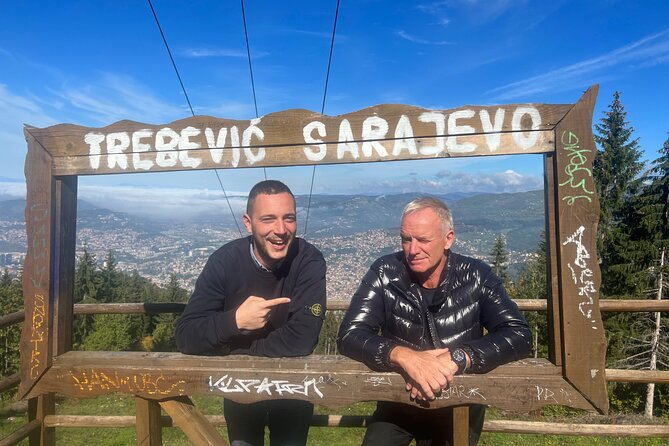
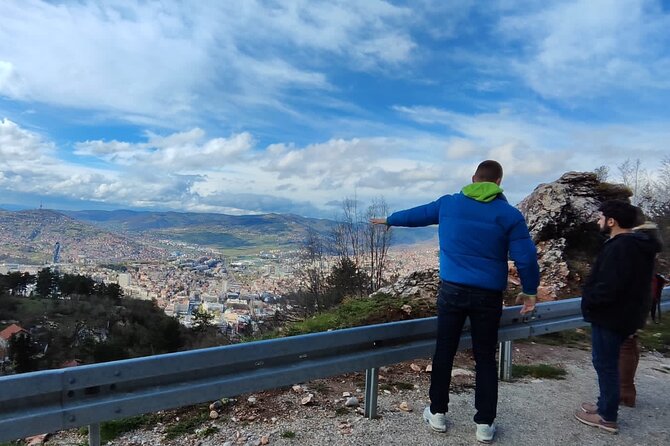
Trebević Mountain provides one of the tour’s clearest visual lessons. From Trebević Vidikovac, you see the first and second sniper zones and the mountains that overlooked Sarajevo during the siege.
The guide explains the core defensive zone and strategy of the Bosnian army. You also pass SunnyLand, a modern entertainment facility described during the tour as a former 1992 to 1995 sniper zone. That contrast can feel strange: a place linked with danger is now associated with leisure.
The nearby Urijan Dedina viewpoint is billed as the best view of Sarajevo’s Sniper Alley. From above, the valley’s shape makes the wartime geography easier to understand. You can see why roads and open spaces were so exposed, and why high ground mattered so much.
The Sarajevo Olympic bobsleigh and luge track adds another layer. Built for the 1984 Winter Olympics, it later became part of the wartime front. You walk along the track and stop at the best photo point.
I like this pairing of Olympic optimism and wartime destruction. The bobsleigh track is visually memorable, but the guide keeps it tied to Sarajevo’s wider story. It also gives you a break from the heaviest material without pretending the past disappeared.
The city center, Sniper Alley, and wartime scars
Back in the central valley, the route follows the main and deadliest section of Sniper Alley. You pass the Holiday Inn, which served as a base for war journalists and was also used in the exchange of soldiers during the siege.
The hotel helps you picture how reporters worked in a city under fire. It was not merely a backdrop for television broadcasts. It was part of the machinery through which the outside world learned about Sarajevo.
You see the Historical Museum of Bosnia and Herzegovina at a key Sniper Alley location. The National Museum appears on the Austro-Hungarian side of the city, along with an explanation of the Sarajevo Haggadah, an important Jewish manuscript associated with Sarajevo.
The middle section of the city suffered heavily during the siege. As you pass through, look for sniper bullet holes in buildings. You also see three yellow towers with leftover grenade damage, and the guide gives the United Nations’ official statistics for grenade fire from Trebević during nearly four years of the siege.
These details matter because Sarajevo’s war damage is easy to overlook. Some buildings have been repaired, repainted, or surrounded by newer construction. A good explanation helps you read the marks that remain.
Jewish Sarajevo and the European Jerusalem
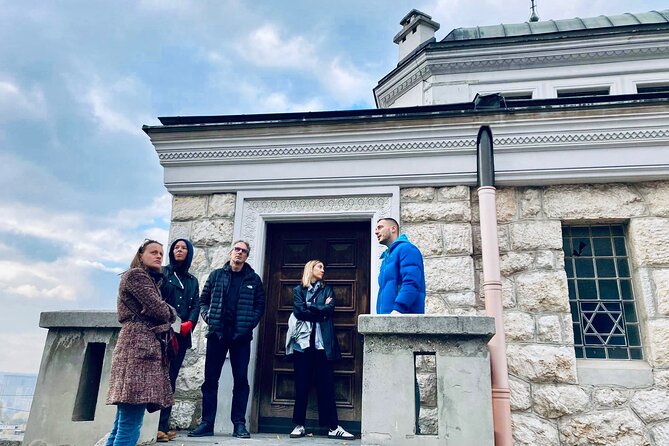
The Jewish Cemetery is one of the quieter stops. You have about 25 minutes to see monuments dating from the 16th century, hear more about Sarajevo as the European Jerusalem, and visit the memorial to Jewish victims of the Second World War.
The route also introduces the Ashkenazi Jewish community and shows the Ashkenazi Synagogue. This gives the city’s religious story more depth. Sarajevo was not defined by a single tradition, and its Jewish heritage is an important part of its identity.
I appreciate that the cemetery is not treated as a quick photo stop. It connects older Jewish life with the city’s wartime and postwar story. The tour’s broader message is that Sarajevo has repeatedly been shaped by different communities living close together, even when political forces tried to separate them.
Bridges, assassination, and the City Hall
At the Suada and Olga Bridge, you see both sides of the Vrbanja Bridge story. One side is linked with the first victim of the Sarajevo siege. The other is remembered as the Sarajevo Romeo and Juliet bridge, connected with a love story during the war.
The stop is only about five minutes, so expect a concise explanation. It is enough to place the bridge within the opening moments of the conflict, but not enough for a long walk or extended reflection.
The route also passes Skenderija, the 1984 Olympic hall, and the former frontline. From there, you move into one of the city’s most attractive Austro-Hungarian areas, with neo-Gothic architecture and more about Sarajevo’s Ashkenazi Jewish life.
At At Mejdan Park, the guide shares a particularly interesting local story. The exact detail depends on how the guide presents it, but this is one of the small historical moments that makes the city feel lived-in rather than arranged for sightseeing.
Latin Bridge brings you to the assassination of Archduke Franz Ferdinand, the event that helped trigger the First World War. Nearby Hotel Saray and the City Hall add more layers. City Hall, now the National Library, has burned twice in its history and remains one of Sarajevo’s most symbolic buildings.
This section is a reminder that Sarajevo’s major crises did not begin in the 1990s. Imperial politics, world war, socialism, nationalism, and modern division all meet in the same few streets.
Yellow Fortress and the final panorama
The tour ends at Yellow Fortress, where you get a broad view across Sarajevo and the surrounding hills. It is the strongest panorama on the route and a good place to let the day’s information settle.
The guide presents Ottoman history here, connecting the fortress and the old city below. If your timing lines up with sunset, the view becomes especially appealing, though sunset timing is not guaranteed by the tour description.
I like ending here instead of at another museum. After seeing sniper positions from above, the valley takes on a different meaning. You can identify the city’s central corridor, the hills around it, and the spaces that shaped both Sarajevo’s beauty and its vulnerability.
Price, group size, and practical value
At $53.21 per person, the tour offers strong value if you want a broad introduction to Sarajevo in one half-day. Transport is included, as is the guide, and the route covers sites that would be difficult to connect efficiently on foot.
The price does not include the €10 Tunnel of Hope admission. Yellow Fortress entry is included. The activity is offered in English and uses mobile tickets, with pickup and drop-off at Đulagina 2 in Sarajevo.
The maximum group size is 15, while one guide can handle up to eight people. That means you should expect a relatively personal setting, though the exact feel depends on the day’s group arrangement. An air-conditioned minivan is useful because the route crosses the city and climbs into the surrounding hills.
Most people can participate, and children must be accompanied by an adult. Wear shoes suitable for short walks and expect a full schedule of stops. The tour ends back at the starting point.
Free cancellation is available up to 24 hours before the start time. If the minimum number is not reached and the operator cancels, you are offered another date or experience, or a full refund.
Who should book the Roses of Sarajevo tour?
I would choose this tour early in a Sarajevo visit, especially if you have only one or two days. It gives you the political, religious, architectural, and wartime background needed to make later walks through the old town more meaningful.
It suits you best if you want:
- A serious look at the Siege of Sarajevo
- First-person stories alongside historical facts
- A mix of museums, viewpoints, monuments, and neighborhoods
- Help understanding Bosnia and Herzegovina’s current political divisions
- Comfortable transport between widely scattered sites
- A small-group tour with room for questions
I would think twice if you want a relaxed city tour with little discussion of violence. The war is not a short aside here. It shapes much of the route, and the guide’s personal account can be heartbreaking.
Should you book it?
Yes, if you want to understand Sarajevo rather than simply photograph it. The Tunnel of Hope, Sniper Alley, Dobrinja, the hills, and the bobsleigh track show the physical story, while Mak’s personal account gives it a human voice.
The best reason to book is the combination of coverage and connection. In four hours and 15 minutes, you see Ottoman, Austro-Hungarian, Yugoslav, Olympic, Jewish, and wartime Sarajevo, then finish above the city at Yellow Fortress. Add the €10 tunnel fee to your budget, prepare for difficult material, and book this as one of your first Sarajevo experiences.
FAQ
How long does the Roses of Sarajevo tour last?
The tour lasts approximately four hours and 15 minutes.
Where does the tour start and finish?
It starts at Đulagina 2, Sarajevo 71000, Bosnia and Herzegovina, and ends back at the same meeting point.
Is the Tunnel of Hope admission included?
No. The Tunnel of Hope Museum entrance costs €10 per person and is paid separately.
Is Yellow Fortress included in the tour price?
Yes. Admission to Yellow Fortress is included.
What language is the tour offered in?
The tour is offered in English.
Is transportation provided?
Yes. The experience includes transport in an air-conditioned minivan and a driver-guide.
How many people can join the tour?
The total activity capacity is 15 people, and one guide can have a maximum of eight people.
Can children join the tour?
Yes. Children must be accompanied by an adult.
Can I cancel for a full refund?
Yes. You can cancel at least 24 hours before the start time for a full refund. Cancellations or changes made less than 24 hours before the start are not refunded or accepted.
Just added around Sarajevo
- Srebrenica Genocide Tour from Sarajevo★ 4.5 · 3 reviews
- Mountain Village Lukomir Full Day Adventure Tour★ 5.0 · 3 reviews
- MTB Bjelasnica – Lukomir★ 5.0 · 3 reviews
- Sarajevo Under Siege: A City’s Struggle & Survival Tour★ 5.0 · 3 reviews
- Herzegovina Tour from Sarajevo: Mostar, Počitelj, Blagaj, Kravice★ 5.0 · 3 reviews
- Bosnian Kingdom Capitals: Travnik & Jajce Tour from Sarajevo★ 5.0 · 3 reviews
- Beautiful Bosnia 8 Days Tour Package★ 5.0 · 3 reviews
- Walking Tour in Sarajevo★ 5.0 · 3 reviews
Bosnian War History Tours, compared.

Fall of Yugoslavia, Sarajevo War Tour with Tunnel of Hope Museum and Frontlines
Read our review →
Tunnel Museum: Bosnian & Yugoslav Wars Tour with War Veteran
Read our review →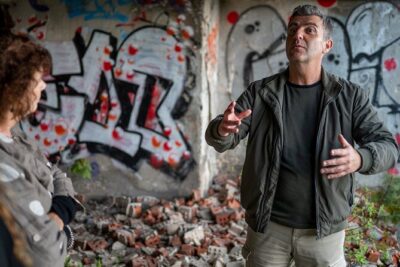
Sarajevo War Tour: A Veteran’s Story of the Siege (fees included)
Read our review →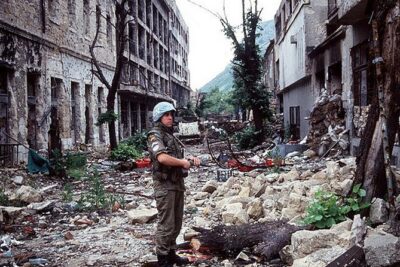
Break-up of Yugoslavia & The War in Mostar: Life Under Siege
Read our review →
Sarajevo Grand Tour: Old Town, War Tunnel, Olympic Sites & More
Read our review →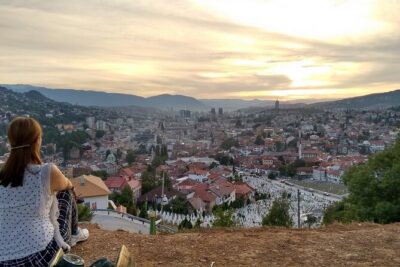
War Times Experience in Sarajevo – Half Day Tour
Read our review →Browse the lists this tour appears in