
REVIEW · CITY TOURS
Mostar city Tour
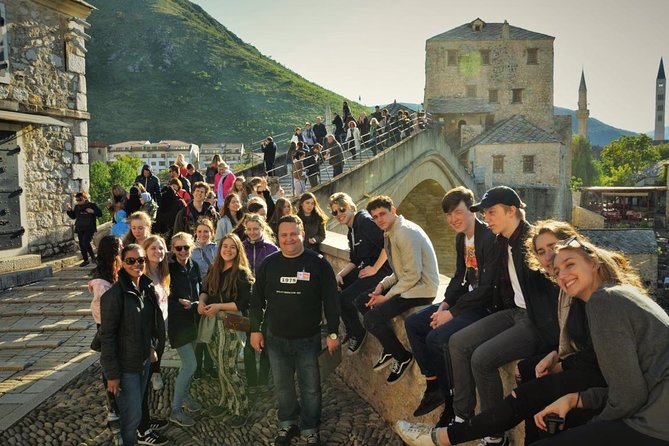
Mostar’s stones carry a complicated story. I like that this two-hour walking tour reaches beyond the Old Bridge, and I like the chance to hear local history from guides such as Marko, who lived through the 1991 to 1993 war as a teenager. The main tradeoff is that the group may include as many as 55 people, so the experience may feel less personal at full capacity.
The tour begins at iHouse Travel on Onesčukova Street, about 200 meters from the Old Bridge, then returns to the same point. It is a good first look at Mostar, though the early 9:00 am start and the lack of included food or drinks mean you should plan a little around it.
In This Review
- Key points to know before you book
- Why this Mostar walk is more than an Old Bridge photo stop
- Meeting at iHouse Travel on Onesčukova Street
- Following Mostar from the Ottoman era to Austro-Hungarian rule
- Seeing the socialist-era city and damaged financial district
- What the guide adds to the two-hour route
- Price, group size, and the real value
- Who will get the most from this tour
- Timing, weather, and a useful backup plan
- Is Mostar City Tour worth booking?
- FAQ
- How long does Mostar City Tour last?
- What time does the tour start?
- Where does the tour meet?
- Where does the tour finish?
- Is the tour offered in English?
- What is included in the price?
- Are food and drinks included?
- Can I cancel for a full refund?
Key points to know before you book
- The tour looks beyond the Old Bridge: You explore Mostar’s older center, later Austro-Hungarian areas, socialist-era architecture, and war-damaged parts of town.
- Marko brings personal context: His experience as a teenager during the 1991 to 1993 war adds a human voice to difficult history.
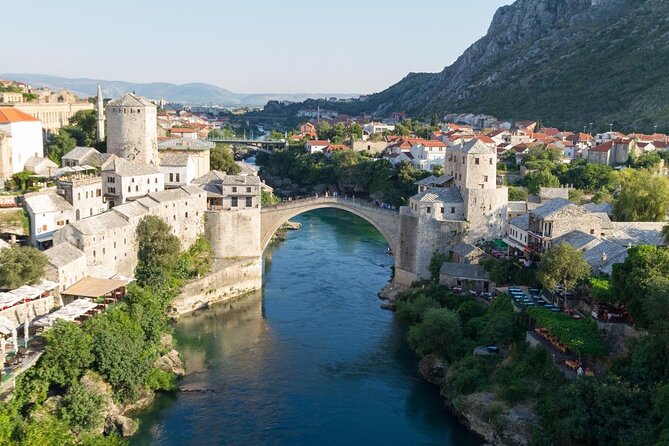
- The Old Bridge is the visual high point: You get striking views of Mostar’s UNESCO-listed bridge while learning why the city grew around it.
- The meeting point is central: iHouse Travel is on the main cobblestone street, only about 200 meters from the bridge.
- The price is modest for a first orientation: At $23.72 per person, the walk can save you time and help you understand what you see afterward.
- The booking rules are simple but firm: At least two people must book, and cancellations must be made at least 24 hours ahead for a full refund.
Why this Mostar walk is more than an Old Bridge photo stop
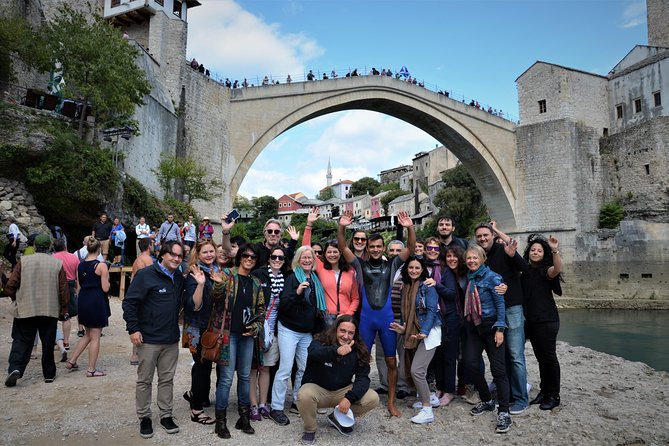
Mostar is easy to admire and harder to understand. You can cross the famous bridge, browse the stone lanes, and take in the Neretva River in a short visit. But without some background, the town can look like a pretty historic center with a few damaged buildings nearby.
This walk puts those pieces together. You move through different periods, from the Ottoman era in the early 16th century to Austro-Hungarian rule, then to Yugoslavia and the conflicts of the late 20th century. That change of setting is the real point of the tour. You are not only looking at monuments. You are seeing how political shifts changed the shape and daily life of Mostar.
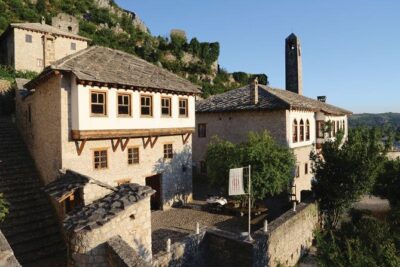
I especially like the way the route reaches outside the Old Town’s tight core. Mostar’s best-known sights are concentrated around the bridge, but the wider center helps explain how the city grew, modernized, suffered, and carried on. You may walk along cobblestones, pass beneath plane trees, and then reach areas where the effects of war remain visible.
The tone also matters. A local guide can explain details that are hard to pick up from signs or a guidebook. Marko is singled out for explaining the city’s past clearly and for answering many questions. His personal connection to the war years gives the recent past a direct human dimension, though some people may prefer to process that subject slowly and independently.
A few more of this kind worth a look:
- From Dubrovnik: Mostar and Kravica Waterfall Day Trip
★ 4.7 · 4,709 reviews - Dubrovnik: Kravica Waterfalls, Mostar and Pocitelj Day Trip
★ 4.5 · 3,045 reviews - Dubrovnik: Mostar & Kravica Waterfalls Day Trip
★ 4.8 · 1,970 reviews
Meeting at iHouse Travel on Onesčukova Street
The meeting point is practical. iHouse Travel is at Onesčukova 25 in the historic center, on the main cobblestone street and on the west side of the Neretva River. It is about 200 meters from the Old Bridge, so you will not need a long transfer or a complicated search outside town.
The start time is 9:00 am. That is useful if you want to see Mostar before the center becomes busier, or if you are using the walk to plan the rest of your day. It also means you need to be in place early, especially if you are staying outside the central area.
The tour returns to the starting point. That makes the walk easy to combine with your own plans. Afterward, you can revisit a section that interested you, stop for a meal, or continue sightseeing without needing to work out where the guide will leave you.
The meeting arrangement is one of the strongest practical features here. A central start matters in Mostar because the old center has pedestrian lanes and cobblestones rather than a simple vehicle drop-off point. You should still allow time to find the address, since the historic center can be confusing on a first visit.
Following Mostar from the Ottoman era to Austro-Hungarian rule
The early part of the experience focuses on the foundations of Mostar’s historic identity. The tour covers monuments dating from the early 16th century, when the Ottoman period shaped the town’s architecture, streets, and public life.
The Old Bridge is the obvious centerpiece. Its setting over the Neretva gives you the classic Mostar view, but the guide adds meaning to what you are seeing. The bridge is not treated as an isolated photo background. It is part of the city’s older pattern, where the river, crossing point, lanes, and surrounding buildings all work together.
You should expect views of the bridge rather than a separate attraction entry or a special bridge activity. The value comes from seeing it in context. If you arrive in Mostar mainly for photographs, the walk gives you the background that turns those photographs into something more than attractive scenery.
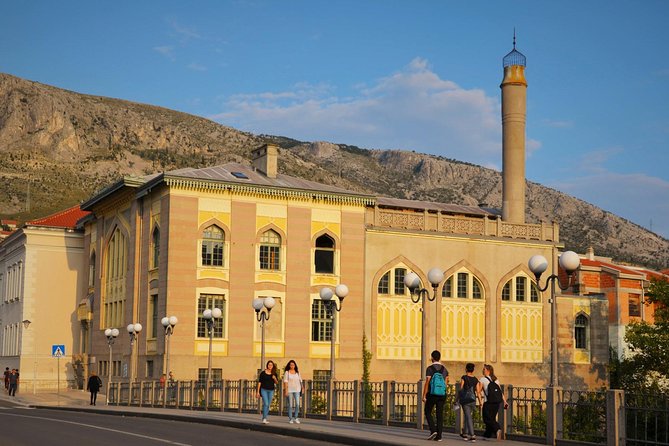
The tour then follows Mostar through the Austro-Hungarian period, described as a romantic fin de siècle chapter. This change is important because the town’s character shifts as you move away from its Ottoman core. The result is a useful visual lesson in how empires leave different marks on a single place.
The supplied details do not name every monument or promise entry into specific buildings. That is worth keeping in mind. This is a guided city walk, not a museum tour with guaranteed interior visits. You should book it for the explanation and route rather than expecting a long list of indoor attractions.
Seeing the socialist-era city and damaged financial district
Mostar’s later history is not confined to the old stone center. The walk also addresses socialist realism from the Yugoslav period and takes you toward a war-torn financial district.
This is where the experience gains weight. You begin with the romantic image of Mostar, then see the marks of more recent political and economic change. The contrast can be stark. Historic streets and plane-shaded lanes sit alongside buildings and districts shaped by the violence of the 1991 to 1993 war.
Marko’s story is particularly useful here. He was a teenager during those war years, and his explanations give the subject a local point of view. His account, as described in the tour feedback, helped connect the city’s damaged areas with the struggle for independence and the country’s difficult path.
That part of the walk may not suit someone who wants a purely light sightseeing outing. Mostar’s wartime past is central to understanding the city, and the tour does not appear to avoid it. I see that as a strength, but you should allow yourself time afterward if you prefer not to rush from difficult material straight into lunch or another organized activity.
The tour also helps you notice that Mostar is not only an Ottoman postcard. Its story continues through Yugoslavia and into the late 20th century. You get a better sense of why different districts look so unlike one another, and why the city’s identity cannot be reduced to a single bridge or architectural style.
Something different, still around Mostar:
- Dubrovnik: Mostar and Kravice Waterfalls Small-Group Tour
★ 4.8 · 1,194 reviews - From Split or Trogir: Mostar & Kravica Waterfall Group Tour
★ 4.7 · 929 reviews - From Dubrovnik: Mostar and Medjugorje Full-Day Tour
★ 4.4 · 898 reviews - Discover Herzegovina Day Tour from Mostar: Kravice Waterfalls, Blagaj, Počitelj
★ 5.0 · 742 reviews
What the guide adds to the two-hour route
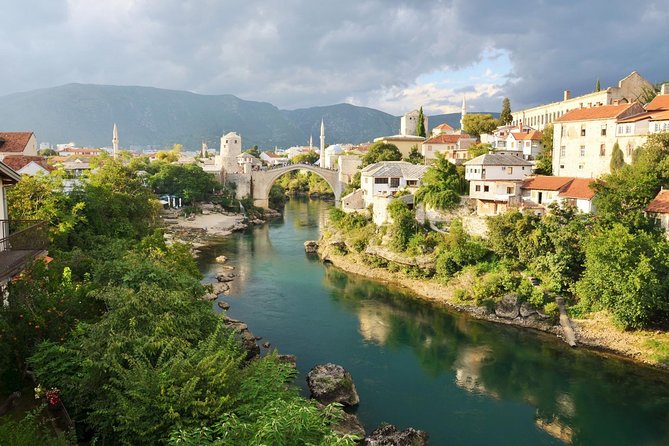
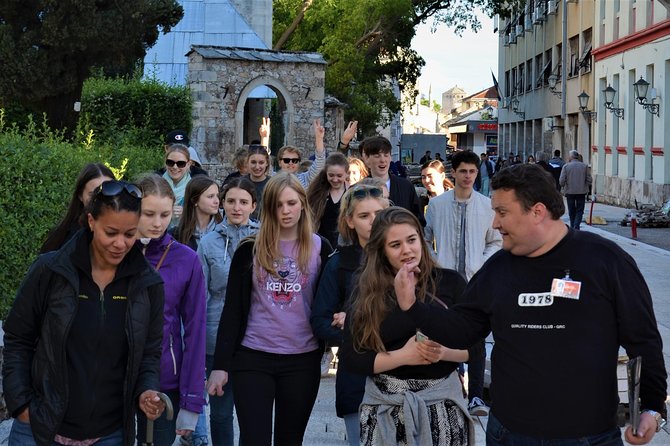
A good city walk depends heavily on the guide, and the strongest praise here centers on the guiding. Marko is described as informative, generous with answers, and able to explain both the old and new parts of Mostar.
That matters because the route covers a large time span in a short period. You are moving from the early 16th century to the late 20th century in roughly two hours. A clear guide can keep that story from becoming a blur of dates and political labels.
The experience seems especially useful if you ask questions. One account describes a guide who answered many questions and helped make the walk feel worthwhile enough to repeat in reverse afterward. That says something about the amount of material covered, though it also suggests that the tour may move at a brisk pace.
The guide’s role is not limited to pointing out buildings. You are given a way to read the city. Ottoman-era monuments, Austro-Hungarian additions, Yugoslav structures, and war damage become connected chapters rather than unrelated sights.
The tour is offered in English. A professional local guide is included, which is important for a subject that can involve sensitive history and competing memories. Still, the exact guide is not guaranteed, so you should view Marko’s personal approach as a strong example of what the experience can offer, not a promise that he will lead every departure.
Price, group size, and the real value
The cost is $23.72 per person. For an approximately two-hour guided walk in central Mostar, that is a reasonable price, particularly if this is your first visit and you want a quick orientation before exploring alone.
I would judge the value by what you want from the morning. If you only need directions to the Old Bridge, you can manage without a paid walk. If you want the city’s Ottoman, Austro-Hungarian, Yugoslav, and wartime layers explained in one route, the fee is easier to justify.
The tour has a maximum group size of 55 people. That is a notable limitation. A group that large can make it harder to hear, ask questions, or stay close to the guide on narrow cobblestone streets. The experience may be more intimate when bookings are light, but you should not assume a small-group format.
At least two people are required per booking. Solo visitors should check availability before making plans, since a single-person reservation may not meet the booking condition.
Food and drinks are not included. That is normal for a walking tour of this length, but you should bring your own water if needed and plan a separate stop afterward. The tour returns to the starting point, so arranging breakfast or an early lunch nearby should be straightforward.
Who will get the most from this tour
I would choose this walk if you are visiting Mostar for the first time and want the basic map of the city in your head early. It gives you a starting point for later independent walks and helps you decide which streets and monuments deserve a second look.
It also suits anyone interested in political and social history. The route does not stop with attractive architecture. It addresses imperial rule, Yugoslav socialism, independence, and wartime damage, all within the physical setting where those changes played out.
Families can join, but children must be accompanied by an adult. The pace and subject matter may work better for older children and teenagers than for very young children, although the supplied details do not set a minimum age.
The walk is also a good fit for visitors who prefer a central activity without transport. It begins and ends in Mostar’s historic center, stays within the city, and does not require a separate vehicle or transfer.
You may want another kind of experience if you dislike group tours, need a very slow pace, or want guaranteed access inside specific monuments. The possible 55-person maximum is the main concern for people who value close contact with a guide.
Timing, weather, and a useful backup plan
The stated duration is about two hours, though one account describes the walk as roughly an hour and a half. I would allow the full two hours in your schedule and treat any shorter finish as a bonus.
Weather can affect the experience. This is an outdoor walk through cobblestone streets and open city areas, so rain may change the plan. In one case, bad weather led to the city tour being cancelled, while the guide offered a different small-group arrangement that included other stops. That alternative is not part of the standard promise, so you should not book expecting it, but it shows that weather decisions may be handled with some flexibility.
The best practical approach is to keep your first morning in Mostar somewhat open. If conditions are poor, contact the operator rather than assuming the route will run unchanged. Comfortable walking shoes are sensible because the route includes cobblestone streets, although the supplied information does not list a required dress code or special equipment.
Free cancellation is available if you cancel at least 24 hours before the local start time. Cancellations or changes made inside that window are not refunded or accepted, so do not wait until the last morning if your plans are uncertain.
Is Mostar City Tour worth booking?
I would book it for a first visit, especially if you want more than a quick bridge photograph. The strongest reasons are the wide historical scope, the central route, and the chance to hear local explanations of the city’s difficult recent past.
At $23.72, it offers good value when you use it as an orientation walk. You can spend the rest of the day returning to places that caught your attention, now with a clearer sense of how they fit into Mostar’s story.
I would hesitate only if a group of up to 55 feels too large for you, or if you want a private guide and a slower, highly customized pace. For most first-time visitors who want a direct introduction to Mostar, this is a sensible two-hour start.
FAQ
How long does Mostar City Tour last?
The tour lasts approximately two hours. One experience account described it as about an hour and a half, so you should allow two hours when planning your day.
What time does the tour start?
The tour starts at 9:00 am local time.
Where does the tour meet?
The meeting point is iHouse Travel at Onesčukova 25 in Mostar’s historic center. It is about 200 meters from the Old Bridge, on the west side of the Neretva River.
Where does the tour finish?
The tour returns to the starting point at iHouse Travel.
Is the tour offered in English?
Yes. The tour is offered in English.
What is included in the price?
A professional local guide is included.
Are food and drinks included?
No. Food and drinks are not included.
Can I cancel for a full refund?
Yes, if you cancel at least 24 hours before the experience starts. Cancellations or changes made less than 24 hours before the start time are not refunded or accepted.
Just added around Mostar
- Private Day trip to Medjugorje from Split or Dubrovnik★ 5.0 · 3 reviews
- From Dubrovnik: Sarajevo and Mostar Private Full-Day Tour★ 4.7 · 3 reviews
- From Dubrovnik to Mostar and Kravice waterfalls★ 3.5 · 3 reviews
- From Dubrovnik: Medjugorje Private Day Tour★ 4.3 · 3 reviews
- Pocitelj City Tour★ 4.5 · 3 reviews
- Mystical Sutjeska National Park★ 5.0 · 3 reviews
- Mostar Guided Tour & Sweet Delights★ 5.0 · 3 reviews
- Private tour from Split to Dubrovnik via Mostar★ 5.0 · 3 reviews
City Tours, compared.

ROSES OF SARAJEVO (Official WAR + CITY tour)- Story of a Survivor
Read our review →
Delicious Sarajevo: Eat, Walk & Discover City Tour
Read our review →
Banja Luka City Tour & A magical journey on Dayak boat
Read our review →
Private group city tour of Mostar and the Old Bridge
Read our review →

Sarajevo Under Siege: A City’s Struggle & Survival Tour
Read our review →Browse the lists this tour appears in