
REVIEW · BOSNIAN WAR HISTORY TOURS
Sarajevo City SIghtseeing / War Bike Tour
Sarajevo reveals itself best at street level. This six to seven-hour ride combines the city’s Ottoman core, Austro-Hungarian landmarks, wartime sites, and the countryside spring of the Bosna River, giving you far more range than a standard walking tour. I especially like the small maximum group of 10, which keeps the outing personal, and the chance to visit the Tunnel of Hope with a local guide who can connect places to Sarajevo’s recent past.
The main consideration is the distance. One account puts the ride at just over 25 miles, so this is not a gentle spin around a few central sights. You should be comfortable cycling for much of a day, and you should also keep Sarajevo’s weather in mind because the tour may be changed or canceled in poor conditions.
In This Review
- Key points at a glance
- Why this Sarajevo bike tour works so well
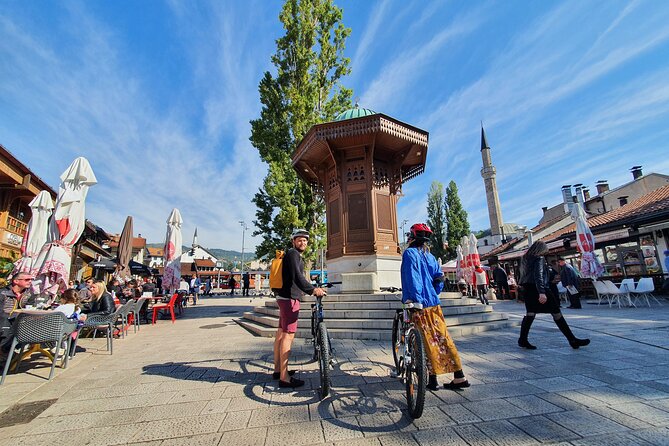
- Starting in Baščaršija at Sebilj Fountain
- Ottoman Sarajevo, City Hall, and the House of Spite
- Latin Bridge and Sarajevo’s layered faiths
- Sacred Heart Cathedral and modern Sarajevo
- Riding out to Vrelo Bosne
- Understanding the Siege at the Tunnel of Hope
- The guides make the difference
- Is $138.34 a fair price?
- Who should book this experience?
- Should you book the Sarajevo War Bike Tour?
- FAQ
- Where does the Sarajevo City Sightseeing and War Bike Tour start?
- What time does the tour begin?
- How long does the tour last?
- Where does the tour finish?
- What language is the tour offered in?
- How many people can join the tour?
- Is bicycle use included?
- Are the Vrelo Bosne and war tunnel admission fees included?
- How far do you cycle?
- Can you cancel for a full refund?
Key points at a glance
- More than an old-town tour: You see Baščaršija, major religious buildings, the City Hall, Parliament, Vrelo Bosne, and the war tunnel in one day.
- A serious cycling distance: The route can cover more than 25 miles, making fitness and comfortable clothing important.
- The Tunnel of Hope is included: Your admission fee covers the war tunnel museum, one of Sarajevo’s most important modern-history sites.
- Local guides shape the day: Mustafa, Mirza, Said, Kamer, and Arna are praised for clear storytelling, care, and useful local advice.
- A small group helps: With no more than 10 people, you have a better chance to hear the guide and ask questions.
- Good value for a full day: At $138.34 per person, the price includes bike use, helmet, both admission fees, and a guide-led route across the city and its outskirts.
Why this Sarajevo bike tour works so well
Sarajevo is a city where several centuries sit close together. In a short walk, you can pass Ottoman market lanes, a Catholic cathedral, an Orthodox church area, Islamic landmarks, Austro-Hungarian buildings, and reminders of the 1990s siege. A bike lets you connect these parts without spending the whole day on foot.
I like the way this tour links famous sights with places that explain how the city functions. Sebilj Fountain and Kazandžiluk introduce you to old Baščaršija. Latin Bridge places Sarajevo in the story of World War I. Vrelo Bosne gives you a change of pace, while the Tunnel of Hope shifts the focus to the Bosnian War.
The guides are a major part of the experience. Mustafa is praised for taking time with the city highlights while adding less obvious stops. Mirza is described as both entertaining and informative, an important balance on a long ride. Said is noted for being charming and accommodating, while Arna is praised for her passion for Bosnian history and culture and for suggesting places to eat, shop, and visit afterward.
The small group matters here. A maximum of 10 people is much easier to manage than a large cycling convoy, especially when the guide stops to explain a building or a difficult chapter of Sarajevo’s past.
More war history tours:
- Fall of Yugoslavia, Sarajevo War Tour with Tunnel of Hope Museum and Frontlines
★ 5.0 · 1,314 reviews - ROSES OF SARAJEVO (Official WAR + CITY tour)- Story of a Survivor
★ 5.0 · 770 reviews - Tunnel Museum: Bosnian & Yugoslav Wars Tour with War Veteran
★ 5.0 · 551 reviews
Starting in Baščaršija at Sebilj Fountain
The tour starts at 9:00 a.m. at Obala Isa-bega Ishakovića 3, close to Sarajevo’s old center and public transportation. The route begins at Sebilj, the famous wooden fountain in Baščaršija.
Sebilj was built in the 18th century and has become one of the city’s best-known meeting points. Its Ottoman design, surrounding cobbles, cafes, and small shops give you an immediate sense of Sarajevo’s old commercial heart. This is a brief stop, listed at about five minutes, so treat it as an introduction rather than a long photo session.
From here, you move into Kazandžiluk, one of the oldest streets in Baščaršija. The lane is pedestrian-only and lined with coppersmith workshops. Look for coffee pots, trays, jewelry, and other handmade copper goods, often decorated with fine patterns.
This is a useful place to learn that Baščaršija is not simply a preserved tourist quarter. Its crafts point to the working Ottoman market that shaped Sarajevo for centuries. If you want a souvenir, copperware is more meaningful here than a generic city magnet, though the short schedule may not leave much time for serious shopping.
Ottoman Sarajevo, City Hall, and the House of Spite
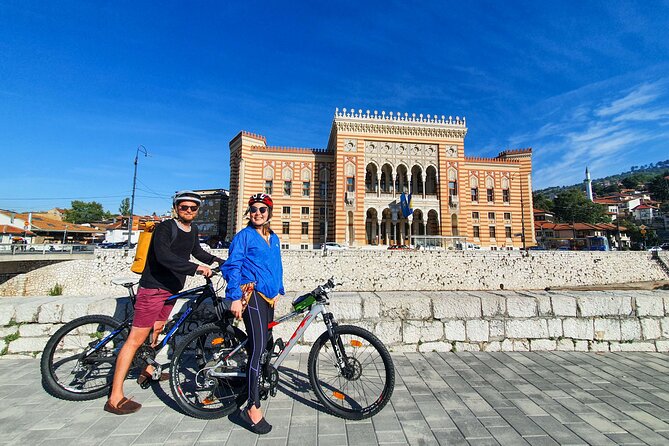
The ride continues toward Vijećnica, Sarajevo’s City Hall. Built in 1894, the building uses Moorish Revival design, with elaborate forms that reflect the city’s Austro-Hungarian period.
Vijećnica later housed the National Library and suffered heavy damage during the Siege of Sarajevo in 1992. It reopened after restoration in 2014 and now serves as a national monument and cultural venue. The building gives the guide a natural way to explain how Sarajevo changed under different empires and how war damaged more than homes and roads.
Across the river is Inat Kuća, or the House of Spite. The story is wonderfully Sarajevo: when authorities wanted the site for City Hall, the owner refused to sell. The house was moved brick by brick to the opposite bank.
Today, it operates as a restaurant serving traditional Bosnian food. The stop itself is short, but the tale is memorable because it gives a human face to a major building project. If you return later for a meal, check the time carefully, since the tour does not appear to include a full restaurant visit.
Latin Bridge and Sarajevo’s layered faiths
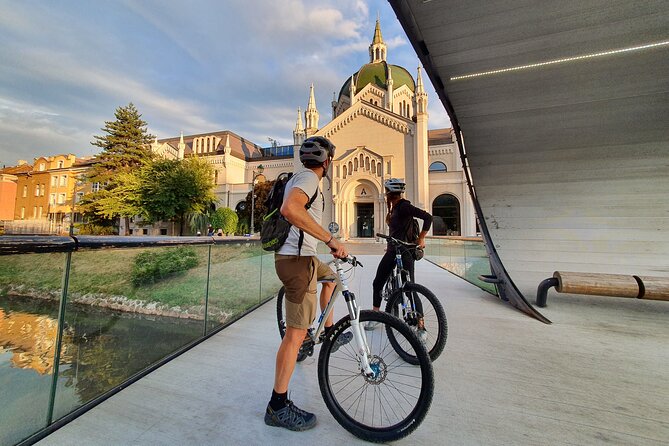
Latin Bridge is one of the city’s essential stops. This Ottoman bridge is linked to the 1914 assassination of Archduke Franz Ferdinand, an event that helped trigger World War I.
The bridge is not huge, and the stop is brief, but its importance is outsized. Your guide can help you place the event in the city rather than treating it as a detached textbook fact. Sarajevo’s streets were already shaped by several cultures and political powers, and this bridge sits in the middle of that story.
The route then reaches Gazi Husrev-beg Mosque, built in 1530 and the largest mosque in Sarajevo. Its importance goes beyond its size. It reflects the Ottoman foundations of the city and remains one of the central landmarks of Baščaršija.
Nearby, Gazi-Husrev Beg’s Bezistan offers another look at Ottoman urban life. This covered market dates from the 16th century and uses arched arcades to shelter small shops. It is a compact stop, but it helps you understand how commerce, worship, and daily life were arranged close together.
You should expect these central stops to be more about explanation and orientation than lengthy interior visits. The listed schedule gives about five minutes at several landmarks, so the guide will likely focus on the key story and viewpoint rather than a detailed architectural tour.
More bike rides:
- Trebevic Mountain Biking Tour from Sarajevo – Bobsleigh Track
★ 5.0 · 16 reviews - Skakavac Waterfall Mountain Biking Tour from Sarajevo MTB
★ 5.0 · 11 reviews - Sarajevo E-Bike City Tour
★ 5.0 · 3 reviews - Downhill Sarajevo MTB Mountain Biking Adventure on Trebevic – Half Day Tour
★ 5.0 · 3 reviews
Sacred Heart Cathedral and modern Sarajevo
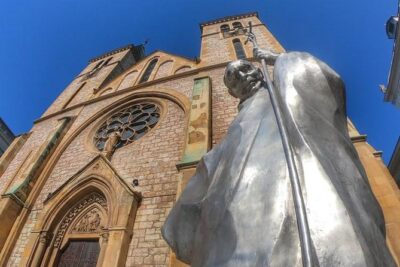
Sacred Heart Cathedral provides a clear contrast with the mosque and bezistan. Built in the late 19th century, it is the largest cathedral in Bosnia and Herzegovina and uses Neo-Gothic design.
This quick sequence of religious and commercial sites is one of the tour’s strengths. You are not being shown Sarajevo as a single-culture destination. Instead, you see how Muslim, Catholic, and other communities form part of the city’s physical character.
The route also includes the Parliamentary Assembly of Bosnia and Herzegovina. Built in 1982 in a modernist style by architect Juraj Neidhardt, the building represents a different Sarajevo from the Ottoman market lanes and Austro-Hungarian facades.
The Parliament building was badly damaged during the siege and later restored. That makes it another useful link between architecture and recent history. The tour keeps showing you that Sarajevo’s past is not arranged in separate museum rooms. Old and new, beauty and damage, religious buildings and government offices all sit along the same route.
Riding out to Vrelo Bosne
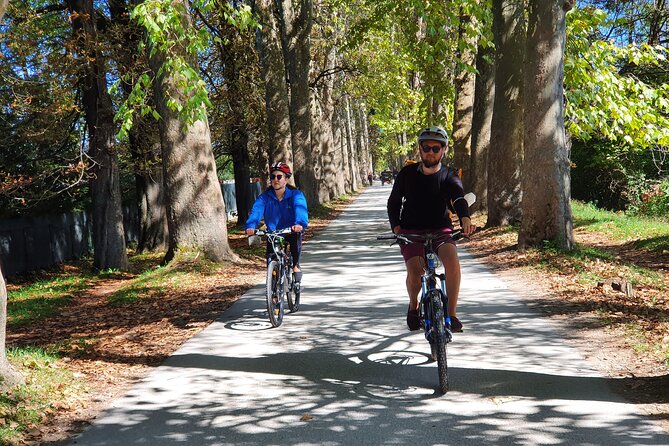
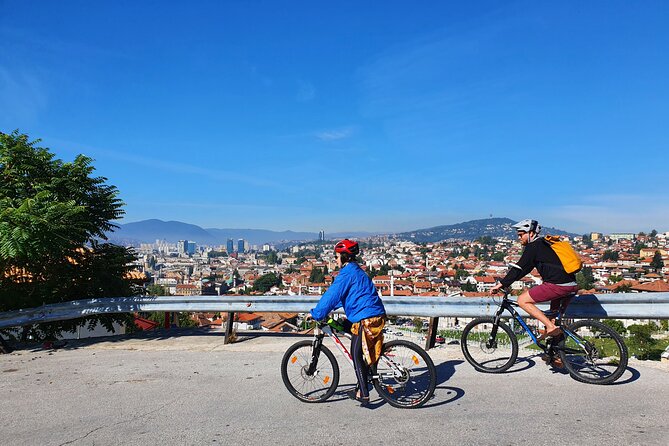
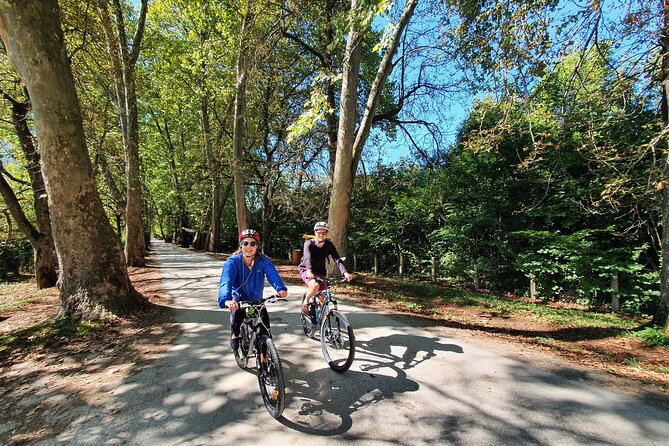
Vrelo Bosne marks a major change from the urban part of the day. This public park lies at the foothills of Mount Igman on the outskirts of Sarajevo, where the River Bosna begins.
You have about an hour here, and admission is included. After the close streets of Baščaršija and the weight of the war sites, the spring provides breathing room. The setting is one of the reasons the bike format makes sense: you are not only ticking off city monuments, but also reaching a natural site outside the central district.
The practical point is that this is where the route’s length becomes more important. The tour is advertised at six to seven hours, and one detailed account reports a ride of slightly more than 25 miles. The exact effort may depend on the route and group, but you should plan for a full cycling day rather than a short sightseeing ride.
Bike use and a helmet are included. Wear clothes that let you pedal comfortably, and consider bringing water and any personal snacks you need, since no separate meal inclusion is specified. The tour is offered in English.
Understanding the Siege at the Tunnel of Hope
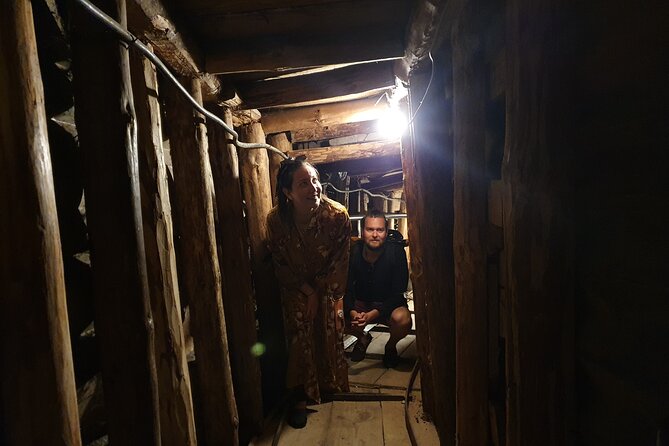
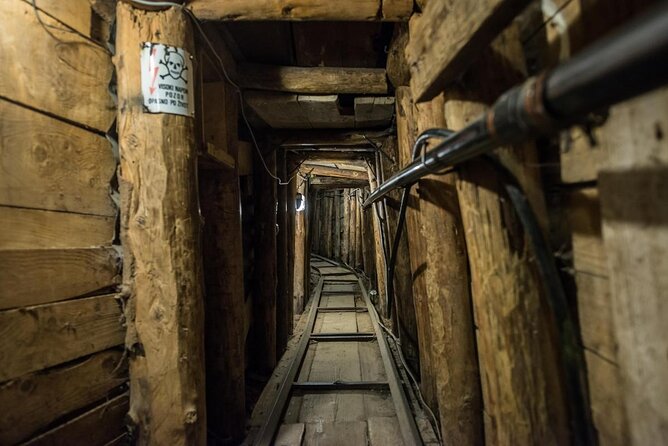
The Sarajevo War Tunnel, also known as the Tunnel of Hope, is the emotional center of the outing. Admission to the tunnel museum is included, with about an hour set aside for the visit.
During the Bosnian War, the tunnel connected two areas held by Bosnian forces that had been cut off by the Army of Republika Srpska. Its purpose was practical and urgent: it offered a link through and around the siege when normal roads were blocked.
You should not expect this stop to feel like a light sightseeing attraction. The value is in understanding how ordinary movement, supplies, and survival were affected during the war. The guide’s role matters greatly here, and the strongest feedback about the tour repeatedly praises the guides’ ability to explain the history while keeping the group engaged.
For many people, the tunnel is the reason to choose this tour over a standard city ride. You get the famous old town, but you also gain a place that helps explain why Sarajevo still carries such a strong memory of the 1990s. The contrast with Vrelo Bosne is effective: one stop shows the city’s natural setting, and the next confronts the conditions created by war.
The guides make the difference
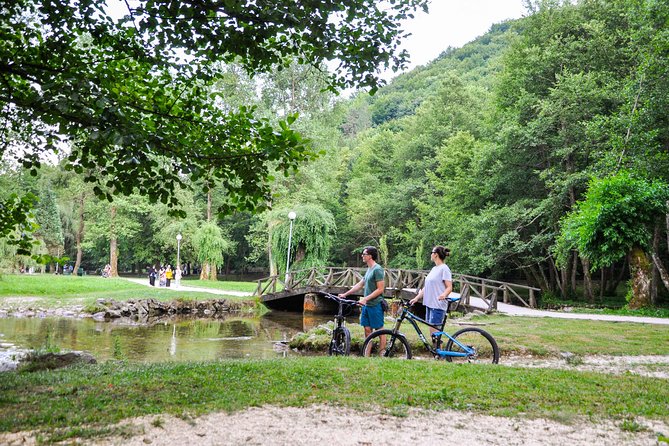
This tour depends less on a scripted performance than on the person leading the ride. Mustafa is praised for adding less obvious places beyond the main sights. Mirza receives especially strong comments for combining history with humor and for keeping people informed during the cycling.
Said is described as charming and flexible, while Arna is singled out for her command of Bosnian history and culture and for practical recommendations after the tour. The names matter because they show a consistent pattern: the experience is built around local storytelling rather than a simple route between photo stops.
I would still ask who your guide will be when you confirm the booking, if that information is available. The tour is offered in English, and confirmation arrives within 48 hours, subject to availability.
Is $138.34 a fair price?
At $138.34 per person, this is not the cheapest way to see Sarajevo. The price makes more sense when you count the full package: six to seven hours, bike and helmet use, a maximum group of 10, admission to Vrelo Bosne, admission to the war tunnel museum, and a route that reaches both central Sarajevo and the outskirts.
You are also paying for route planning. Sarajevo is not generally known as a cycling city, and the tour team has to plan a ride that joins major sights with a longer trip beyond the center. One account specifically praises the careful planning that made the cycling work well.
The value is strongest if you have limited time and want a broad first look at Sarajevo. It is weaker if you prefer slow museum visits, long meals, or a relaxed ride with little physical effort. The brief five-minute stops are enough for orientation and photographs, but not enough for deep visits inside every landmark.
Who should book this experience?
I would choose this tour if you want a fast but meaningful introduction to Sarajevo and are happy to cycle for several hours. It suits active couples, friends, solo visitors who like small groups, and anyone especially interested in the Bosnian War.
It also works well early in your stay. The guide’s local suggestions for food, shopping, and further sightseeing can help you plan the rest of your time. The route gives you a useful map of the city, from Baščaršija to the government district and out toward Vrelo Bosne.
I would be cautious if you have difficulty with long bike rides or want a fully relaxed day. The tour is described as suitable for most people, but that does not remove the need for basic cycling comfort. Poor weather can also affect the schedule, and the experience requires a minimum number of participants.
Booking is flexible up to 24 hours before the start for a full refund. Changes or cancellations inside that window are not accepted for a refund. If weather or low enrollment forces cancellation, you are offered another date or experience, or a full refund.
Should you book the Sarajevo War Bike Tour?
Book it if you want one day that connects Sarajevo’s Ottoman market, Austro-Hungarian architecture, religious landmarks, modern government buildings, natural setting, and wartime past. The Tunnel of Hope admission, small group, and local guide stories give the tour real substance.
Skip it if 25 miles of cycling sounds like a chore, or if you want to linger inside every museum and monument. For an active first day in Sarajevo, though, the route offers unusually broad coverage and a useful sense of how the city fits together. The combination of Mustafa, Mirza, Said, Kamer, and Arna’s praised guiding style, plus the included admissions, makes the $138.34 price easier to justify.
FAQ
Where does the Sarajevo City Sightseeing and War Bike Tour start?
It starts at Obala Isa-bega Ishakovića 3, Sarajevo 71000, Bosnia and Herzegovina.
What time does the tour begin?
The scheduled start time is 9:00 a.m.
How long does the tour last?
The experience lasts approximately six to seven hours.
Where does the tour finish?
The activity ends back at the meeting point.
What language is the tour offered in?
The tour is offered in English.
How many people can join the tour?
The maximum group size is 10 travelers.
Is bicycle use included?
Yes. Use of a bicycle and helmet is included in the price.
Are the Vrelo Bosne and war tunnel admission fees included?
Yes. Admission to the Spring of the River Bosna and the war tunnel museum is included.
How far do you cycle?
One account describes the route as just over 25 miles. The exact distance may vary with the route and conditions.
Can you cancel for a full refund?
Yes. You can cancel at least 24 hours before the start time for a full refund. Poor weather or failure to meet the minimum number of participants may also result in an alternative date or a full refund.
Just added around Sarajevo
- Srebrenica Genocide Tour from Sarajevo★ 4.5 · 3 reviews
- Mountain Village Lukomir Full Day Adventure Tour★ 5.0 · 3 reviews
- MTB Bjelasnica – Lukomir★ 5.0 · 3 reviews
- Sarajevo Under Siege: A City’s Struggle & Survival Tour★ 5.0 · 3 reviews
- Herzegovina Tour from Sarajevo: Mostar, Počitelj, Blagaj, Kravice★ 5.0 · 3 reviews
- Bosnian Kingdom Capitals: Travnik & Jajce Tour from Sarajevo★ 5.0 · 3 reviews
- Beautiful Bosnia 8 Days Tour Package★ 5.0 · 3 reviews
- Walking Tour in Sarajevo★ 5.0 · 3 reviews
Bosnian War History Tours, compared.

Fall of Yugoslavia, Sarajevo War Tour with Tunnel of Hope Museum and Frontlines
Read our review →
ROSES OF SARAJEVO (Official WAR + CITY tour)- Story of a Survivor
Read our review →
Tunnel Museum: Bosnian & Yugoslav Wars Tour with War Veteran
Read our review →
Sarajevo War Tour: A Veteran’s Story of the Siege (fees included)
Read our review →
Break-up of Yugoslavia & The War in Mostar: Life Under Siege
Read our review →
Sarajevo Grand Tour: Old Town, War Tunnel, Olympic Sites & More
Read our review →Browse the lists this tour appears in