
REVIEW · PRIVATE DRIVERS
Sarajevo to/from Zagreb Transfer Day Tour (North-central Bosnia)
Bosnia rewards a slower crossing. This transfer turns a long trip between Sarajevo and Zagreb into a full day of castles, rivers, waterfalls, Ottoman buildings, and 20th-century history. I like the route because it reaches places that are awkward to visit by public transport, especially Jajce and Jasenovac. I also like the small-group format, air-conditioned vehicle, hotel pickup, and included entrance fees. The catch is the length: 10 to 12 hours in transit and stops, with lunch not included.
You will not simply move from one capital to another. You will cross central and northern Bosnia by way of Travnik, Jajce, Banja Luka, and the Jasenovac memorial area. This is best for curious sightseers, not for anyone who wants a quick point-to-point ride or a leisurely day at each stop.
In This Review
- Six things to know before booking
- Why this transfer is more than a long car ride
- Travnik: Ottoman Bosnia and a hilltop fortress
- Jajce: a waterfall in the middle of town
- The AVNOJ Museum and the birth of socialist Yugoslavia
- Following the Vrbas River to Banja Luka
- Jasenovac: the day’s most serious stop
- What the $161.95 price buys you
- Who will enjoy this long Bosnia crossing
- Should you book the Sarajevo to Zagreb transfer?
- FAQ
- How long does the Sarajevo to Zagreb transfer take?
- What time does the tour start?
- Is hotel pickup available?
- What attractions are included in the price?
- Is lunch included?
- Can I take the tour from Zagreb to Sarajevo?
- How large is the group?
Six things to know before booking
- The route replaces a complicated public transport day: You avoid juggling several bus and train connections between Sarajevo and Zagreb.
- Travnik gives you Ottoman Bosnia in a compact stop: You visit its fortress and the colorful Šarena Džamija, or Painted Mosque.
- Jajce packs several major sights together: The waterfall, fortress area, catacombs, Bear Tower, St. Luke’s Tower, and AVNOJ Museum all appear during the visit.
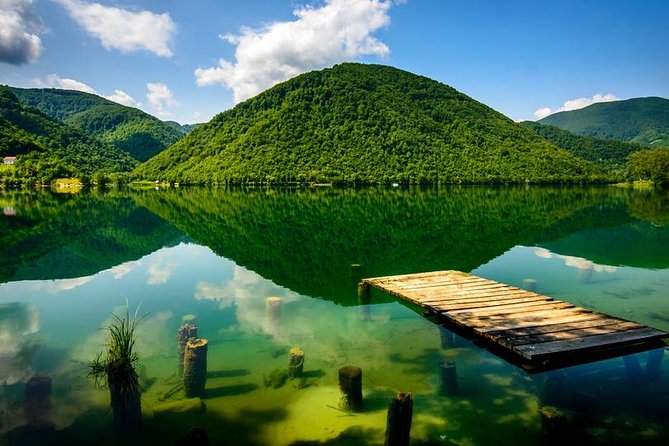
- The Vrbas River makes the road itself part of the experience: Its canyon accompanies the journey toward Banja Luka.
- Jasenovac adds difficult but important history: The memorial visit is conducted from outside unless you arrange a customized visit.
- The group is small, but confirm the exact size: The tour is described as capped at seven in one place and as allowing a maximum of eight elsewhere.
Why this transfer is more than a long car ride
The practical reason to book is simple. Sarajevo and Zagreb are not connected by one easy, direct sightseeing train or bus journey. You can piece the route together yourself, but you would lose the chance to stop in Travnik, Jajce, Banja Luka, and Jasenovac.
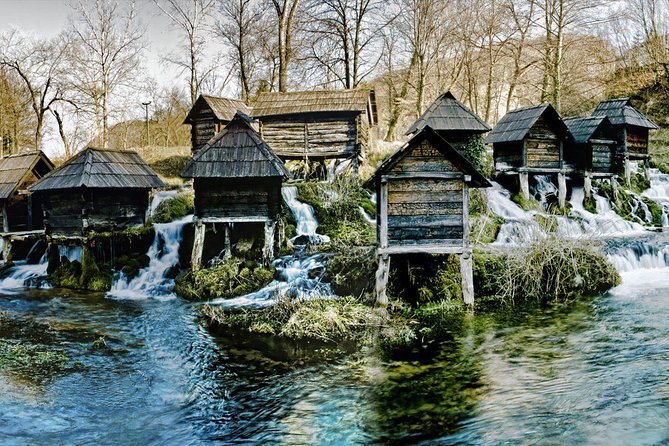
Here, your driver-guide handles the road while you look out at the Bosna, Lašva, and Vrbas rivers. Pickup is offered, and the day begins at about 7:30 a.m. That early start matters. With roughly 10 to 12 hours on the road, there is no spare time for a lazy morning.
I would treat this as a transfer with serious sightseeing attached, not as a traditional city tour. The stops are short, usually 15 to 30 minutes, with about an hour for Banja Luka. You get a useful introduction to many places, but you do not get a full visit to any one of them.
The vehicle is air-conditioned, and the group is kept small. That makes the long ride more manageable and gives you a better chance to ask questions or request a little help at the stops. The published details describe the group as capped at seven, while the additional information allows up to eight people. If group size matters to you, confirm this before paying.
More private transfers and drivers:
- Sarajevo to/from Dubrovnik Transfer Tour via Mostar & Herzegovina
★ 5.0 · 115 reviews - Sarajevo to Belgrade: Transfer With East Bosnia Tour
★ 5.0 · 63 reviews - Sarajevo to/from Belgrade UNESCO Transfer Day Tour (Fees Incl.)
★ 5.0 · 54 reviews
Travnik: Ottoman Bosnia and a hilltop fortress
The first major stop is Travnik, once the town of Ottoman viziers and the birthplace of Nobel Prize-winning Bosnian author Ivo Andrić. The route reaches town along the Bosna and Lašva rivers, then continues through the Vrbas canyon later in the day.
Travnik works well as an opening stop because its main sights are close enough to see without spending half the day walking. You visit Stari Grad, the old town, then climb to Travnik Fortress. The fortress is one of Bosnia and Herzegovina’s best-preserved medieval strongholds, with wide views over the town and surrounding countryside.
The entrance fee is included, listed as 2 euros per person. That is a small detail, but it keeps the day easy. You are not stopping repeatedly to sort out local tickets or small cash payments.
The fortress visit lasts about 30 minutes. That gives you time to see the walls and enjoy the view, but not to study every corner. Wear shoes that are comfortable on uneven ground, since old fortifications rarely come with smooth floors and gentle ramps.
The next stop is Šarena Džamija, one of Bosnia and Herzegovina’s most striking mosques. Its painted decoration gives it a very different character from the plain stone mosques you may have seen elsewhere. The visit lasts about 20 minutes, so think of it as a focused look rather than a long religious or architectural tour.
Travnik is a strong part of the day for anyone interested in the Ottoman period. The drawback is that the visit is brief. If you want cafés, museums, or a slow walk through town, you will need a separate visit.
Jajce: a waterfall in the middle of town
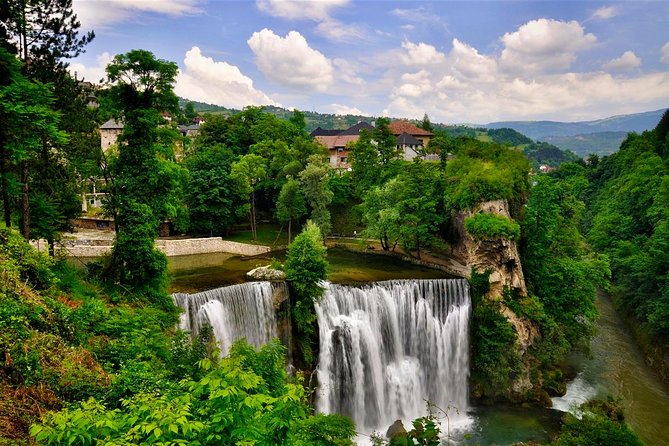
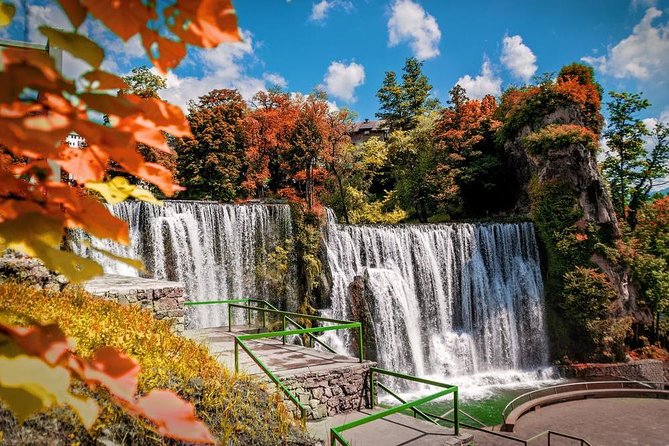
Jajce is the visual high point of the route. The Pliva Waterfall drops where the Pliva River meets the Vrbas, right in the city center. That location gives the sight unusual force: you are not driving far into the countryside to find it. The water is part of the town itself.
The waterfall stop lasts about 30 minutes and has no separate admission fee listed. I would use that time for photographs and a quick look around, but I would not expect a long walk beside the river. Weather and road conditions can also affect how relaxed this stop feels.
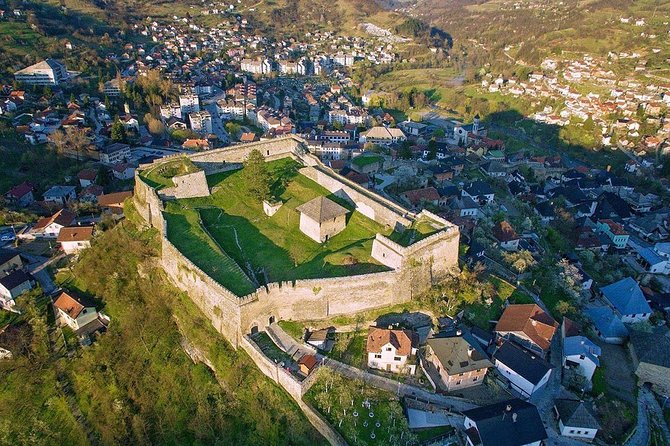
Jajce is not only about water. The town’s medieval core includes a fortress and several unusual structures. The tour includes the Jajce fortress entrance, listed at 2.50 euros, along with the catacombs and AVNOJ Museum.
The catacombs sit six meters below ground inside the city walls. They were carved from solid rock in the late 14th or early 15th century, during the period when Duke Hrvoje Vukčić Hrvatinić ordered them as a burial and religious site for his family. The underground church is a national monument of Bosnia and Herzegovina.
The catacomb visit lasts about 30 minutes. It is a compact sight, but it gives Jajce a sense of mystery that the waterfall alone cannot provide. If underground spaces make you uncomfortable, keep in mind that this is a carved crypt beneath the old town.
The Bear Tower, or Medvjed Kula, is another quick stop, lasting about 15 minutes. Its walls are between 4.5 and 6 meters thick, which explains the name. A darker local story says bears were fed with captives and convicts held there, though the tour description presents this as a mythic explanation rather than a confirmed fact.
Nearby, the 23.15-meter St. Luke’s Tower is the surviving medieval tower of the Church of St. Mary. It is described as the only surviving medieval tower in the continental Balkans. You should see it as part of the old-town fabric rather than expect a long interior visit.
These Jajce stops are appealing because they cover nature, medieval power, religion, and modern political history within a small area. They are also the part most likely to feel rushed. The tour gives you a sampler of Jajce. If Jajce is your main reason for coming to Bosnia, plan a separate overnight stay.
The AVNOJ Museum and the birth of socialist Yugoslavia
The AVNOJ Museum adds a different layer to Jajce. The second session of AVNOJ took place here on November 29, 1943. That meeting helped establish the foundations of socialist Yugoslavia and gave Jajce a major place in the country’s 20th-century political story.
The museum opened in 1953, and its first permanent collection was installed in 1959. It suffered major damage and theft during the 1992 to 1995 war. Those facts matter because the museum is not just a collection of old political material. It also reflects the damage and competing memories that shaped Bosnia after Yugoslavia broke apart.
Admission is included, listed at 1 euro per person, and the visit lasts about 30 minutes. I like this inclusion because it prevents the day from becoming only a scenic drive. You get a short, direct look at how modern state power was organized in wartime Jajce.
The museum may not suit you if you only want castles and natural sights. For anyone interested in Yugoslavia, World War II, or the political divisions that still affect the region, it is one of the most useful stops.
A few more of this kind worth a look:
- Sarajevo: Mostar, Konjic, Blagaj Tekke, Pocitelj & Waterfall
★ 4.9 · 1,335 reviews - Fall of Yugoslavia, Sarajevo War Tour with Tunnel of Hope Museum and Frontlines
★ 5.0 · 1,314 reviews - Sarajevo: Mostar, Konjic, Sufi House, Pocitelj & Kravice Falls
★ 5.0 · 1,179 reviews - ROSES OF SARAJEVO (Official WAR + CITY tour)- Story of a Survivor
★ 5.0 · 770 reviews
Following the Vrbas River to Banja Luka
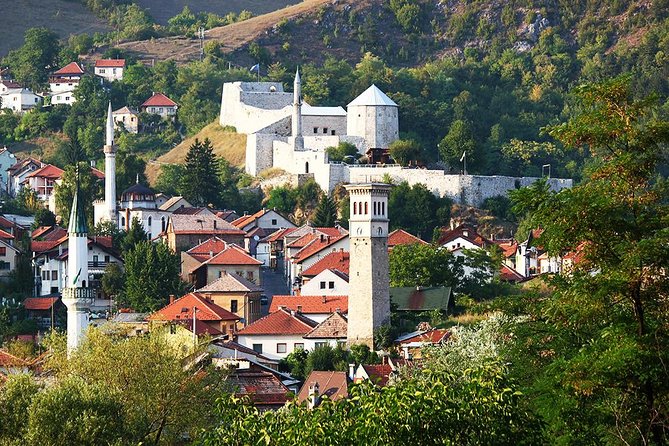
After Jajce, the road follows the Vrbas River canyon toward Banja Luka. This is one of the reasons the transfer works better than a standard intercity ride. The journey is not dead time. The river and canyon provide a changing view as you move north.
The Banja Luka portion includes a guided walking tour. The detailed timing describes about one hour in the city, while the inclusions list a two-hour guided Banja Luka tour. Treat the total time as approximate, since the full day depends on traffic, road conditions, and the pace at earlier stops.
Banja Luka is split by the Vrbas River, and the tour uses that setting to explain the city’s mixed character and complex past. The walk is a chance to stretch your legs after the road and see a city that many people would otherwise pass without stopping.
Still, one hour is not enough for a complete city visit. You will get orientation rather than a deep look at Banja Luka. That is fine if your priority is reaching Zagreb while seeing more of Bosnia. It is less satisfying if Banja Luka itself is high on your list.
Jasenovac: the day’s most serious stop
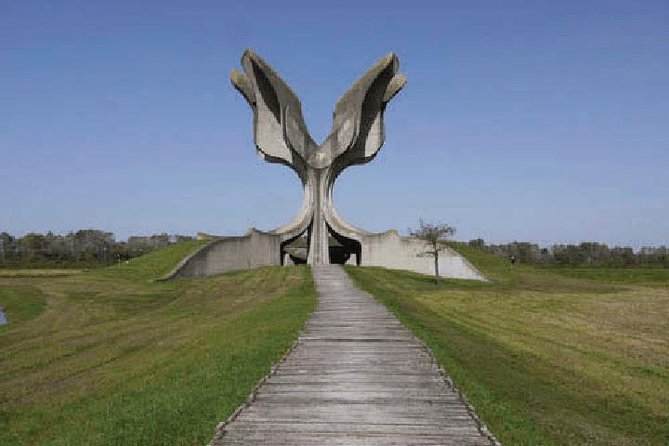
Jasenovac changes the tone. The site was a World War II extermination camp under the Ustaše regime, where Serbs, Jews, and Croats who opposed the regime were detained, forced to work, and murdered. It is often called the Auschwitz of the Balkans, though every camp has its own history and should be understood on its own terms.
The stop lasts about 30 minutes. The standard visit is from outside, with a guided explanation at the memorial area. Visits into the camp site and museum are possible by request through a customized itinerary, but they are not part of the standard route.
I consider this an important inclusion, but it will not suit everyone. The subject is grim, and the stop comes late in a long day when you may be tired. That is also why it can have such weight. The road has shown you Bosnia’s scenery and old towns, then asks you to face the consequences of racial and national exclusion.
Give yourself a little emotional space here. This is not a quick photo stop. Listen carefully, avoid treating the memorial as scenery, and expect the final part of the day to feel more reflective than cheerful.
What the $161.95 price buys you
At $161.95 per person, this is not the cheapest way to cross the border. You are paying for more than a seat in a vehicle, though. The price covers a driver-guide, hotel pickup, a small group, and admission to Travnik Fortress, Jajce Fortress, the Jajce catacombs, and the AVNOJ Museum.
It also includes the guided Banja Luka visit and the guided stop at Jasenovac. Those inclusions add real value because local transport between all these stops would be difficult to arrange in one day.
Lunch is not included. You should plan for that rather than assume a meal will appear during the route. The supplied details do not specify a restaurant stop or fixed lunch time, so bring water and a practical snack if you need regular food.
I see the price as fair for a one-way transfer if you already need to move between Sarajevo and Zagreb. The value drops if you only want transportation, since the extra stops create a long day. It rises if you would otherwise pay for separate taxis, private transfers, attraction tickets, and a Banja Luka guide.
The option runs in both directions. Sarajevo to Zagreb and Zagreb to Sarajevo use the same general concept, but the order and timing may feel different depending on traffic and border conditions.
Who will enjoy this long Bosnia crossing
I would recommend this tour to you if:
- You need to travel between Sarajevo and Zagreb anyway.
- You want to see more of Bosnia without renting a car.
- You enjoy a mix of Ottoman, medieval, socialist, and World War II history.
- You are comfortable with short stops and a full 10 to 12-hour day.
- You prefer a small group to a large coach.
- You want a driver-guide rather than a bare transfer.
I would hesitate if you dislike long road days, need generous time at museums, or want to explore Jajce or Banja Luka at your own pace. A self-drive trip or overnight route would give you more freedom, though it would require more planning.
Most people can participate, and service animals are allowed. The experience is near public transportation, but the main convenience is the included pickup. Confirmation is sent within 48 hours, subject to availability.
Free cancellation is available up to 24 hours before the start time. Changes or cancellations inside that window are not accepted for a refund, so check your border-crossing plans before booking.
Should you book the Sarajevo to Zagreb transfer?
Book it if you want the journey to be part of your Bosnia visit. Travnik, Jajce, the Vrbas canyon, Banja Luka, and Jasenovac give you a broad look at the country in one demanding day.
I especially like the route for first-time visitors who have limited time and do not want to build a complicated chain of buses and trains. The strongest parts are Jajce’s waterfall and old town, the included fortress and catacomb entries, and the chance to see Banja Luka and Jasenovac on the way north.
Do not book it expecting a relaxed tour. You will spend many hours in the vehicle, lunch is your responsibility, and several stops are brief. But if you accept the pace, the $161.95 fare buys a useful transfer and a memorable cross-section of Bosnia rather than a day spent simply watching the highway.
FAQ
How long does the Sarajevo to Zagreb transfer take?
The experience lasts approximately 10 to 12 hours.
What time does the tour start?
The stated start time is 7:30 a.m.
Is hotel pickup available?
Yes. Pickup is offered, and the experience includes hotel pickup.
What attractions are included in the price?
Included admission covers Travnik Fortress, Jajce Fortress, the Jajce catacombs, and the AVNOJ Museum. The Banja Luka guided tour and guided visit to the Jasenovac Memorial are also included.
Is lunch included?
No. Lunch is not included in the price.
Can I take the tour from Zagreb to Sarajevo?
Yes. A Zagreb-to-Sarajevo option is available as well as the Sarajevo-to-Zagreb transfer.
How large is the group?
The experience is described as a small-group tour. One description says it is capped at seven people, while the additional information gives a maximum of eight travelers. Confirm the exact group size when booking if this is important to you.
Just added around Sarajevo
- Srebrenica Genocide Tour from Sarajevo★ 4.5 · 3 reviews
- Mountain Village Lukomir Full Day Adventure Tour★ 5.0 · 3 reviews
- MTB Bjelasnica – Lukomir★ 5.0 · 3 reviews
- Sarajevo Under Siege: A City’s Struggle & Survival Tour★ 5.0 · 3 reviews
- Herzegovina Tour from Sarajevo: Mostar, Počitelj, Blagaj, Kravice★ 5.0 · 3 reviews
- Bosnian Kingdom Capitals: Travnik & Jajce Tour from Sarajevo★ 5.0 · 3 reviews
- Beautiful Bosnia 8 Days Tour Package★ 5.0 · 3 reviews
- Walking Tour in Sarajevo★ 5.0 · 3 reviews
Private Drivers, compared.
Sarajevo to/from Dubrovnik Transfer Tour via Mostar & Herzegovina
Read our review →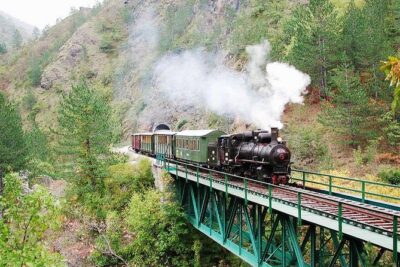
Sarajevo to/from Belgrade UNESCO Transfer Day Tour (Fees Incl.)
Read our review →
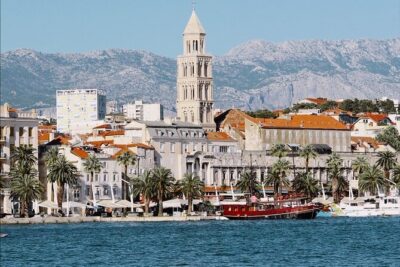
Sarajevo to Split (or opposite): Transfer With Herzegovina Tour
Read our review →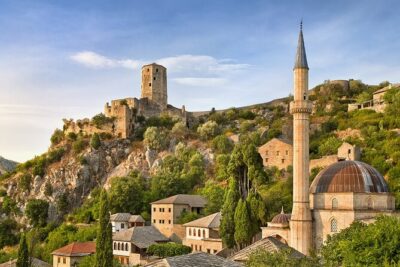
Transfer Mostar to Dubrovnik with Kravice Waterfalls, Blagaj and Počitelj tour
Read our review →
Private Transfer between Trebinje and Dubrovnik
Read our review →
Sarajevo to Dubrovnik: Transfer With Herzegovina Tour
Read our review →
Browse the lists this tour appears in