
REVIEW · SARAJEVO TOURS
Beautiful Bosnia 8 Days Tour Package
Bosnia rewards curious travelers. This 8-day Bosnia tour links Sarajevo, Mostar, medieval towns, waterfalls, caves, and Olympic mountains without making you plan every transfer. I like the mix of war history and everyday culture, and I like having four-star hotels, breakfast, entrance fees, and an air-conditioned vehicle arranged in advance. The main catch is the pace: several days cover a lot of ground, so you will spend plenty of time in the vehicle.
The small group limit of 15 should make the trip easier to manage than a large coach tour. Guides such as Elvis, Senat, and Mizra have been praised for friendly service, strong cultural insight, and careful attention to personal needs. Still, check the pickup details before booking, since the tour offers hotel pickup but also lists Sarajevo Airport as the starting point.
In This Review
- Five details that shape this Bosnia journey
- Why this eight-day route works
- Day 1: Vrelo Bosne and Sarajevo’s first view
- Day 2: Sarajevo from siege tunnels to religious landmarks
- Day 3: Following the Neretva to Mostar
- Day 4: Blagaj, Počitelj, and Kravice Falls
- Day 5: Medieval Bosnia in Travnik and Jajce
- Day 6: Rural Bosnia, Bijambare Caves, and local food
- Day 7: Olympic mountains on Bjelašnica and Igman
- Day 8: A simple finish in Sarajevo
- What $1,489.36 buys you
- Guides, food, and the human side
- Who should book this tour?
- FAQ
- Where does the tour start?
- How long does the tour last?
- What accommodation is included?
- Are meals included?
- What transport is used?
- What places are visited?
- Is the War Tunnel Museum included?
- How large is the group?
- Can I cancel for a full refund?
- Should you book it?
Five details that shape this Bosnia journey
- The Sarajevo focus is unusually strong: You get the War Tunnel, Baščaršija, Latin Bridge, religious landmarks, Trebević, and a panoramic city tour.
- Mostar includes more than a bridge photo: The visit covers the Old Bridge, a gallery, a short film, a mosque, the Crooked Bridge, and free time.
- Nature is built into nearly every day: Expect springs, waterfalls, caves, lakes, forests, and mountain resorts.
- The route reaches three distinct parts of Bosnia: Sarajevo and central Bosnia, Mostar and Herzegovina, plus the rural highlands near the capital.
- The price includes useful basics: At $1,489.36 per person, you receive seven breakfasts, accommodation in four-star hotels, transport, taxes, and listed entrance fees.
- The group stays fairly small: A maximum of 15 people is a good fit if you want company without a full-size bus crowd.
Why this eight-day route works
I like the way this trip balances Bosnia’s major sights with places that are easy to miss when you travel independently. Sarajevo gets two substantial days, Mostar and southern Herzegovina receive their own section, and the final days shift toward mountains, villages, caves, and lakes.
That variety matters. You are not seeing Bosnia as one postcard. The route shows Ottoman-era streets, Austro-Hungarian buildings, medieval fortresses, socialist-era reminders, war sites, Olympic facilities, and rural food traditions.
The schedule is also practical for a first visit. You do not need to arrange intercity buses, find parking in Mostar, or work out how to reach remote mountain stops. Your driver-guide handles the movement while you watch the scenery from an air-conditioned vehicle.
The tradeoff is time. The itinerary has many stops, and some are short. Ten minutes in a square or twenty minutes at a bridge gives you an introduction, not a full visit. If you prefer long café breaks, slow museum visits, or independent wandering, this may feel compressed.
A few more of this kind worth a look:
- Sarajevo: Mostar, Konjic, Blagaj Tekke, Pocitelj & Waterfall
★ 4.9 · 1,335 reviews - Fall of Yugoslavia, Sarajevo War Tour with Tunnel of Hope Museum and Frontlines
★ 5.0 · 1,314 reviews - Sarajevo: Mostar, Konjic, Sufi House, Pocitelj & Kravice Falls
★ 5.0 · 1,179 reviews
Day 1: Vrelo Bosne and Sarajevo’s first view
The tour begins at Vrelo Bosne, the source area of the Bosna River. You spend about an hour in this major Sarajevo park, where the river gives the country part of its name. It is a gentle start after arrival, with nature before the busy city streets.
Next comes a one-hour panoramic tour of Sarajevo, followed by hotel check-in in the Old Town. This first look helps you understand the city’s setting before the detailed walking tour on Day 2.
The listed start time is 8:00 a.m. at Sarajevo Airport, while hotel pickup is also offered. I would confirm the exact meeting arrangement before arrival, especially if you are staying outside the Old Town or landing later in the day.
Day 2: Sarajevo from siege tunnels to religious landmarks
Day 2 is the tour’s most important history day. After breakfast, you visit the Sarajevo War Tunnel Museum and learn how the tunnel served as the only route in and out during the 1,425-day siege from 1992 to 1995.
This stop gives needed context to the city. Sarajevo’s cafés, markets, and handsome buildings can make the war feel distant, but the tunnel brings the recent past close. Allow yourself time to listen carefully. This is not a quick photo stop.
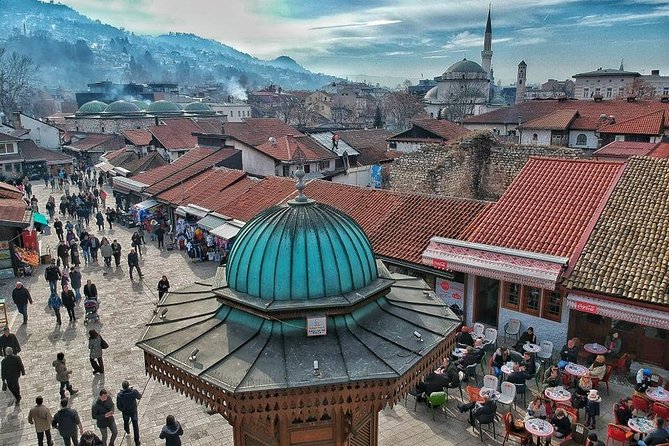
Back in the Old Town, the walking tour moves through a compact but layered part of Sarajevo. At Šeher-Ćehaja’s Bridge, the guide explains City Hall and Inat Kuća, known as the House of Spite. The Ottoman-era bridge, the river, and the buildings around it make this a useful place to hear how Sarajevo’s cultures overlap.
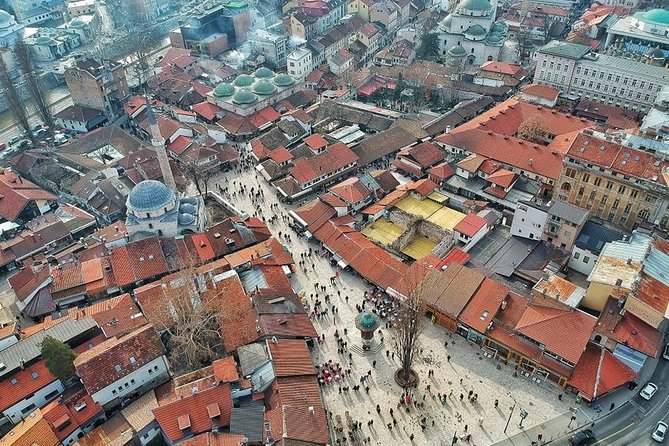
The Copper Street adds a more ordinary side of the city. Craftspeople still work along this traditional lane, and you pass through Baščaršija Square, where caravans and merchants once arrived. Morića Han, a former caravanserai, adds another glimpse into Sarajevo’s trading past and includes a Persian carpet shop.
You also visit Gazi Husrev-beg Mosque, one of the central landmarks of the Old Town. The mosque, clock tower, school, bazaars, and caravanserais connected with Gazi Husrev-beg help explain why his name appears so often in Sarajevo.
Some costs need attention here. Entrance to the mosque and Jewish Museum is not included, so carry some local currency for optional admissions. The tour also passes the Latin Bridge, tied to the assassination that helped trigger World War I, then the Jewish Museum, the Catholic Cathedral of the Sacred Heart, and the Serbian Orthodox Cathedral.
That sequence is one of the route’s best features. In a short walk, you see Islamic, Jewish, Catholic, and Serbian Orthodox heritage side by side. The guide’s explanation matters more than simply collecting building photos.
The day ends at Trebević, where you see the bobsleigh track from the 1984 Winter Olympics. It is a striking contrast with the Old Town. The track is a reminder of Sarajevo’s Olympic identity, while its worn condition reflects the passage of time and the city’s difficult decades.
Day 3: Following the Neretva to Mostar
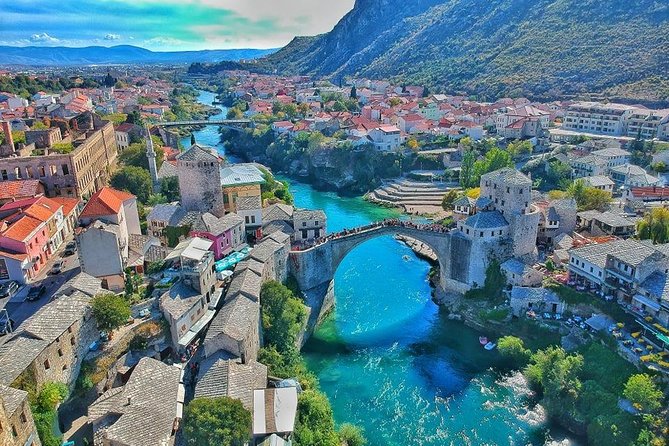
The drive toward Mostar begins with a photo stop at the Ottoman stone bridge in Konjic. You get about 15 minutes here, enough for pictures and an introduction to the upper Neretva River, which continues through the route toward Mostar.
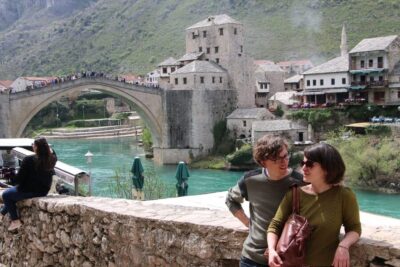
Mostar receives about three hours, including a guided walk and free time. The Old Bridge is the obvious centerpiece, but the visit does more than take you to the standard viewpoint. You see the Mostar Gallery, watch a short film about the bridge, visit Koski Mehmet Pasha Mosque, and pass the Crooked Bridge.
I like this arrangement because the film and gallery give the bridge a human and historical setting. The bridge is beautiful, but its meaning is larger than its stone arch. The guide can help you understand why Mostar is more than a scenic stop.
Three hours is enough for orientation and some independent exploring, though not enough to see every corner of the city. Wear comfortable shoes for the walking tour, and use free time for a meal, coffee, or a second look at the Old Bridge.
Something different, still around Sarajevo:
- ROSES OF SARAJEVO (Official WAR + CITY tour)- Story of a Survivor
★ 5.0 · 770 reviews - Sarajevo: Mostar, Konjic, Počitelj, Sufi House, & Waterfalls
★ 4.9 · 572 reviews - Tunnel Museum: Bosnian & Yugoslav Wars Tour with War Veteran
★ 5.0 · 551 reviews - Sarajevo: 2 Hours Old Town Walking Tour With Local Guide
★ 5.0 · 505 reviews
Day 4: Blagaj, Počitelj, and Kravice Falls
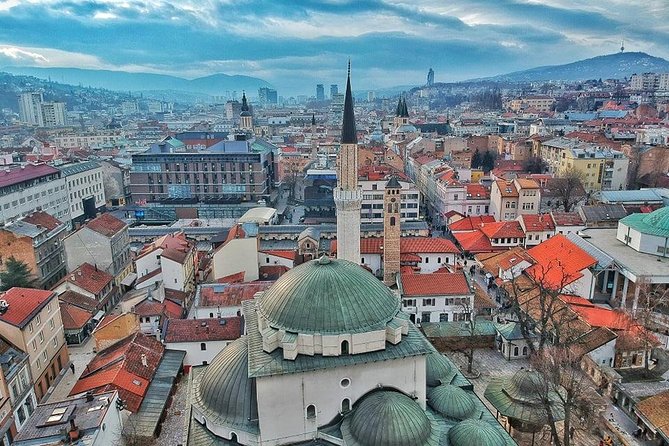
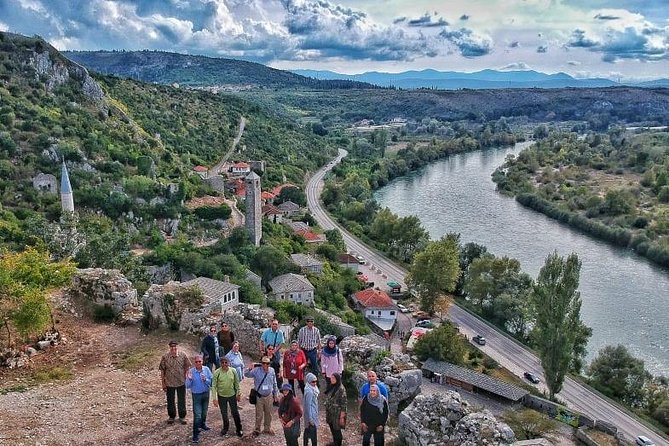
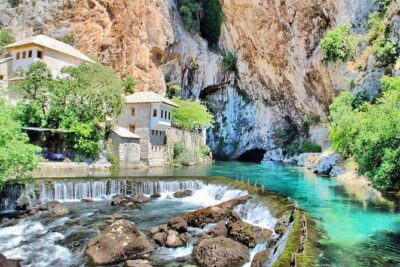
Day 4 brings three very different stops in Herzegovina. At Blagaj, you visit the Buna River spring and a 15th-century dervish house. The setting combines water, cliffs, and religious tradition, making it one of the more peaceful stops on the route.
You then continue to Počitelj, a medieval stone town with a fortress. One hour gives you a useful introduction to its old streets and defensive position, though the short visit means you should not expect a full exploration.
Kravice Falls receives another hour, with admission included. This is one of the country’s major waterfalls and a natural highlight of the southern route. The hour should give you time to view the falls and enjoy the setting, but swimming or a long meal may not fit the schedule.
This day is especially good for people who want variety without changing hotels every few hours. The only concern is that all three stops have different rhythms, and the schedule leaves little room for lingering.
Day 5: Medieval Bosnia in Travnik and Jajce
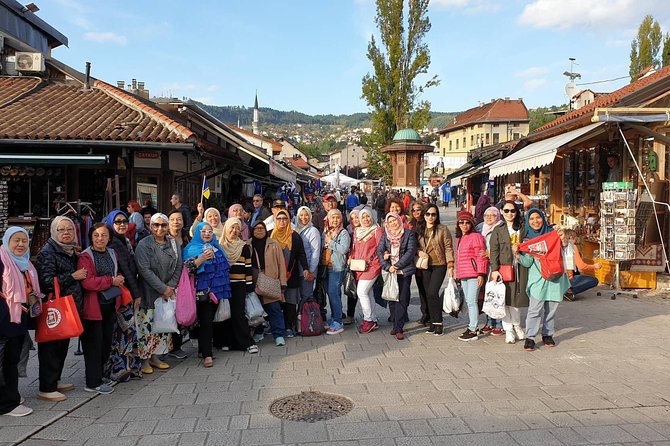
Travnik introduces central Bosnia through its fortress, Colorful Mosque, and mixed architectural record. You see medieval, Ottoman, Austro-Hungarian, and socialist-era buildings in and around the town center.
I appreciate that the guide points out more than the postcard version of Travnik. The town’s architecture shows how Bosnia changed across centuries, with each period leaving a different mark. One hour is enough for a compact visit, but the fortress may deserve more time if you enjoy old stone defenses.
Jajce receives two hours. It was the capital of the medieval Bosnian Kingdom, and the itinerary includes the fortress and Pliva Waterfall. The waterfall is unusual because it drops close to the town, so history and nature meet within a short visit.
Nearby Pliva Lakes add another half-hour, with wooden watermills as the main feature. This is a quieter stop and a good change after the fortress and waterfall. The total day still feels full, so keep your camera ready and avoid assuming every stop allows a long break.
Day 6: Rural Bosnia, Bijambare Caves, and local food
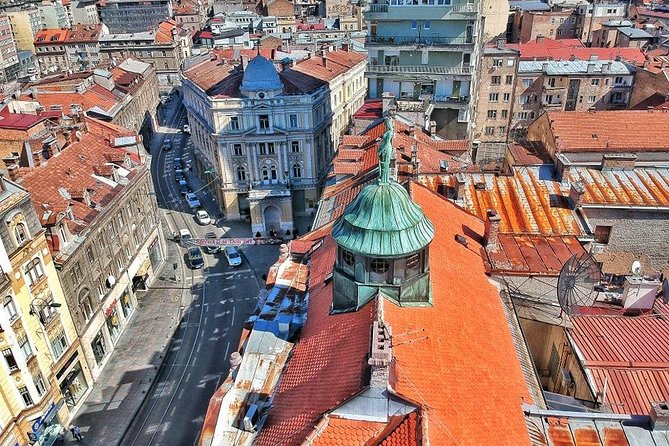
Day 6 is described as a day trip to Bijambare Caves near Sarajevo, reached through the Nišićka visoravan. The five-hour stop is less about famous monuments and more about rural Bosnia, traditional villages, wooded nature, and local food.
I see this as one of the most useful days for understanding life beyond the main cities. The chance to taste traditional food in a village adds a personal element that a standard sightseeing route often misses.
The itinerary does not specify which meal is included at this stop, so check how the food tasting fits with the stated lunch and dinner arrangements. Breakfast is included for seven mornings, and lunch is listed among the inclusions, but dinner is not.
Day 7: Olympic mountains on Bjelašnica and Igman
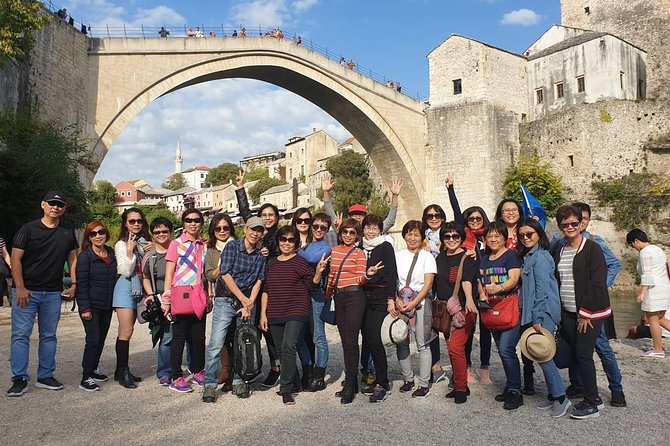
The final full day heads into the mountains. On Bjelašnica, Bosnia’s main ski resort, you spend about four hours around Javorov Do and walk through the forest.
This is a good counterpoint to the urban history of Sarajevo. You get open air, mountain scenery, and time outside the vehicle. The route then continues to Igman, where you see the ski jumps used during the 1984 Winter Olympics.
The stop at Igman lasts about 30 minutes, so treat it as an Olympic site visit rather than a full mountain outing. Conditions can change, and the tour notes that poor weather may lead to cancellation, a different date, or a full refund.
Day 8: A simple finish in Sarajevo
After breakfast, you check out and receive transfer to the airport or another location. The final hour is useful if you have an onward flight, but confirm the drop-off plan and timing with the operator.
Because the tour ends in Sarajevo, you can also use it as part of a longer Bosnia trip. The route gives you a strong introduction, while independent time before or after would let you explore more slowly.
What $1,489.36 buys you
At $1,489.36 per person, the value depends on how much you care about convenience. The package includes air-conditioned transport, four-star hotel accommodation, seven breakfasts, all fees and taxes, and listed entrance costs. It also includes lunch, though the exact lunch schedule is not spelled out.
That bundle removes several large planning tasks. You avoid arranging transport between Sarajevo, Mostar, Jajce, Travnik, and the mountain areas. You also have a driver-guide explaining the places rather than relying only on signs or guidebooks.
The price is less compelling if you already have a car, prefer budget hotels, or want to choose your own restaurants and overnight stops. It becomes more attractive if you value a small group, guided interpretation, and a single booking covering most of the trip.
The maximum group size is 15. That is small enough for easier conversation and fewer delays than a large coach, though it is not a private tour.
Guides, food, and the human side
The strongest praise centers on Elvis, Senat, and Mizra. Elvis is described as friendly and attentive in Sarajevo, while Senat and Elvis are praised for sharing Bosnia’s culture. Mizra is singled out for a caring attitude throughout the journey.
That matters because this route depends on explanation. Sarajevo’s religious buildings, the war tunnel, Mostar’s bridge, Travnik’s architecture, and the Olympic sites all gain meaning when someone connects the details.
Food is another positive thread. Traditional Bosnian food is included in the experience, and the rural village visit offers a chance to taste local dishes. Since dinners are not included, budget separately for evening meals and personal purchases.
Who should book this tour?
I would recommend it to first-time visitors who want to see a broad section of Bosnia without renting a car. It suits people who enjoy history, scenery, small towns, and guided context more than people who want a resort-style holiday.
It is also a good fit if you want Sarajevo to be the base and prefer returning to organized transport each day. Families and many first-time international visitors may appreciate the simple structure, since most travelers can participate and the tour operates with a group of no more than 15.
I would hesitate if you need a slow pace, dislike long drives, or want every museum admission and meal included. The itinerary is active, several visits are brief, and dinners and personal expenses remain yours.
Free cancellation is available if you cancel at least 24 hours before the start time. Weather or minimum-group issues can also lead to a new date, a different experience, or a full refund.
FAQ
Where does the tour start?
The listed meeting point is Butmir Airport in Sarajevo, Bosnia and Herzegovina, with an 8:00 a.m. start time. Hotel pickup is also offered, so confirm the exact arrangement before the tour.
How long does the tour last?
The tour lasts approximately eight days, ending after breakfast and checkout on Day 8.
What accommodation is included?
Accommodation in four-star hotels is included for the tour.
Are meals included?
Seven breakfasts are included, and lunch is listed among the inclusions. Dinner is not included, and personal expenses are also excluded.
What transport is used?
You travel in an air-conditioned vehicle throughout the tour.
What places are visited?
The route includes Sarajevo, Vrelo Bosne, Mostar, Konjic, Blagaj, Počitelj, Kravice Falls, Travnik, Jajce, Pliva Lakes, Bijambare Caves, Bjelašnica, and Igman.
Is the War Tunnel Museum included?
Yes. The Sarajevo War Tunnel visit includes admission.
How large is the group?
The maximum group size is 15 people.
Can I cancel for a full refund?
Yes, if you cancel at least 24 hours before the experience start time. Poor weather or failure to meet the minimum number of participants may also result in a new date, a different experience, or a full refund.
Should you book it?
Book this tour if you want Bosnia’s major sights, war history, natural attractions, and mountain areas in one organized trip. The best reasons are the broad route, four-star accommodation, air-conditioned transport, and guides such as Elvis, Senat, and Mizra, whose friendly personal approach adds value.
Skip it if your ideal Bosnia visit means lingering in Mostar, taking long hikes, or choosing each hotel and meal yourself. For a first visit with limited planning time, though, the $1,489.36 package offers a practical way to see far more than Sarajevo alone.
Just added around Sarajevo
- Srebrenica Genocide Tour from Sarajevo★ 4.5 · 3 reviews
- Mountain Village Lukomir Full Day Adventure Tour★ 5.0 · 3 reviews
- MTB Bjelasnica – Lukomir★ 5.0 · 3 reviews
- Herzegovina Tour from Sarajevo: Mostar, Počitelj, Blagaj, Kravice★ 5.0 · 3 reviews
- Sarajevo Under Siege: A City’s Struggle & Survival Tour★ 5.0 · 3 reviews
- Bosnian Kingdom Capitals: Travnik & Jajce Tour from Sarajevo★ 5.0 · 3 reviews
- Walking Tour in Sarajevo★ 5.0 · 3 reviews
- Travnik, Jajce, Pliva Lakes & Mills –Medieval & Ottoman Bosnia Full Day Tour★ 5.0 · 3 reviews
Sarajevo Tours, compared.
Mostar, Konjic, Blagaj Tekke, Pocitelj & Waterfall
Read our review →
Fall of Yugoslavia, Sarajevo War Tour with Tunnel of Hope Museum and Frontlines
Read our review →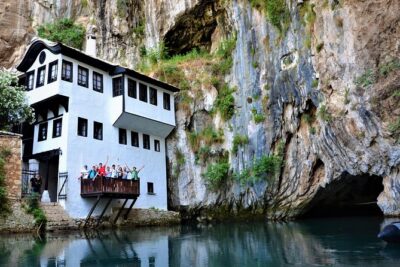
Mostar, Konjic, Sufi House, Pocitelj & Kravice Falls
Read our review →
ROSES OF SARAJEVO (Official WAR + CITY tour)- Story of a Survivor
Read our review →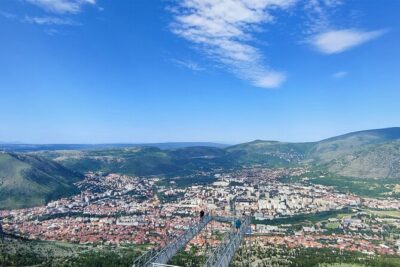
Mostar, Konjic, Počitelj, Sufi House, & Waterfalls
Read our review →
Tunnel Museum: Bosnian & Yugoslav Wars Tour with War Veteran
Read our review →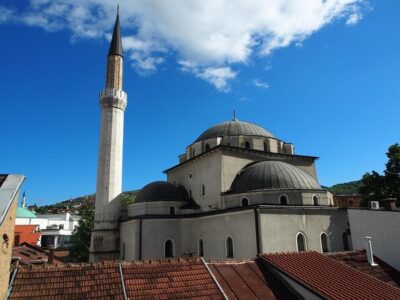
Mostar, Konjic, Dervish House, Pocitelj & Kravica Falls
Read our review →Browse the lists this tour appears in