
REVIEW · JAJCE & TRAVNIK TOURS
Travnik, Jajce & Pliva Lakes Day Tour From Sarajevo (fees Incl.)
Bosnia’s best day trip heads west. This 11-hour outing from Sarajevo combines Jajce’s waterfall, fortress, catacombs, and royal past with the calm waters of Pliva Lakes and the Ottoman town of Travnik. I especially like the small group of no more than eight and the fact that the main entrance fees are included. The main tradeoff is the long day, with several hours on the road and limited time at each place.
The route also gives you more than postcard scenery. Your guide explains Bosnian kings, Ottoman viziers, Yugoslavia, religion, food, and the country’s difficult recent past. Guides such as Emir, Adnan, Ajla, Christian, Saudnic, and Dadu have been praised for making the day personal and relaxed. Still, sights in Travnik may occasionally be closed, and you should not expect a leisurely visit at every stop.
In This Review
- Key details that shape the day
- Why this makes sense from Sarajevo
- Jajce begins with water and medieval power
- Catacombs, towers, and a complicated past
- Pliva Lakes slow the middle of the day
- Mlinčići offers the best photo stop
- Travnik shows Ottoman Bosnia
- How the guiding affects the experience
- Is $96.12 a fair price?
- Who should book this day trip?
- Should you book Travnik, Jajce, and Pliva Lakes?
- FAQ
- How long is the tour?
- Where does the tour start?
- Is drop-off included?
- How many people can join?
- Is the tour offered in English?
- Are entrance fees included?
- Is lunch included?
- Can I stop at the Bosnian Pyramids in Visoko?
- What places are visited in Jajce?
- What is the cancellation policy?
Key details that shape the day
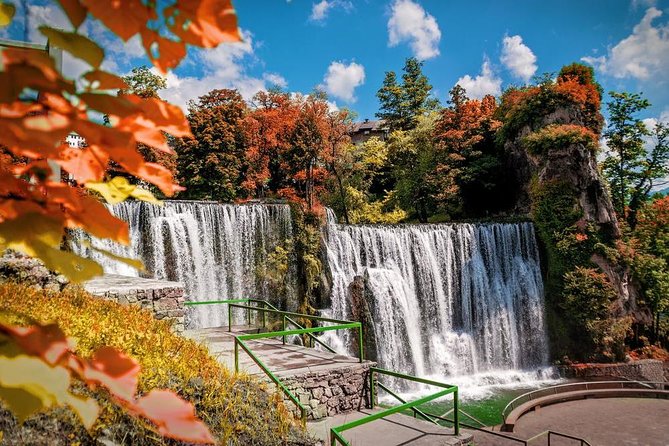
- Jajce’s waterfall is in the city center: Pliva River drops into the Vrbas right beside town, making the first stop unusually dramatic.
- Four important entrance fees are included: Catacombs, Jajce Fortress, the AVNOJ Museum, and Travnik Fortress are covered.
- Pliva Lakes add a slower hour: You get time for views, photos, a walk, and a lunch break near the water.
- The group is capped at eight people: That matters on a long day, since a smaller van group can feel more flexible than a large coach.
- Travnik brings a different historical mood: Its fortress, painted mosque, Ottoman links, and connection with writer Ivo Andrić round out the day.
- Food costs extra: Lunch and drinks are not included, so bring cash or ask your guide about the planned stop.
Why this makes sense from Sarajevo
Sarajevo is a rewarding base, but its mountain setting can make Bosnia’s inland sights look close on a map while taking time to reach. This tour solves that problem in one organized day. You leave around 8 AM, travel through central Bosnia, and return to Sarajevo at about 8 PM.
The route passes Visoko and the valley associated with the Bosnian Pyramids, then follows parts of the Bosna and Lašva river areas before reaching the Vrbas canyon. A stop at Visoko can be arranged in some cases, but the schedule is already full, so it is better treated as scenery unless you book a longer two-day trip.
I like that the drive is not treated as dead time. The guide uses it to explain the region’s past and connect the towns you see with Bosnia’s larger story. The mountain roads and river views are a major part of the appeal, though anyone who dislikes long road days should think carefully before booking.
Transportation is provided from Sarajevo, with complimentary pickup and drop-off at a chosen Sarajevo address. You can also meet at the Funky Tours office on Besarina čikma in the old town, near Baščaršija. The minivan format and small group limit make the ride more manageable, but this is still a full 11-hour excursion.
More Jajce and Travnik trips:
- Jajce, Travnik and Pliva watermills – Day Tour from Sarajevo
★ 5.0 · 295 reviews - From Sarajevo: Travnik, Jajce, Pliva Lakes & Watermills Tour
★ 5.0 · 213 reviews - Jajce, Travnik, Pliva lake and Watermills Tour
★ 5.0 · 104 reviews
Jajce begins with water and medieval power
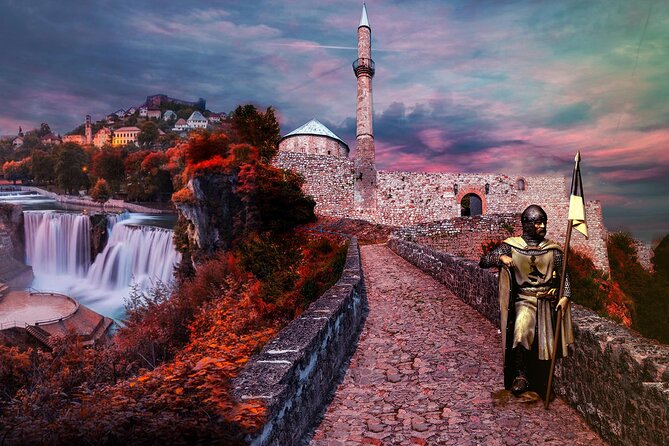
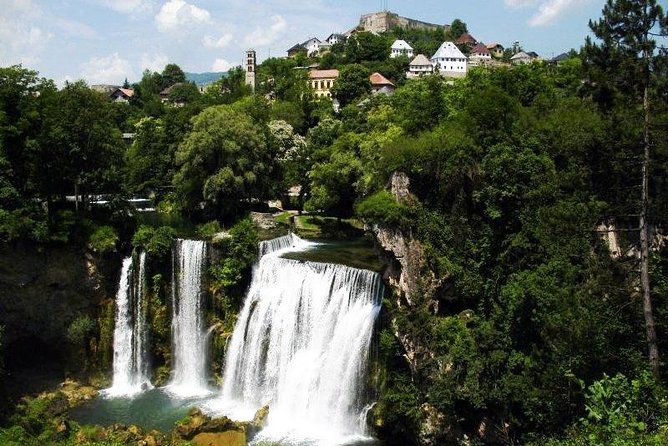
Jajce is the centerpiece of the tour. The first sight is Pliva Waterfall, where the Pliva River meets the Vrbas in the middle of the city. The setting is hard to miss: instead of driving outside town to find a waterfall, you see a major natural feature right in the urban center.
You get about two hours for a guided walk through Jajce and its historic core. The exact order can vary, but the usual sights include the fortress, catacombs, the AVNOJ Museum, Medvjed Kula, St. Luke’s Tower, and the Esma Sultanija Mosque.
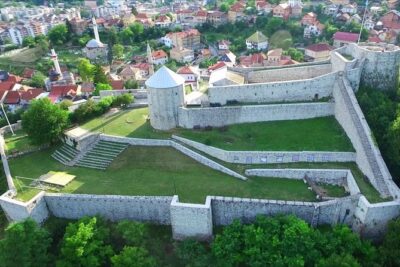
This is where a good guide matters. Jajce can look like a collection of attractive ruins if you do not know how the pieces fit together. The town served as a royal residence in the Middle Ages, and its fortress later held a palace when the royal court moved there in the mid-15th century.
The fortress was built between the 13th and first half of the 14th centuries. Inside and around its walls, you can spot evidence of several periods of construction, including the southern royal portal and a surviving bifora, a type of two-part window. The climb and uneven surfaces may be tiring, but the fortress gives the clearest sense of Jajce as a defended royal town.
Catacombs, towers, and a complicated past
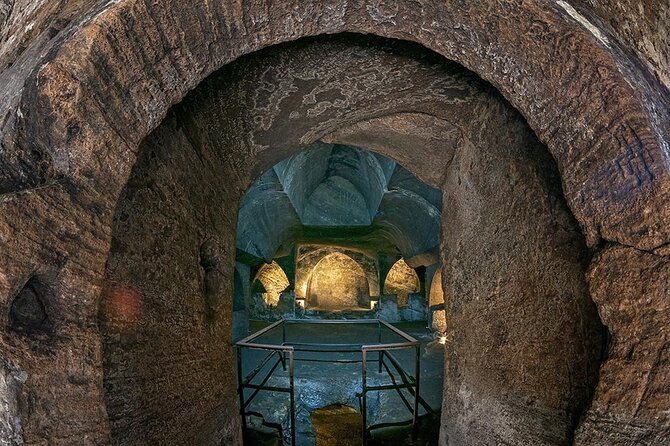
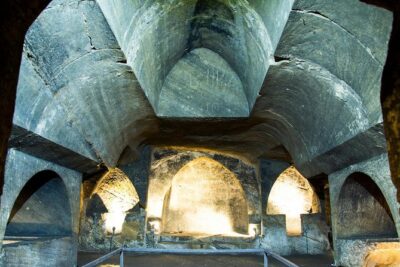
The Catacombs of Jajce are one of the more unusual stops. The underground church and crypt were carved into solid rock about six meters below ground. They were ordered by the Bosnian duke Hrvoje Vukčić Hrvatinić in the late 14th or early 15th century as a burial place for his family.
The space is compact, so the visit lasts about 15 minutes. That short stop works well in a busy day, and the underground setting gives Jajce a more intimate feel than the open fortress. The site has been protected as a national monument of Bosnia and Herzegovina since 2003.
The AVNOJ Museum shifts the story from medieval Bosnia to 20th-century Yugoslavia. The second session of AVNOJ took place in Jajce on November 29, 1943. It helped establish the foundations of socialist Yugoslavia, making Jajce important not only as a medieval royal town but also as a place tied to a modern state’s creation.
The museum was founded in 1953. It suffered major damage and looting during the 1992 to 1995 war, and that fact gives the visit extra weight. You spend about 20 minutes inside, enough to understand why this modest building matters.
Medvjed Kula, or Bear Tower, is an early military structure built in the Romanesque style. Its walls are between 4.5 and 6 meters thick, which explains the practical origin of its name. A darker local story says captives and convicts were kept there for bears to feed on. Your guide can help separate the solid architectural facts from the more dramatic legend.
St. Luke’s Tower is another valuable detail. At 23.15 meters high, it is the only surviving medieval tower of its kind in the continental Balkans. It originally served as the bell tower of the Gothic Church of St. Mary, which also contains Romanesque and Renaissance features. The relics of St. Luke were reportedly brought to Jajce by the last Bosnian queen, Mara Jelena, as part of her dowry.
The Esma Sultanija Mosque is included in the walking tour, but the provided schedule does not list an admission fee for it. It is described as one of Bosnia and Herzegovina’s most beautiful mosques and adds another layer to Jajce’s mix of royal, Christian, Islamic, and Yugoslav history.
Pliva Lakes slow the middle of the day
After the compact history lesson in Jajce, the tour moves to Great and Small Pliva Lake. This is the day’s natural pause. You have about an hour for a walk, photos, and lunch near Great Pliva Lake.
The lakes allow you to choose your own pace. You might prefer a quiet walk beside the water, or you may want to look into kayaking, canoeing, fishing, swimming, or simply sitting on the shore. These activities are described as options in the area, but the tour itself does not state that equipment or activity fees are included.
Pliva Lake has a sporting connection as well. World and European kayaking and canoeing championships were held there in 1963. That detail helps explain why the water is more than a pretty backdrop. It is also a long-standing setting for water sports.
Lunch and drinks are not covered in the tour price. One especially useful detail from the day’s feedback is that a guide took a group to an excellent ćevapi restaurant in his home town. You should see this as a possible guide recommendation, not a guaranteed restaurant stop, but it is worth asking where the group plans to eat.
A few more of this kind worth a look:
- Sarajevo: Mostar, Konjic, Blagaj Tekke, Pocitelj & Waterfall
★ 4.9 · 1,335 reviews - Fall of Yugoslavia, Sarajevo War Tour with Tunnel of Hope Museum and Frontlines
★ 5.0 · 1,314 reviews - Sarajevo: Mostar, Konjic, Sufi House, Pocitelj & Kravice Falls
★ 5.0 · 1,179 reviews - ROSES OF SARAJEVO (Official WAR + CITY tour)- Story of a Survivor
★ 5.0 · 770 reviews
Mlinčići offers the best photo stop
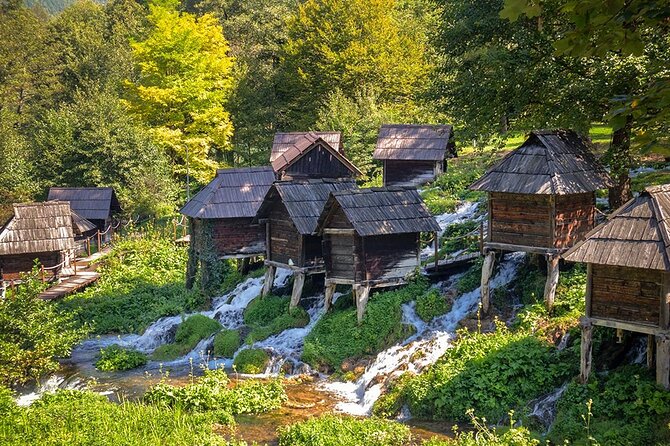
The small wooden mills at Small Pliva Lake, known locally as Mlinčići, are among the most visually memorable parts of the route. These little mills once formed an important attraction during the period of the Austro-Hungarian Empire. Today, the setting is made for easy walks and photographs.
You spend about 15 minutes here, so keep your camera ready and do not expect a long independent visit. The stop is short because Travnik still lies ahead and the return to Sarajevo takes time.
Mlinčići is also a good example of the tour’s balance. Jajce brings fortifications and political history. The lakes bring open space and water. The mills add a small-scale, local detail that can be more charming than another major monument.
Travnik shows Ottoman Bosnia
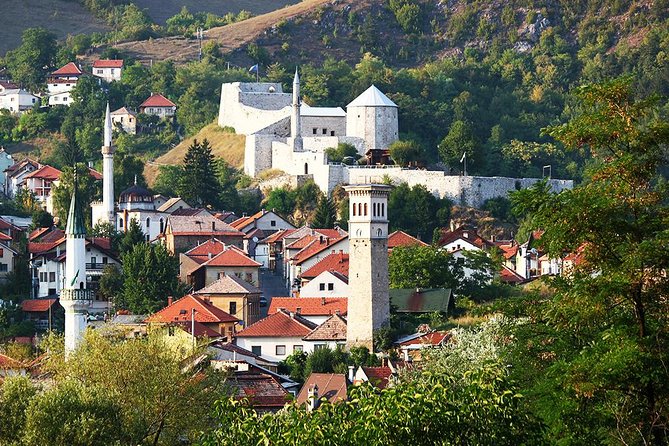
Travnik is the final major town and gives the day a different character. It was known as a town of viziers and is the birthplace of Nobel Prize winning author Ivo Andrić. It is also associated with ćevapi and white cheese, so this is a useful place to ask your guide about local food.
You have about an hour in town, followed by a 30-minute visit to Travnik’s Old Fort. The fortress is considered one of Bosnia’s best-preserved medieval fortified buildings, though later periods left their own marks on it. That mixture makes the site useful for understanding how Bosnia’s towns changed hands and functions over time.
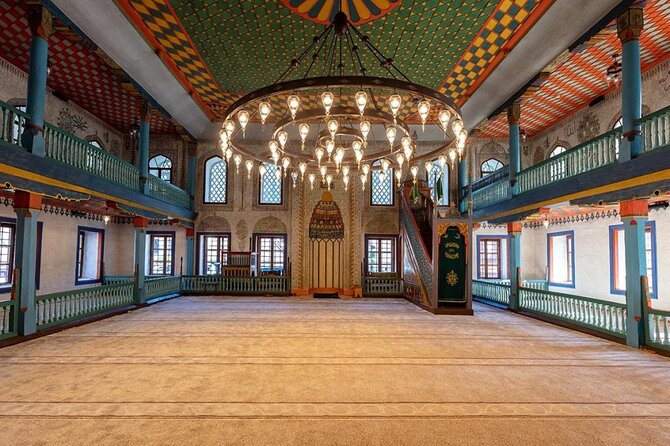
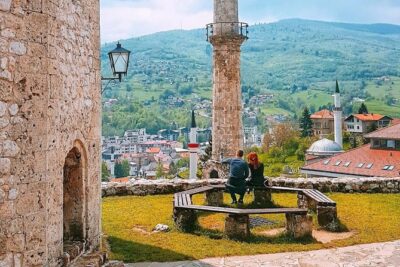
The painted Šarena Džamija is another important stop. It is described as one of the most beautiful mosques in the country, and its colorful decoration gives Travnik a visual contrast with Jajce’s stone walls and underground spaces.
There is one practical warning here: some Travnik sights may not be open on a particular day. That means you should regard the town walk and exterior views as important parts of the visit, rather than counting on every interior. One past outing also included a stop at a divided school in a remote town, but that is not listed as a standard part of this experience, so you should not expect it.
How the guiding affects the experience
The strongest part of this tour is the human side. The guide does not only recite dates. The stated approach is conversational, with room for questions about history, politics, religion, culture, food, and personal impressions of Bosnia.
That matters on this route because the subject is not simple. Medieval kings, Ottoman viziers, Yugoslavia, and the 1990s war all appear in one day. A guide who can explain those layers without turning the ride into a lecture will make the long drive feel worthwhile.
Emir is singled out for his close connection to the region and for making the day lively. Saudnic is praised for guiding and driving well, while Dadu is noted for being patient with children and flexible about toilet breaks and a slower pace. Adnan, Christian, and Ajla are also praised for their work on Funky Tours outings.
You should still remember that guide quality can vary from day to day. The consistent pattern is friendly, personal service, but the exact route, stop order, and amount of time at each sight may change with weather, opening hours, and the group.
Is $96.12 a fair price?
At $96.12 per person, the value is good if you want to see both Jajce and Travnik without arranging a rental car or public transport. The price includes transportation from Sarajevo and entrance to the Jajce Catacombs, Jajce Fortress, AVNOJ Museum, and Travnik Fortress.
The listed admission values total about 8 euros per person: 2.50 euros for the catacombs, 2.50 euros for Jajce Fortress, 1 euro for the AVNOJ Museum, and 2 euros for Travnik Fortress. Food and drinks remain extra, so budget separately for lunch.
A private car and driver could offer more freedom, but it would not automatically provide the same historical explanation or local food advice. A large coach might cost less, but the maximum of eight people is a real advantage on a route with many short stops and a long drive.
The best value comes if you have only a few days in Sarajevo and want a broad look at central Bosnia. If you already plan to spend several nights in Jajce or Travnik, an overnight trip would give you more time and less pressure.
Who should book this day trip?
I would recommend it to first-time visitors based in Sarajevo who want scenery and history in equal measure. It suits people who enjoy medieval fortresses, museums, religious buildings, river views, and clear storytelling.
Families can also do well, especially with a patient guide. The day is long, but the stops change often enough to keep the schedule moving. Ask for a toilet break when needed, since one practical criticism of the route was that stops could be more frequent.
The tour is less suitable if you want long meals, slow photography sessions, or hours at the lakes. You should also think twice if an 11-hour day in a vehicle sounds exhausting. Rain does not necessarily ruin the outing, since the program still offers museums, fortresses, and guided walks, but outdoor views will be less comfortable.
Pickup is offered from your preferred Sarajevo address, and the office meeting point is in Baščaršija. Confirmation is sent within 48 hours, subject to availability. Most people can participate, and service animals are allowed.
Should you book Travnik, Jajce, and Pliva Lakes?
Book it if you want one efficient day covering three very different sides of Bosnia: Jajce’s royal and Yugoslav past, Pliva’s water and mills, and Travnik’s Ottoman character. The 98 percent recommendation rate, 4.8 rating from 50 reviews, small group limit, and included fees all support the price.
I would not book it expecting a relaxed village holiday. This is a packed road day with early pickup, several hours of driving, and short visits. But if you are staying in Sarajevo and want to move beyond the capital without handling the transport yourself, it is a strong choice. Free cancellation is available up to 24 hours before departure, which gives you some useful flexibility while planning.
FAQ
How long is the tour?
The tour lasts approximately 11 hours. It starts at 8 AM and normally returns to Sarajevo around 8 PM.
Where does the tour start?
You can meet at the Funky Tours office at Besarina čikma 5 in Sarajevo’s old town, near Baščaršija. Complimentary pickup is also offered from a chosen location in Sarajevo.
Is drop-off included?
Yes. The tour ends back in Sarajevo, with drop-off at your desired address available through the pickup service.
How many people can join?
The group has a maximum of eight participants.
Is the tour offered in English?
Yes. The experience is offered in English.
Are entrance fees included?
Yes. Admission to the Jajce Catacombs, Jajce Fortress, AVNOJ Museum, and Travnik Fortress is included.
Is lunch included?
No. Food and drinks are not included in the price.
Can I stop at the Bosnian Pyramids in Visoko?
A stop in Visoko and the Bosnian Pyramids valley can be arranged, but the schedule recommends visiting that area as part of a two-day package because of time limits on this day.
What places are visited in Jajce?
The route includes Pliva Waterfall, Jajce Fortress, the AVNOJ Museum, the Catacombs, Medvjed Kula, St. Luke’s Tower, and the Esma Sultanija Mosque.
What is the cancellation policy?
You can cancel for a full refund up to 24 hours before the experience starts. Cancellations or changes made less than 24 hours before departure are not accepted for a refund.
Just added around Sarajevo
- Srebrenica Genocide Tour from Sarajevo★ 4.5 · 3 reviews
- Mountain Village Lukomir Full Day Adventure Tour★ 5.0 · 3 reviews
- MTB Bjelasnica – Lukomir★ 5.0 · 3 reviews
- Sarajevo Under Siege: A City’s Struggle & Survival Tour★ 5.0 · 3 reviews
- Herzegovina Tour from Sarajevo: Mostar, Počitelj, Blagaj, Kravice★ 5.0 · 3 reviews
- Beautiful Bosnia 8 Days Tour Package★ 5.0 · 3 reviews
- Bosnian Kingdom Capitals: Travnik & Jajce Tour from Sarajevo★ 5.0 · 3 reviews
- Walking Tour in Sarajevo★ 5.0 · 3 reviews
Jajce & Travnik Tours, compared.
Jajce, Travnik and Pliva watermills – Day Tour from Sarajevo
Read our review →
CENTRAL BOSNIA | A medieval tour (Jajce + Travnik + Pliva lakes)
Read our review →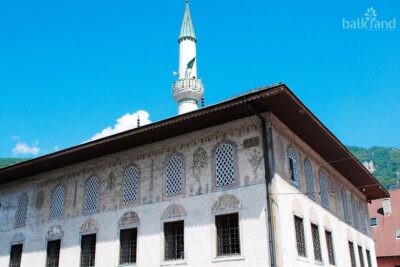
Bosnian Kingdom Capitals: Travnik & Jajce Tour from Sarajevo
Read our review →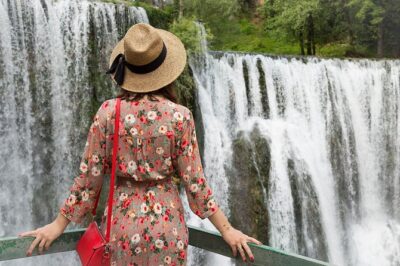
Sarajevo to Zagreb: One-Way Tour via Jajce, Travnik, Pliva Lake and Watermills
Read our review →
Travnik, Jajce, Pliva Lakes & Mills –Medieval & Ottoman Bosnia Full Day Tour
Read our review →Browse the lists this tour appears in