
REVIEW · SARAJEVO TOURS
Balkan trip
Four countries, one long road trip. This 14-day private Balkan journey links Sarajevo, Zagreb, Ljubljana, Bled, Split, Dubrovnik, Kotor, Mostar, and mountain villages in one carefully packed route. I especially like the mix of grand city sights and active days, from Dubrovnik’s walls and Plitvice’s waterfalls to rafting and a two-hour mountain trek. The included hotels, transport, and 13 breakfasts, lunches, and dinners also make the $2,245.70 price easier to understand.
I also like the personal scale. Your group travels privately, with guides handling border crossings, driving, meals, and the constant changes of scenery. The main caution is the pace: several days include long road journeys, border crossings, hikes, and sightseeing in the same day, so this suits you best if you prefer seeing a lot over lingering in one place.
In This Review
- Key points to know before booking
- What the $2,245.70 price really covers
- Sarajevo begins with coffee, history, and Baščaršija
- Travnik, Jajce, and Bihać reveal Bosnia beyond the capital
- Zagreb, Ljubljana, and Lake Bled create a Central European pause
- Plitvice and Split bring the Adriatic into view
- Dubrovnik earns a full afternoon and a high viewpoint
- Perast and Kotor show Montenegro at its most dramatic
- Trebinje and Mostar reconnect you with Bosnia
- Tito’s bunker and rafting make Day 12 the trip’s boldest day
- Lukomir offers the most traditional mountain experience
- Who will get the most from this private Balkan tour
- Should you book this Balkan trip?
- FAQ
- Where does the tour start and finish?
- How long does the experience last?
- Is this a private tour?
- Are meals included?
- Is airport pickup provided?
- Can I cancel for a full refund?
Key points to know before booking
- A full Balkan circuit: You visit Bosnia and Herzegovina, Croatia, Slovenia, and Montenegro, with Sarajevo both the starting and ending point.
- Strong mix of culture and nature: Expect Ottoman-era towns, Adriatic cities, Alpine scenery, waterfalls, national parks, and mountain villages.
- Adventure is part of the plan: Day 12 includes a 23-kilometer rafting trip lasting about five hours, with the needed equipment provided.
- Private touring means personal attention: Only your group participates, which makes the trip more flexible than a standard coach tour.
- Most major costs are bundled: Accommodation, activity transport, and 13 sets of breakfast, lunch, and dinner are included.
- The pace is active: The Kotor fortress hike, Plitvice walk, Lukomir trek, and rafting day require reasonable fitness.
What the $2,245.70 price really covers
At about $160 per day, this is not a bare-bones sightseeing package. Your price includes overnight stays, professional guides, transport for the planned activities, and 13 breakfasts, 13 lunches, and 13 dinners. Flights, souvenirs, and gratuities are extra.
That difference matters in the Balkans. This route crosses several international borders and moves through places where arranging separate transfers, hotels, guides, meals, and outdoor activities would take real time. You are paying for one connected trip rather than assembling a chain of bookings yourself.
The value is strongest if you intend to take part in the full program. A traveler who prefers booking inexpensive rooms and eating independently might find the package less attractive. But if you want a guide, private transport, organized meals, and a steady plan across four countries, the price is reasonable for the amount included.
The accommodation standard is not described in detail, so I would ask about hotel names and room locations before paying. The available information does say that overnight stays are included and that carefully selected hotels have been part of the company’s family and group trips. Still, hotel quality can vary from city to city, and it is sensible to confirm whether rooms are twin, double, or single occupancy.
A few more of this kind worth a look:
- Sarajevo: Mostar, Konjic, Blagaj Tekke, Pocitelj & Waterfall
★ 4.9 · 1,335 reviews - Fall of Yugoslavia, Sarajevo War Tour with Tunnel of Hope Museum and Frontlines
★ 5.0 · 1,314 reviews - Sarajevo: Mostar, Konjic, Sufi House, Pocitelj & Kravice Falls
★ 5.0 · 1,179 reviews
Sarajevo begins with coffee, history, and Baščaršija
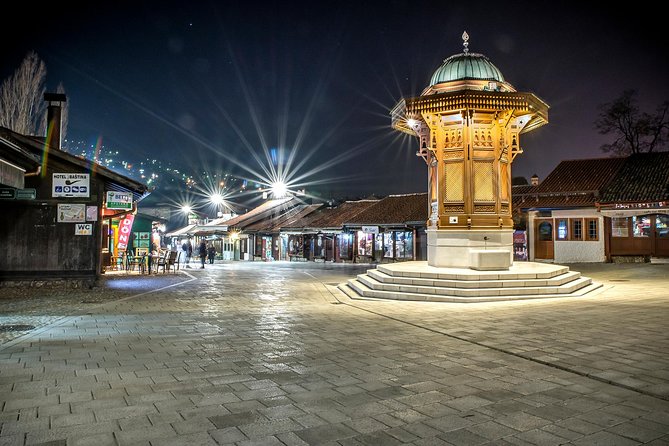
Your arrival day is simple. A pickup from Sarajevo International Airport takes you to the hotel, followed by a short walk and dinner in Baščaršija, Sarajevo’s old Ottoman-era quarter.
That first evening is useful rather than ornamental. Baščaršija gives you an immediate feel for Sarajevo, with narrow streets, craft shops, cafés, and old religious buildings close together. You can settle in without needing to find your own taxi or work out the city after a flight.
Day 2 gives Sarajevo the attention it deserves. The walk includes Baščaršija, Gazi Husrev-bey’s Mosque, the Gazi Husrev-bey Bezistan, the Sebilj fountain, City Hall, the Cathedral of the Sacred Heart, and the Latin Bridge, also called Princip’s Bridge. You also see Avaz Tower, a modern counterpoint to the old center.
I like this combination because Sarajevo is best understood through contrasts. Ottoman, Austro-Hungarian, religious, and modern influences sit within a compact area. The Latin Bridge also connects the city to the event that helped trigger the First World War, giving the walk a strong historical focus without leaving the center.
Later, you go up Trebević and visit the spring of the Bosna River. The plan allows time for trekking and outdoor relaxation, especially in summer. This is a welcome change after the city walk, though you should expect a fairly full day. Comfortable shoes are a must.
Travnik, Jajce, and Bihać reveal Bosnia beyond the capital
Day 3 moves west through three very different Bosnian towns. Travnik comes first, with Ottoman architecture, the Plava Voda spring, and an old fortress. It was an important Ottoman center, and the town’s buildings and waterway give it a more relaxed feel than Sarajevo.
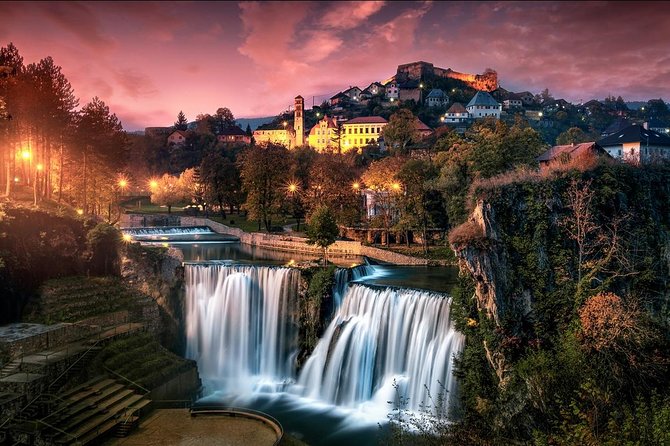
Jajce follows, and this is one of the route’s most unusual stops. The town was once associated with Bosnian kings and has a waterfall in the middle of the urban area. That makes the visit easy to enjoy even if you have limited time. Lunch is arranged in Jajce before continuing to Bihać.
Bihać receives an easy walking tour and becomes your overnight base. This three-town day gives you a better sense of Bosnia than a capital-only visit. The tradeoff is time. You will see the main sights, but you will not have long, unplanned afternoons in each town.
On Day 4, you visit Una National Park and Štrbački buk, a major waterfall. The park is one of the trip’s strongest nature stops, and the waterfall adds a dramatic reward before the journey continues into Croatia.
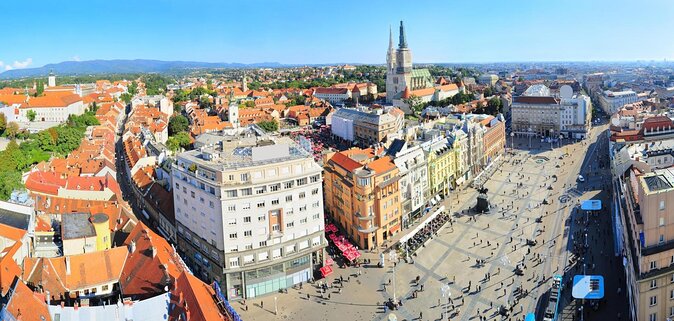
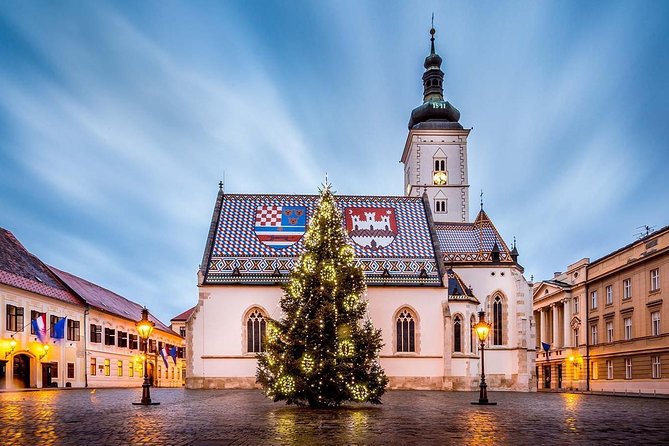
The same day ends in Zagreb, which means the road time is substantial. After the park, you tour Croatia’s capital, including Ban Jelačić Square, St. Mark’s Church, the Upper Town, parks, and central historical sights. Hotel check-in and free time follow lunch.
This is a day to pace yourself. If you are hoping for a relaxed national park visit and a long evening in Zagreb, the schedule may feel tight. If you like using one travel day to connect several important places, it is efficient.
Zagreb, Ljubljana, and Lake Bled create a Central European pause
Zagreb gets more attention on Day 4, but Day 5 shifts into Slovenia. Ljubljana is compact, green, and easy to explore on foot. The walking tour includes Prešeren Square, the Ljubljanica River, the Triple Bridge, and the Dragon Bridge.
These stops give you the city’s main character without turning the visit into a museum marathon. Ljubljana is a pleasant pause between Bosnia’s Ottoman towns and the Adriatic cities ahead. You have enough structure to see the key center, while the walking format leaves room to look around.
The route then continues to Lake Bled, one of Slovenia’s best-known sights. The lake sits below the Julian Alps, with an island in the middle that is described as Slovenia’s only natural island. Lunch is included, and swimming may be possible if weather conditions cooperate.
Bled is scenic, but the experience depends heavily on weather and available free time. The tour does not promise a boat ride or a visit to the island, so ask if those extras matter to you. The schedule returns you to Zagreb for the night, an arrangement that keeps the trip moving but means you do not sleep in Bled.
Something different, still around Sarajevo:
- ROSES OF SARAJEVO (Official WAR + CITY tour)- Story of a Survivor
★ 5.0 · 770 reviews - Sarajevo: Mostar, Konjic, Počitelj, Sufi House, & Waterfalls
★ 4.9 · 572 reviews - Tunnel Museum: Bosnian & Yugoslav Wars Tour with War Veteran
★ 5.0 · 551 reviews - Sarajevo: 2 Hours Old Town Walking Tour With Local Guide
★ 5.0 · 505 reviews
Plitvice and Split bring the Adriatic into view
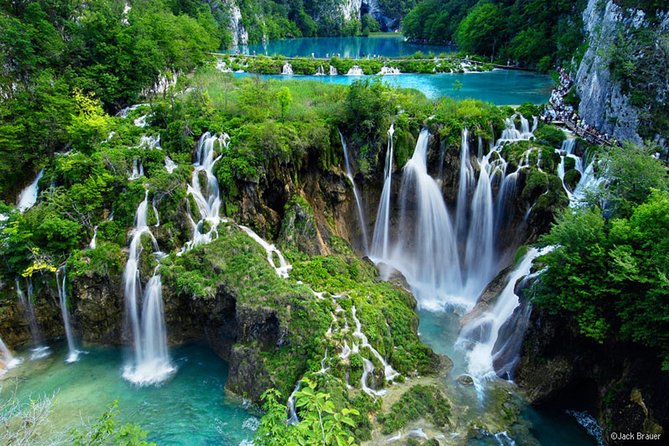
Day 6 is another full transfer day, this time toward Croatia’s coast. Plitvice Lakes National Park is the main stop. The park is a UNESCO World Heritage site and is known for sixteen clear lakes connected by waterfalls.
The planned activity is a comfortable hike along the lakes and falls. It is one of the most rewarding nature sections of the journey, but comfortable is not the same as effortless. You will be walking outdoors, and wet conditions or crowds could affect the experience. Good walking shoes and a light rain layer make sense.
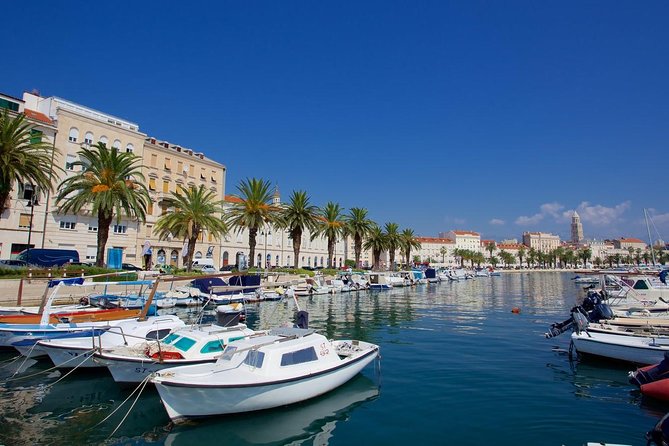
After lunch at Plitvice, you continue to Split. The evening is centered on the Riva, the city’s waterfront promenade. Split is built around the remains of Diocletian’s Palace, though the supplied schedule specifically emphasizes strolling along the Riva rather than a detailed palace tour.
Day 7 gives you free time in Split before moving south to Ston. This is helpful because Split deserves time without a guide directing every step. Ston is known for its long defensive walls, built to protect the former city-state of Dubrovnik. Lunch is organized there, and you spend the night in Dubrovnik.
The route is especially good for showing how quickly Croatia changes from Roman and medieval urban sights to stone villages and the coast. Again, the cost is time. Split to Ston to Dubrovnik makes for a useful connection, but not a slow coastal holiday.
Dubrovnik earns a full afternoon and a high viewpoint
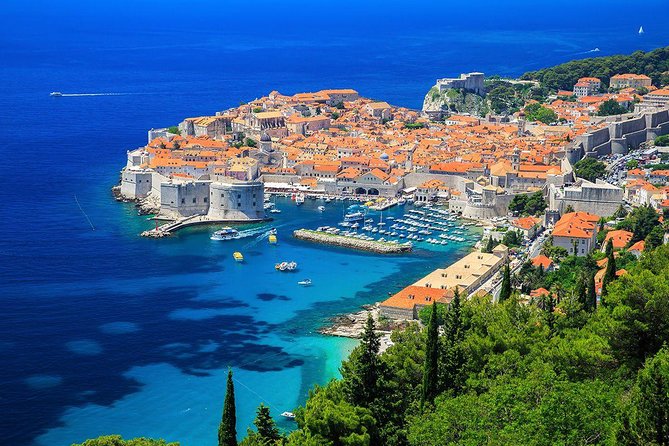
Day 8 is one of the trip’s clearest highlights. You go first to Mount Srđ by cable car for wide views over Dubrovnik and the Adriatic islands. The view gives you the city’s shape in one glance, with the old walls pressed between the hills and the sea.
The afternoon is reserved for Dubrovnik’s Old Town. Its walls, fortresses, and bastions provide a memorable walk above the rooftops and water. Dubrovnik is protected as a UNESCO World Heritage site, and the old center is compact enough to explore on foot.
I appreciate the balance here. You are not rushed through Dubrovnik as a quick photo stop, yet you also avoid spending several days in one heavily visited city. Bring water and shoes with a firm grip for the wall walk. The cable car is included in the planned visit description, but it is worth confirming whether its ticket is part of your package or paid locally.
Perast and Kotor show Montenegro at its most dramatic
Day 9 crosses into Montenegro and heads to Perast, a small Baroque town on the Bay of Kotor. The setting is the star, but the visit has a clear cultural purpose too. Two islands sit offshore, Sveti Đorđe and Gospa od Škrpjela.
A boat ride takes you to the Basilica of Our Lady of the Rocks on Gospa od Škrpjela. This gives the day a pleasant change from road travel and walking. You then drive through the Bay of Kotor before reaching Kotor for hotel check-in, lunch, and free time for relaxing or swimming.
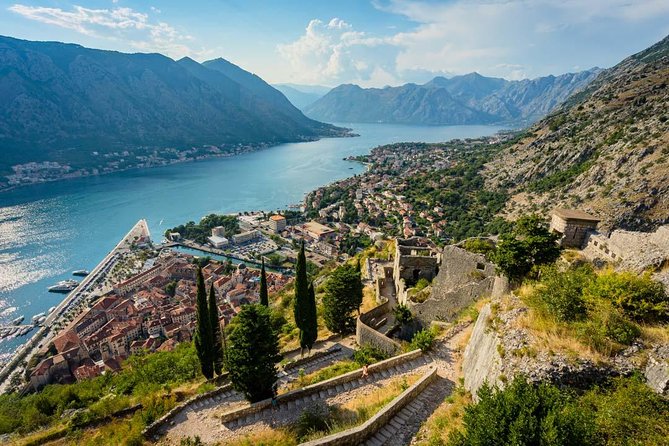
Day 10 starts with a two-hour easy hike to the fortress above Kotor. The tour schedules the climb in the morning, before the strongest heat, which is exactly right. From the top, you get the broadest view of the bay and the old city.
The word easy should be treated with some care. It is still a hill hike, and the route may feel demanding in hot weather. If you have knee or mobility concerns, ask the operator about the exact trail. The rest of the day is free for Kotor’s Old Town, so you can recover at a slower pace.
Trebinje and Mostar reconnect you with Bosnia
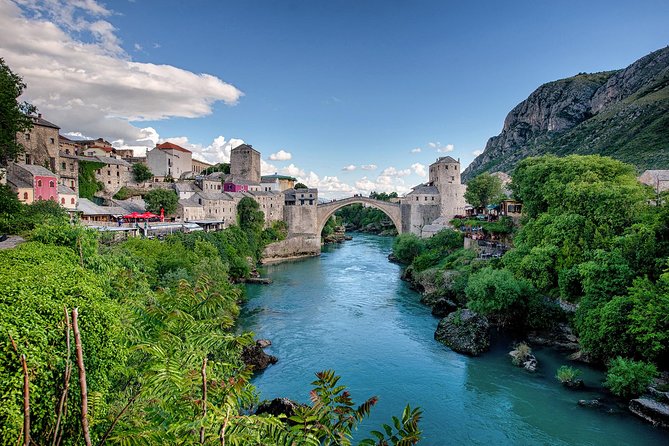
Day 11 returns to Bosnia and Herzegovina through Trebinje, where you take a short break before continuing to Mostar. The stop divides a long transfer and adds another southern Bosnian town to the route.
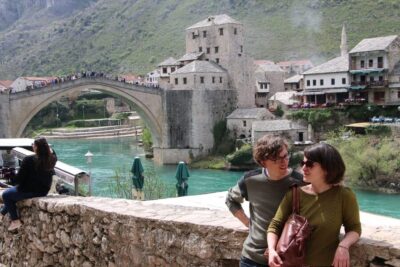
Mostar’s main tour includes the Old Bridge, the UNESCO-protected Old Town, Kujundžiluk street, Karađoz-bey’s Mosque, and Kriva Ćuprija. The Old Bridge is the obvious centerpiece, but the surrounding lanes and stone buildings make the visit more rewarding than a single bridge photograph.
Free time follows the guided walk. Use it to cross the bridge at your own pace, browse the old bazaar, or sit near the river. Mostar can be busy around its central sights, so the free period is valuable.
Tito’s bunker and rafting make Day 12 the trip’s boldest day
The next morning takes you to Konjic and ARK D-0, Tito’s nuclear bunker. Built between 1953 and 1979, the underground complex was intended to protect 350 senior military and government figures in case of nuclear attack. It lies 280 meters underground beneath Mount Zlatar, and construction reportedly cost 4.6 billion US dollars.
This is a rare Cold War site with a strong connection to former Yugoslavia. The visit adds political and military context to a trip otherwise filled with old towns, churches, mosques, and outdoor scenery.
After the bunker, you prepare for rafting. The river trip covers 23 kilometers and lasts about five hours. Neoprene suits, life jackets, shoes, and helmets are supplied. You still need to be comfortable with an active water-based day, and the weather policy matters here: poor conditions can lead to a new date or a full refund.
This is not a minor optional add-on. It is one of the central experiences of the journey, so ask about the rafting route and physical requirements before booking if anyone in your group is unsure.
Lukomir offers the most traditional mountain experience
Day 13 heads into the mountains by jeep, with breaks on Bjelašnica before reaching Lukomir. The village is described as the highest populated place in Bosnia and Herzegovina and the country’s last traditional Bosnian village.
You take a village walk, eat a traditional Bosnian lunch made from organic ingredients, and have time to rest before a two-hour trek to Umoljani. This is the kind of day that gives the tour a stronger local identity. You are not only moving between capital cities and famous old towns; you are also seeing rural Bosnia and eating food tied to the place.
The jeep transport is important because the mountain route would be awkward to handle independently. The trek still requires sturdy footwear and enough energy for a second active day after rafting.
That evening returns you to Sarajevo. It is a satisfying place to finish, tying the mountain experience back to the capital where the trip began.
Who will get the most from this private Balkan tour
I would choose this trip if you want variety, organization, and outdoor activity in equal measure. It suits couples, families, friend groups, and private parties that would rather travel together than join a large coach.
It is also a good fit if you want Bosnia and Herzegovina to be more than a quick stop. Sarajevo, Travnik, Jajce, Bihać, Mostar, Konjic, and Lukomir receive meaningful attention, while Croatia, Slovenia, and Montenegro add major sights nearby.
The company’s personal approach has been praised repeatedly, with guests crediting staff including Sanjin, Aldin, Amella, Jelle, and Martina for warm assistance, careful planning, and a friendly atmosphere. The strongest pattern is not simply good guiding. It is the sense that the team helps with problems, adapts trips for groups, and treats people personally.
I would hesitate if you want a slow, hotel-based vacation. The route changes bases often, includes several long drives, and packs outdoor activities into the schedule. You should also confirm exact hotel standards, room arrangements, cable-car ticket details, and the full Day 12 rafting schedule before booking.
The tour is private, and that is a major advantage. Your group alone takes part, so you have a better chance of discussing preferences with the guide and making the trip feel personal rather than mass-produced.
Should you book this Balkan trip?
Book it if you want to see a large part of the western Balkans without managing four countries, several border crossings, hotels, meals, and adventure activities yourself. The best parts are the range, the private format, the included food and transport, the strong Bosnia focus, and the combination of UNESCO cities with real time outdoors.
Skip it if you need long stays in each place or dislike frequent packing and road travel. At $2,245.70, the trip offers solid value when you use the included meals, accommodation, guides, and activities. Before committing, confirm the hotels and the exact physical demands of the hikes and rafting.
For an active group that wants a broad first look at the Balkans, this is a well-balanced route with plenty of memorable stops and very little wasted space.
FAQ
Where does the tour start and finish?
The tour starts with pickup at Sarajevo International Airport, also called Butmir Airport, in Sarajevo, Bosnia and Herzegovina. It ends with organized transport back to Sarajevo International Airport on Day 14.
How long does the experience last?
The trip lasts approximately 14 days, with overnight stays in Sarajevo, Bihać, Zagreb, Split, Dubrovnik, Kotor, and Mostar.
Is this a private tour?
Yes. Only your group participates in the activity, and professional guides accompany the planned program.
Are meals included?
Yes. The package includes 13 breakfasts, 13 lunches, and 13 dinners.
Is airport pickup provided?
Yes. Airport pickup is provided at the start, and organized airport transport is provided at the end.
Can I cancel for a full refund?
You can cancel at least 24 hours before the experience start time for a full refund. Cancellations or changes made less than 24 hours in advance are not accepted for a refund. If poor weather or insufficient numbers cause cancellation, you are offered another date or experience, or a full refund.
Just added around Sarajevo
- Srebrenica Genocide Tour from Sarajevo★ 4.5 · 3 reviews
- Mountain Village Lukomir Full Day Adventure Tour★ 5.0 · 3 reviews
- MTB Bjelasnica – Lukomir★ 5.0 · 3 reviews
- Sarajevo Under Siege: A City’s Struggle & Survival Tour★ 5.0 · 3 reviews
- Herzegovina Tour from Sarajevo: Mostar, Počitelj, Blagaj, Kravice★ 5.0 · 3 reviews
- Beautiful Bosnia 8 Days Tour Package★ 5.0 · 3 reviews
- Bosnian Kingdom Capitals: Travnik & Jajce Tour from Sarajevo★ 5.0 · 3 reviews
- Walking Tour in Sarajevo★ 5.0 · 3 reviews
Sarajevo Tours, compared.
Mostar, Konjic, Blagaj Tekke, Pocitelj & Waterfall
Read our review →
Fall of Yugoslavia, Sarajevo War Tour with Tunnel of Hope Museum and Frontlines
Read our review →
Mostar, Konjic, Sufi House, Pocitelj & Kravice Falls
Read our review →
ROSES OF SARAJEVO (Official WAR + CITY tour)- Story of a Survivor
Read our review →
Mostar, Konjic, Počitelj, Sufi House, & Waterfalls
Read our review →
Tunnel Museum: Bosnian & Yugoslav Wars Tour with War Veteran
Read our review →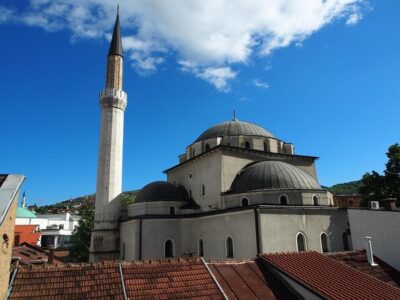
Mostar, Konjic, Dervish House, Pocitelj & Kravica Falls
Read our review →Browse the lists this tour appears in