
REVIEW · BOSNIAN WAR HISTORY TOURS
Inside the Siege: Sarajevo’s Story of Survival
Sarajevo remembers every street. Inside the Siege takes you from the Yellow Fortress to Sniper Alley and the Tunnel of Hope, using war sites to explain how the city survived. I like the small group limit of 16 and the chance to hear local perspectives from guides such as Adis Hamzic. The main drawback is that the €10 Tunnel of Hope admission fee is extra, and the vehicle may feel tight when the group is full.
This is a serious tour, but it is not cold or academic. Guides explain the political background, military events, and civilian experience in clear English, with room for questions and conversation. I especially like the personal storytelling and the efficient three-hour route, though anyone seeking a relaxed sightseeing drive should know that the subject is painful and emotionally heavy.
In This Review
- Key points to know before you book
- Why this Sarajevo war tour matters
- Starting at the Yellow Fortress
- Cemeteries, massacre sites, and the cost of the siege
- Asim Ferhatovic Hase Stadium and an uneasy Olympic legacy
- The memorial to 1,601 children
- Sniper Alley and the Presidency Building
- The Tunnel of Hope: the tour’s central stop
- The return drive and the wider view of Sarajevo
- Price, group size, and comfort
- Who should book this tour?
- Should you book Inside the Siege?
- FAQ
- How long does Inside the Siege last?
- What time does the tour begin?
- Where does the tour start?
- Where does the tour finish?
- Is the Tunnel of Hope entrance fee included?
- What language is the tour offered in?
- How many people can join the tour?
Key points to know before you book
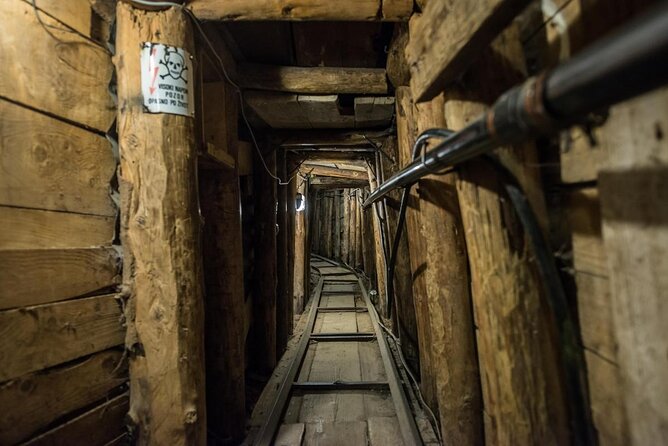
- The Tunnel of Hope gets 50 minutes: This is the longest stop and the tour’s central experience, but the €10 museum ticket is paid separately in local currency.
- The route connects Sarajevo’s major siege locations: You see the Yellow Fortress, a war cemetery, massacre sites, the Olympic stadium, the memorial to 1,601 children, Sniper Alley, and the Presidency Building.
- Adis Hamzic leads a highly personal style of tour: His guides explain the war with strong English, humor where appropriate, and plenty of time for questions.
- The group can be as large as 16 people: Smaller groups are possible, but a full vehicle could feel cramped.
- You return to the central meeting point: The tour begins and ends at Mula Mustafe Bašeskije 65 at 1:00 pm.
- The cost is $54.22 per person: For a two to three-hour guided visit with transport and the Tunnel of Hope stop, I consider it fair, provided you are willing to pay the museum fee separately.
Why this Sarajevo war tour matters
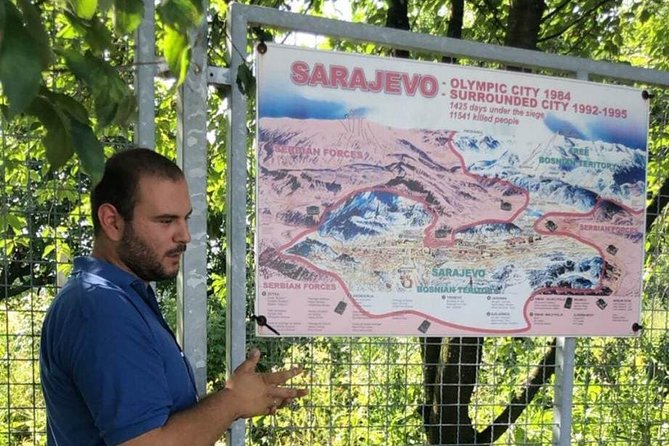
Sarajevo’s siege lasted from 1992 to 1996, but a good tour should do more than repeat dates. It should help you understand how ordinary life continued while the city was surrounded, shelled, and exposed to sniper fire.
That is the strength of this experience. You move between high ground, public buildings, cemeteries, memorials, and survival sites. Each place adds a different piece to the story. The Yellow Fortress shows the city’s position and the front lines. Sniper Alley brings the danger into an urban setting. The Tunnel of Hope shows the practical ingenuity people needed to keep Sarajevo alive.
I also value the local voice. Adis Hamzic is associated with this tour, and his style is friendly, clear, and open to questions. An assistant guide has also led the route, offering a younger local perspective alongside detailed knowledge of the war. That mix can make the subject easier to follow than a lecture delivered only through dates and political labels.
The guides speak excellent English, which matters here. The Bosnian War involved complicated political changes, shifting alliances, and events across the Balkans. You can stop and ask for clarification rather than nodding along to terms you do not understand.
More war history tours:
- Fall of Yugoslavia, Sarajevo War Tour with Tunnel of Hope Museum and Frontlines
★ 5.0 · 1,314 reviews - ROSES OF SARAJEVO (Official WAR + CITY tour)- Story of a Survivor
★ 5.0 · 770 reviews - Tunnel Museum: Bosnian & Yugoslav Wars Tour with War Veteran
★ 5.0 · 551 reviews
Starting at the Yellow Fortress
The tour begins at 1:00 pm from Mula Mustafe Bašeskije 65, then heads toward the Yellow Fortress. Allow about 15 minutes at the fortress itself.
The reward is the view. From this high point, you can see Sarajevo spread through the valley and begin to understand the city’s military geography. The hills around Sarajevo were not simply scenic backdrops during the siege. They helped define the front lines and exposed the city below to fire.
I find this an important opening because it gives you a physical map before the tour becomes more detailed. Later, when the guide discusses sniper positions, shelling, or movement through the city, you have a clearer sense of distance and visibility.
Do not expect a long stop or a separate admission experience here. The fortress visit is brief and free, so the guide’s explanation is the main reason to pay attention. Bring a jacket if the afternoon is cool, since exposed viewpoints can feel different from the streets below.
Cemeteries, massacre sites, and the cost of the siege
The route continues to a resting place for people who fought to protect Sarajevo, followed by sites connected with civilian massacres during the siege. These are not interchangeable stops. One focuses on those who defended the city, while the other forces attention onto the civilians who were killed.
This part of the tour is likely to feel quiet and solemn. The guide’s role is especially important because the sites themselves may not explain the full story. You will get more from them if you listen to the context, ask questions, and allow the subject to remain serious.
The experience does not treat the war as a distant museum topic. Personal memories and local explanations give the places a human scale. That is valuable, but it also means you should not book this expecting light sightseeing with a few dramatic anecdotes.
Sarajevo has many reminders of the siege scattered through ordinary neighborhoods. A guided route helps you connect those reminders to one another rather than seeing each one as an isolated marker. You may leave with a clearer understanding of how close daily life and wartime danger were.
Asim Ferhatovic Hase Stadium and an uneasy Olympic legacy
The next named stop is Asim Ferhatovic Hase Stadium, with about 10 minutes to look around. The stadium hosted the 1984 Winter Olympics, a period when Sarajevo was presenting itself to the world as a modern international city.
During the war, parts of the site were later used as a cemetery. That contrast is hard to miss. The same city that had welcomed athletes and television audiences was soon dealing with death, displacement, and shortages.
The short visit works because it links two sharply different chapters of Sarajevo’s recent past. If you are interested in the 1984 Olympics, this is not a full Olympic tour, so keep your expectations in check. The emphasis is on the stadium’s connection to the war, not on sports facilities or competition history.
The guide’s explanation turns a familiar public building into a reminder of how quickly a city’s purpose can change. I appreciate stops like this because they show that the siege was not confined to remote military zones. It reached places made for celebration, community, and public life.
A few more of this kind worth a look:
- Sarajevo: Mostar, Konjic, Blagaj Tekke, Pocitelj & Waterfall
★ 4.9 · 1,335 reviews - Sarajevo: Mostar, Konjic, Sufi House, Pocitelj & Kravice Falls
★ 5.0 · 1,179 reviews - Sarajevo: Mostar, Konjic, Počitelj, Sufi House, & Waterfalls
★ 4.9 · 572 reviews - Sarajevo: 2 Hours Old Town Walking Tour With Local Guide
★ 5.0 · 505 reviews
The memorial to 1,601 children
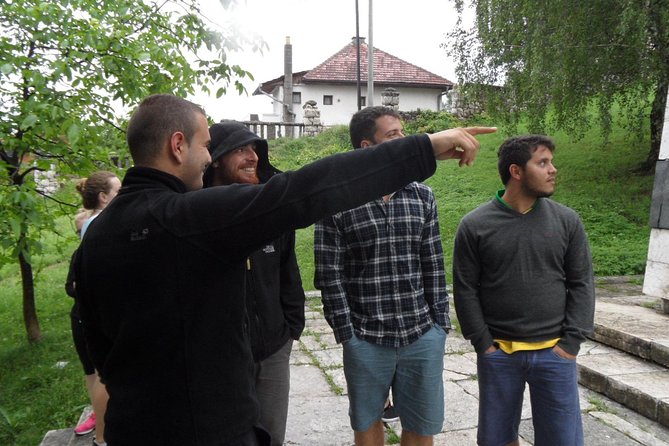
One of the most painful stops honors the 1,601 children killed during the siege. The number is presented as a memorial figure, but the point of the stop is not to reduce lives to statistics.
This is a place where you should give yourself time to listen. A strong guide will explain why the memorial exists and place it within the wider civilian experience. You may find the visit emotionally difficult, especially after seeing the cemetery and massacre sites earlier in the route.
The stop also helps correct a common mistake in war tourism. It is easy to focus on commanders, buildings, and front lines. A memorial to children brings the cost back to families and homes. It makes the story more immediate without turning the suffering into spectacle.
If you are traveling with children, decide in advance how much historical detail feels suitable for your group. The provided tour information does not set a specific age restriction, and most people can participate, but the subject remains serious.
Sniper Alley and the Presidency Building
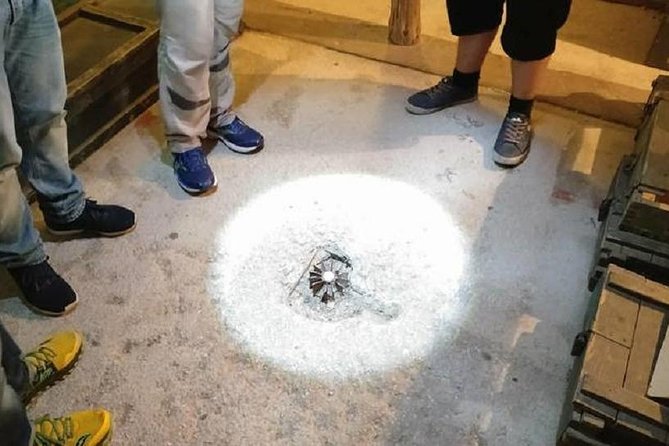
The tour then covers Sniper Alley, described as one of the most dangerous streets in Sarajevo during the war. The power of this stop comes from its ordinary appearance. It is a city street, not a battlefield set apart from daily life.
Your guide explains how sniper fire affected movement through the city and why crossing certain roads could become a life-threatening act. You will gain more from the guide’s commentary than from simply looking out of the vehicle window, so keep listening during the drive between stops.
The Presidency Building adds the political center of wartime Sarajevo to the route. It connects the personal stories of survival with the decisions, negotiations, and pressure surrounding the city’s leadership.
Together, these locations show two sides of the siege. Sniper Alley represents danger faced by people trying to move through the city. The Presidency Building represents the political struggle occurring at the same time. The contrast gives the tour useful balance.
This is also where the vehicle format earns its keep. Sarajevo’s key sites are spread across different parts of the city, and an air-conditioned vehicle allows you to cover more ground than a walking route. You see more in one afternoon, though the tradeoff is less time standing in each neighborhood.
The Tunnel of Hope: the tour’s central stop
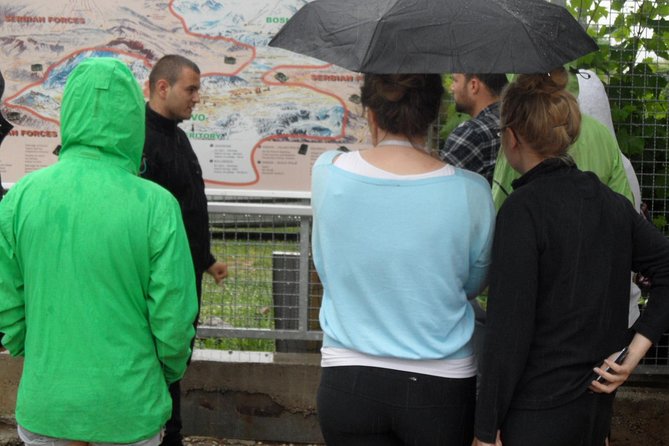
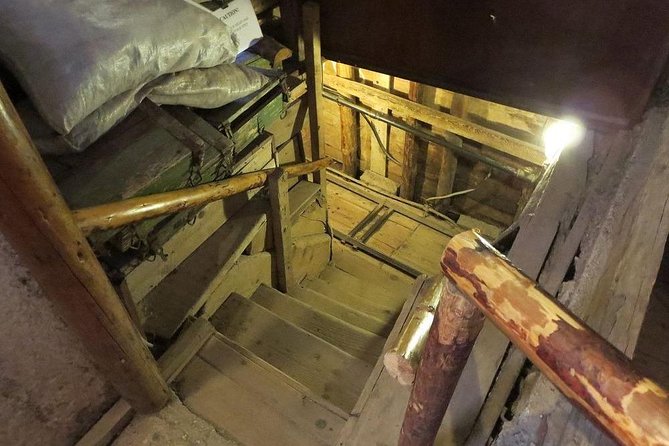
The Tunnel of Hope Museum receives about 50 minutes, making it the longest visit. The tunnel was Sarajevo’s secret lifeline, used to move supplies and support survival while the city was cut off.
You will need to pay the €10 entrance fee separately, using local currency on site. This extra cost is worth factoring into your budget before you go. It is not a hidden charge, since the tour price does not include it, but you should arrive prepared.
The tunnel is the clearest physical example of the resourcefulness required during the siege. A narrow underground route can explain more than another hour of general background because it shows how people created a connection when normal roads and supplies were blocked.
Fifty minutes is a useful amount of time. It gives you room to hear the guide’s explanation and visit the museum without racing through. The information provided does not specify how much of the original tunnel is open or list every museum display, so do not assume you will walk a long underground route. The important point is the survival system the tunnel represented.
I would save your questions for this stop. Ask how the tunnel functioned, what it carried, and how it changed daily life. The guides are praised for answering questions fully, and this is the place where their storytelling matters most.
The return drive and the wider view of Sarajevo
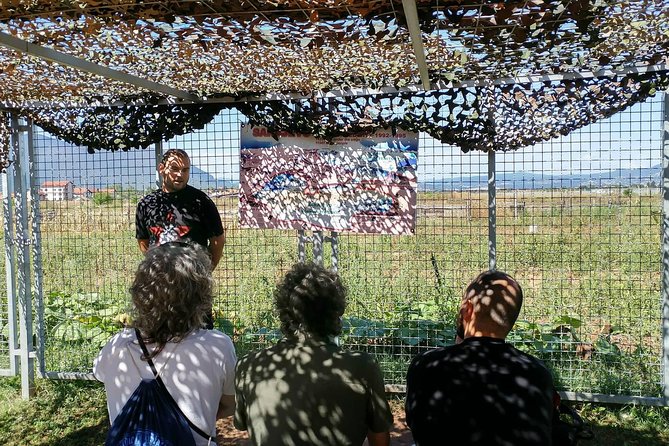
After the tunnel, the vehicle takes a scenic route back, ending with another broad view of Sarajevo. This final drive gives you a chance to process the tour rather than ending abruptly at the museum.
The return view works as a visual reminder of the whole route. You have seen the valley from above, the streets where civilians faced sniper fire, the public buildings tied to politics and sport, and the underground route that helped the city survive.
The scenic drive is also practical. You return to the original meeting point instead of arranging your own transport from the Tunnel of Hope. The full experience lasts about two to three hours, depending on the group and the pace of questions.
Price, group size, and comfort
At $54.22 per person, this is not a budget walking tour, but it offers more than a basic city drive. You receive an air-conditioned vehicle, a professional local guide, transport between several distant sites, and a focused explanation of Sarajevo’s war history.
The value depends on what you want from Sarajevo. If you only need a quick introduction, the price may feel high. If you want to understand the siege through several locations in one afternoon, the cost is reasonable, especially because the route would be difficult to cover efficiently on foot.
The group limit is 16 people. That is small enough for a more personal experience than a large coach tour, but it does not guarantee an intimate group. Groups of four have been possible, and that size allows easy conversation. A fuller vehicle may feel cramped, particularly if you are tall or carrying a day bag.
The tour is offered in English. The guides are praised for clear communication, friendly conversation, and the ability to explain difficult topics without making the experience stiff. Adis Hamzic’s approach includes humor at suitable moments, which can help keep the afternoon human without making light of the war.
Tips are not included and are optional, though appreciated. The Tunnel of Hope fee is the only listed admission cost, at €10 per person.
Who should book this tour?
I would choose this experience if you want a guided introduction to the Siege of Sarajevo and prefer stories tied to real places. It suits first-time visitors who need help connecting the city’s geography with its recent past.
It is also a good fit if you value conversation. The route leaves room for questions, and the guides offer practical suggestions for places to visit around the Old Town. That makes the tour useful beyond its scheduled stops.
You should think twice if you dislike war history, memorial visits, or emotionally heavy subjects. This is not a casual sightseeing circuit. The subject includes civilian deaths, children killed during the siege, sniper fire, and the practical struggle to obtain supplies.
The 1:00 pm start leaves your morning free, and the tour finishes back at the meeting point. It is near public transportation, service animals are allowed, and most people can participate. Confirmation is provided when you book.
Free cancellation is available up to 24 hours before the start time. Cancellations or changes made inside that window are not accepted for a refund, and the tour requires a minimum number of participants. If that minimum is not met, you are offered another date or experience, or a full refund.
Should you book Inside the Siege?
Book it if you want context, local voices, and efficient access to Sarajevo’s siege sites. The combination of Yellow Fortress views, Sniper Alley, the child memorial, the Presidency Building, and the Tunnel of Hope gives you a strong picture of how the city endured.
The tour’s best feature is its human scale. Guides such as Adis Hamzic explain the facts while leaving room for personal questions and local perspective. Just budget another €10 for the museum, accept that a full vehicle may feel tight, and come ready for a serious afternoon.
If those conditions suit you, this is a worthwhile way to understand Sarajevo beyond its cafes, bridges, and handsome old streets.
FAQ
How long does Inside the Siege last?
The experience lasts approximately two to three hours.
What time does the tour begin?
It begins at 1:00 pm.
Where does the tour start?
You meet at Mula Mustafe Bašeskije 65, Sarajevo 71000, Bosnia and Herzegovina.
Where does the tour finish?
The experience ends back at the original meeting point.
Is the Tunnel of Hope entrance fee included?
No. The entrance fee is €10 per person and is paid separately on site in local currency.
What language is the tour offered in?
The tour is offered in English.
How many people can join the tour?
The maximum group size is 16 people.
Just added around Sarajevo
- Srebrenica Genocide Tour from Sarajevo★ 4.5 · 3 reviews
- Mountain Village Lukomir Full Day Adventure Tour★ 5.0 · 3 reviews
- MTB Bjelasnica – Lukomir★ 5.0 · 3 reviews
- Herzegovina Tour from Sarajevo: Mostar, Počitelj, Blagaj, Kravice★ 5.0 · 3 reviews
- Sarajevo Under Siege: A City’s Struggle & Survival Tour★ 5.0 · 3 reviews
- Beautiful Bosnia 8 Days Tour Package★ 5.0 · 3 reviews
- Bosnian Kingdom Capitals: Travnik & Jajce Tour from Sarajevo★ 5.0 · 3 reviews
- Walking Tour in Sarajevo★ 5.0 · 3 reviews
Bosnian War History Tours, compared.

Fall of Yugoslavia, Sarajevo War Tour with Tunnel of Hope Museum and Frontlines
Read our review →
ROSES OF SARAJEVO (Official WAR + CITY tour)- Story of a Survivor
Read our review →
Tunnel Museum: Bosnian & Yugoslav Wars Tour with War Veteran
Read our review →
Sarajevo War Tour: A Veteran’s Story of the Siege (fees included)
Read our review →
Break-up of Yugoslavia & The War in Mostar: Life Under Siege
Read our review →
Sarajevo Grand Tour: Old Town, War Tunnel, Olympic Sites & More
Read our review →Browse the lists this tour appears in