
REVIEW · MUSEUMS
SARAJEVO CONCEPTUAL ART TOUR (galleries, art and arhitecture)
Sarajevo turns war scars into public art. This small-group art walk links contemporary galleries, public sculpture, architecture, and the city’s famous Sarajevo Roses in about two to three hours. I like that it takes you beyond the usual old-town sights, and I like the chance to hear personal context from guide Mak, who has shared his own wartime experiences and helped visitors connect the art to the city.
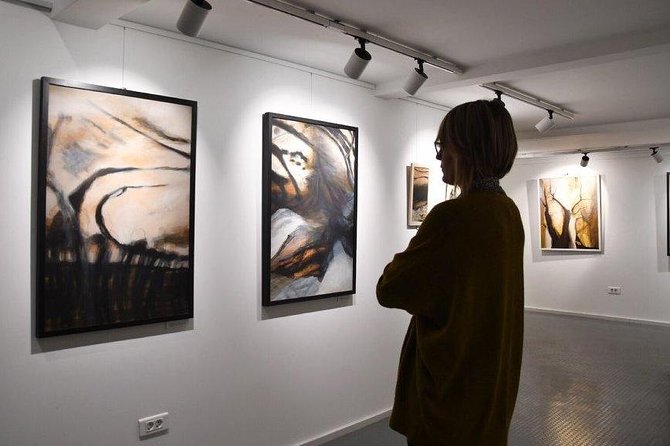
The tour also makes Sarajevo’s scattered art spaces easy to find, with stops at Brodac Gallery, Galerija Java, Gallery Boris Smojo, and several public sites. The main consideration is that conceptual art can be personal and uneven, and some exhibitions may change, so this suits you best if you enjoy ideas and discussion more than a standard museum checklist.
In This Review
- Key points about Sarajevo’s art walk
- Why this Sarajevo tour is different
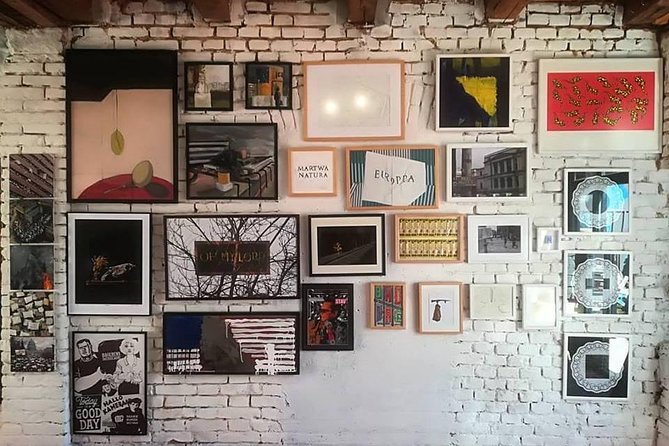
- Brodac Gallery and its former prison walls
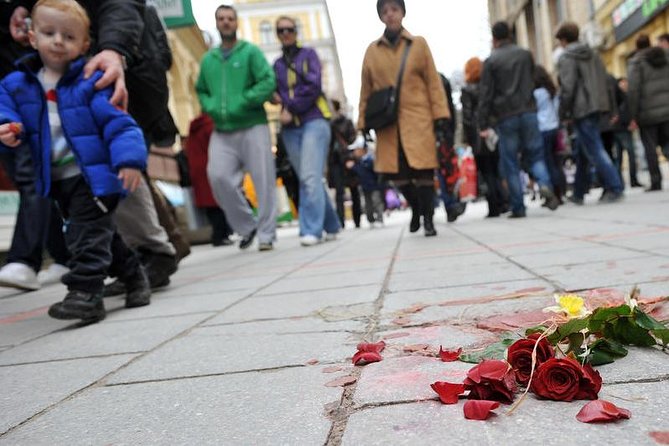
- Ferhadija Street and the meaning of Sarajevo Roses
- Galerija Java and Sarajevo’s contemporary art scene
- Veliki Park and Srebrenica memorial sculpture
- Gallery Boris Smojo and the Festina Lente bridge
- What the guide adds to the experience
- Price, timing, and who gets the best value
- Should you book the Sarajevo Conceptual Art Tour?
- FAQ
- Where does the Sarajevo Conceptual Art Tour begin?
- What time does the tour start?
- Where does the tour end?
- How long does the tour last?
- Is the tour offered in English?
- How many people can join the tour?
- What is the cancellation policy?
Key points about Sarajevo’s art walk
- Brodac Gallery occupies a former Austro-Hungarian prison, giving its contemporary exhibitions an unusual setting and a strong sense of place.
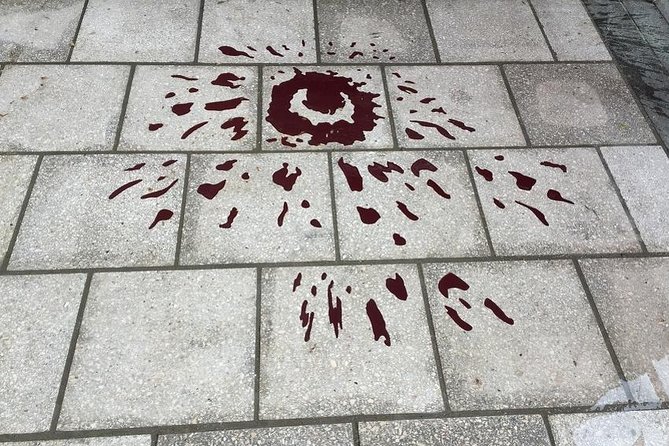
- Sarajevo Roses mark mortar impacts from the Siege of Sarajevo, with red resin filling the flower-like scars in the pavement.
- Guide Mak adds personal wartime experience to the history and art, and has even given a visitor a book he wrote.
- Galeriја Java supports Bosnian and international artists, with work presented in a central exhibition space on Titova Street.
- The tour ends near Skenderija, with a café break at Gallery Boris Smojo and a look at the Festina Lente bridge.
- The $33.64 price includes a maximum group size of 15, admission at the galleries, and an English-speaking guide.
Why this Sarajevo tour is different
Most first walks through Sarajevo focus on Ottoman streets, Austro-Hungarian buildings, cafés, and the marks left by the 1990s war. This tour adds another layer: how artists respond to the city, its buildings, its public spaces, and its painful recent past.
I like the way the route mixes formal galleries with art you encounter outdoors. You are not spending two hours indoors looking at framed pieces. You move through central Sarajevo, pause at a war memorial, enter galleries in old and modern settings, and finish with a bridge designed as a public artwork.
The group is capped at 15 people. That is large enough to keep the price reasonable but small enough for questions and conversation. At $33.64 per person, the value depends on your interest in modern art. If you would normally pay for a private guide or spend time searching for galleries on your own, the price is fair. If you want only major historical sights, another Sarajevo walking tour may give you more for your money.
The tour begins at 1 p.m. at Đulagina 2 and finishes at Skenderija. Since the route uses central streets and public spaces, you should expect a walking experience rather than a vehicle tour. The supplied details do not give exact walking distances, so wear shoes that are comfortable for a few hours on city streets.
More museums and galleries:
- Fall of Yugoslavia, Sarajevo War Tour with Tunnel of Hope Museum and Frontlines
★ 5.0 · 1,314 reviews - Tunnel Museum: Bosnian & Yugoslav Wars Tour with War Veteran
★ 5.0 · 551 reviews - Tunnel of Hope Museum Tour
★ 5.0 · 38 reviews
Brodac Gallery and its former prison walls
The first stop is Brodac Gallery, where the setting is almost as important as the exhibition. The gallery occupies an old building that served as a prison during the Austro-Hungarian occupation. Today, it offers a much friendlier purpose, showing contemporary Bosnian art in a cozy space.
That change of use gives the stop a useful tension. You are looking at new art inside a building tied to an older period of control and confinement. I find that kind of setting helps you pay attention to the room itself, not just the works on the wall.
The visit lasts about 45 minutes, and admission is included. The gallery also serves Gelender, a local craft beer. That small detail matters. A drink can make the first stop feel less like a formal museum visit and more like a conversation about art in a lived-in Sarajevo setting.
The exhibition program is not fixed in the supplied information, so you should not expect one permanent collection. The work may be different from one visit to the next. That is good news if you like discovery, but less helpful if you want to plan around a particular artist or piece.
Ferhadija Street and the meaning of Sarajevo Roses
From Brodac, the route continues along Ferhadija Pedestrian Street. The street runs from the Vječna Vatra area and Titova Street toward Gazi Husrev-Begova Street, where it becomes Sarači Street and continues east through the old center.
The key art here is not in a gallery. It is under your feet. Sarajevo Roses are concrete scars left by mortar explosions. The force of a shell striking pavement created a pattern with a flower-like shape, and the marks were later filled with red resin.
The tour gives you about 30 minutes at this part of the route. That may sound brief, but these memorials do not need a long indoor visit. You pause, look closely, and listen to the explanation. The red filling changes an accidental mark of destruction into a deliberate memorial.
The Roses also show why an art tour can add something to a history walk. A guide can explain what you are seeing, but you still encounter it at street level, among shops and pedestrians. The memorial is part of daily Sarajevo rather than sealed away in a museum.
You may find this section emotionally heavy. The city suffered intense urban warfare during the Siege of Sarajevo, and the concrete patterns record that violence in a direct, physical way. The tour does not treat them as decoration. Give yourself time to look before moving on.
Galerija Java and Sarajevo’s contemporary art scene
Galerija Java is on Titova 21, right in the center of town. The gallery has helped build Sarajevo’s contemporary art scene by giving artists a place to show their work in an attractive exhibition space.
This is the most traditional gallery stop on the route, with about an hour set aside for the visit. The gallery works with artists from Bosnia and Herzegovina as well as artists from abroad. It also presents several artistic mediums, so the exact experience can vary with the current show.
I like this stop because it gives context to the rest of the walk. After seeing public memorials and a gallery in a former prison, you get a clearer look at how Sarajevo’s art world presents itself in a dedicated space. It is a chance to consider how local artists deal with identity, memory, place, and contemporary life.
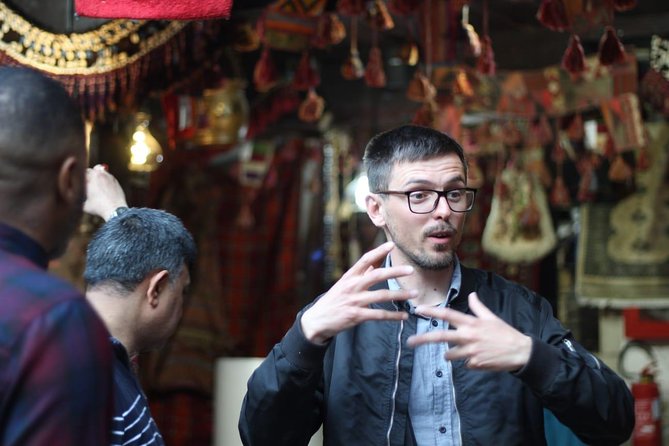
Still, modern art is not always easy to read without discussion. That is where the guide matters. Mak has been praised for answering questions and sharing his own wartime experiences. His role is not just to lead you from one address to another. He can help you ask what a piece is doing, why it is shown there, and how it fits into Sarajevo today.
The gallery stop includes admission. Since the exhibition can change, I would treat the experience as a conversation and a chance to see what is current, not as a guaranteed list of famous works.
A few more of this kind worth a look:
- Sarajevo: Mostar, Konjic, Blagaj Tekke, Pocitelj & Waterfall
★ 4.9 · 1,335 reviews - Sarajevo: Mostar, Konjic, Sufi House, Pocitelj & Kravice Falls
★ 5.0 · 1,179 reviews - ROSES OF SARAJEVO (Official WAR + CITY tour)- Story of a Survivor
★ 5.0 · 770 reviews - Sarajevo: Mostar, Konjic, Počitelj, Sufi House, & Waterfalls
★ 4.9 · 572 reviews
Veliki Park and Srebrenica memorial sculpture
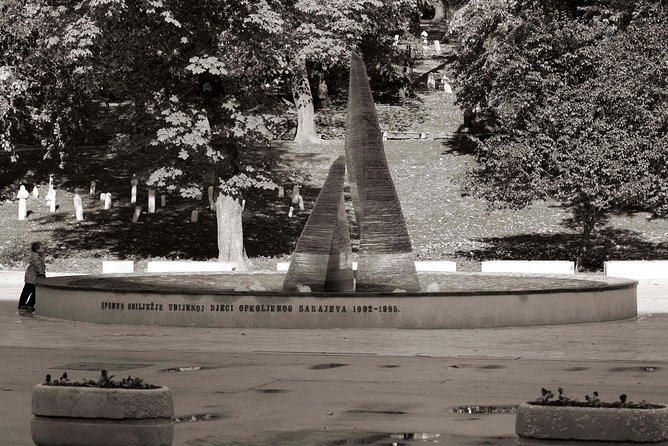
The route then reaches Veliki Park, one of Sarajevo’s best-known parks. Here you see Nermine, dođi, a sculpture by Bosnian artist and sculptor Mensud Kečo.
The sculpture is dedicated to the genocide in Srebrenica. It uses concrete, reinforcement bars, plastic, and silicone to represent the distressing documented photograph that inspired the artist. The materials are rough and exposed, which suits a work dealing with violence and loss.
You have about 30 minutes at the park. This is another outdoor stop, so the art is encountered in public space rather than behind a museum entrance. The setting matters. A memorial in a city park becomes part of the city’s daily life, and you can consider it alongside the people and streets around it.
This is not a light sightseeing stop. You should expect a serious conversation about memory and the Bosnian war. If you prefer art tours that focus only on design, galleries, and architecture, this section may feel more difficult than expected. If you want to understand how Sarajevo remembers, it is one of the most important stops.
The sculpture also broadens the tour beyond Sarajevo itself. The Sarajevo Roses speak directly to the city under siege, while Nermine, dođi points to the wider regional trauma of Srebrenica. Together, they show how public art can carry history without using a museum label or a long written display.
Gallery Boris Smojo and the Festina Lente bridge
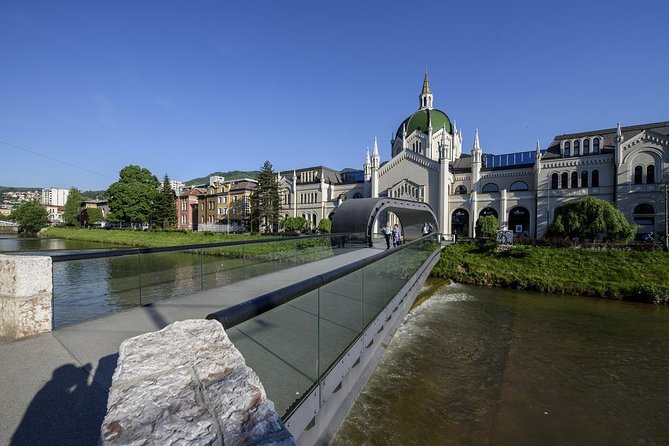
The final section takes you toward Skenderija Bridge. The plan includes a café break at Gallery Boris Smojo, followed by a visit to the Festina Lente bridge.
The gallery stop gives the tour a relaxed finish. After several serious discussions, a break can help you process what you have seen. Admission is included at the gallery stops, and the tour information specifically includes a café break here, though it does not state whether drinks are included in the tour price. Plan to pay for anything you order unless your guide tells you otherwise.
Then comes Festina Lente, a bridge whose name means make haste slowly. The bridge is a useful final image for the tour because it links movement, design, and public space. You are not simply viewing an object in a gallery. You are seeing how art and architecture shape the way people cross the city.
The tour ends in Skenderija, at or near Skenderija Bridge. That gives you a practical finish in a central part of Sarajevo, rather than returning you to the starting point. Check the end point before booking if you need to collect luggage, return to a hotel, or meet someone elsewhere.
What the guide adds to the experience
A route like this can be followed alone, but the guide is the main reason to book it. Finding galleries is one task. Understanding why a former prison now houses contemporary art, or how an impact mark became a memorial, is another.
Mak receives particularly strong praise for being kind, helpful, and able to discuss more than dates and facts. He has shared his own experiences of the war, answered questions, and given a visitor a book he wrote. That personal touch is unusual and may be the most memorable part of the tour.
You should keep in mind that a guide’s personal perspective is part of the experience. It can bring the city closer, but it also means the tour is not a detached academic lecture. I would book this if you want a human conversation about Sarajevo’s art and memory.
The tour is offered in English. The group limit of 15 should allow some interaction, though the feel may differ between a small group and one close to the maximum. Ask questions as you go. This is not a tour where you should quietly wait for a long list of facts.
Price, timing, and who gets the best value
At $33.64, this is a moderate price for a two to three-hour guided walk with gallery admission included. You are paying for the route, the guide’s interpretation, access to several art spaces, and the time saved by not locating each place yourself.
The price is strongest for a visitor who has already seen Sarajevo’s main historic sights and wants a different angle. It is also useful early in a stay if you want an introduction to local contemporary art before visiting galleries on your own.
I would be less quick to book it for young children or anyone who dislikes conceptual art, although the supplied information says most people can participate. The tour includes war memorials and discussion of genocide, so the subject matter may not suit every mood or age group.
The 1 p.m. start leaves your morning free. The afternoon timing also places the public-space portions of the route in daylight, which is helpful when looking for pavement memorials and sculpture. The tour requires a minimum number of participants, so a cancellation is possible if that number is not reached. If that happens, you are offered another date or experience, or a full refund.
Free cancellation is available up to 24 hours before the start time. Changes or cancellations inside that window are not refunded, so do not wait until the last afternoon if your plans are uncertain.
Should you book the Sarajevo Conceptual Art Tour?
Book it if you want Bosnian contemporary art, public memorials, and personal historical context in one compact walk. The mix of Brodac Gallery, Ferhadija Street, Galerija Java, Veliki Park, Gallery Boris Smojo, and Festina Lente gives the tour a clear shape without feeling like a standard sightseeing circuit.
I especially recommend it if you value direct access to a local guide and want help finding art spaces that are easy to miss. Mak’s personal approach can add real weight to the route, particularly at the Sarajevo Roses and the Srebrenica memorial sculpture.
Skip it if your main goal is Ottoman architecture, food, or the city’s major historical landmarks. Also think twice if discussions of war and genocide would make your afternoon uncomfortable. For the right audience, though, the $33.64 fee buys more than gallery entry. It gives you a way to read Sarajevo through the art it makes, preserves, and places in the street.
FAQ
Where does the Sarajevo Conceptual Art Tour begin?
The tour begins at Đulagina 2, Sarajevo 71000, Bosnia and Herzegovina.
What time does the tour start?
The start time is 1 p.m.
Where does the tour end?
The tour ends in the Skenderija area of Sarajevo, at Skenderija 71000.
How long does the tour last?
The experience lasts approximately two to three hours.
Is the tour offered in English?
Yes. The tour is offered in English.
How many people can join the tour?
The maximum group size is 15 people.
What is the cancellation policy?
You can cancel up to 24 hours before the start time for a full refund. Cancellations or changes made less than 24 hours before the experience are not refunded or accepted.
Just added around Sarajevo
- Srebrenica Genocide Tour from Sarajevo★ 4.5 · 3 reviews
- Mountain Village Lukomir Full Day Adventure Tour★ 5.0 · 3 reviews
- MTB Bjelasnica – Lukomir★ 5.0 · 3 reviews
- Sarajevo Under Siege: A City’s Struggle & Survival Tour★ 5.0 · 3 reviews
- Herzegovina Tour from Sarajevo: Mostar, Počitelj, Blagaj, Kravice★ 5.0 · 3 reviews
- Bosnian Kingdom Capitals: Travnik & Jajce Tour from Sarajevo★ 5.0 · 3 reviews
- Beautiful Bosnia 8 Days Tour Package★ 5.0 · 3 reviews
- Walking Tour in Sarajevo★ 5.0 · 3 reviews
Museums, compared.

Fall of Yugoslavia, Sarajevo War Tour with Tunnel of Hope Museum and Frontlines
Read our review →
Tunnel Museum: Bosnian & Yugoslav Wars Tour with War Veteran
Read our review →
Browse the lists this tour appears in