
REVIEW · BOSNIAN WAR HISTORY TOURS
Times of Misfortune – Life Under Siege and the Tunnel of Hope
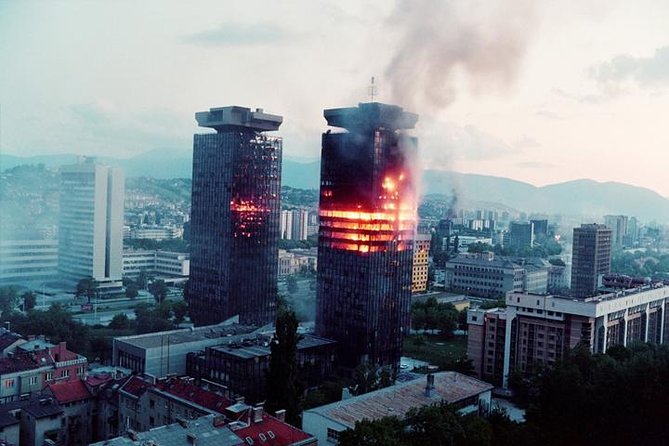
Sarajevo’s past is impossible to ignore. This three-and-a-half-hour tour connects the city’s wartime sites with the wider story of the Siege of Sarajevo, using a guide, private transportation, and a visit to the Tunnel of Hope Museum to turn scattered landmarks into a clear human story. I especially like the stop at Yellow Fortress for its broad city view, and I value the personal accounts shared by guides such as Nermin, who lived through the war. The main drawback is that several central sites are viewed only from the vehicle, so this is more of a moving history lesson than a walking tour.
The tour costs $32.58 per person, with the Tunnel of Hope admission paid separately. That keeps the basic price reasonable for a small group of up to 20 people, transportation, and a licensed guide, but you should budget another 20 BAM for the museum if you are an adult.
In This Review
- Five things to know before you go
- Why Sarajevo needs a tour like this
- Yellow Fortress and Kovači Cemetery
- City Hall, Markale, and the Presidency Building
- Olympic Sarajevo meets a city under fire
- The maternity hospital and Sniper Alley
- The Tunnel of Hope is the heart of the tour
- The guide can shape the whole experience
- Is $32.58 good value?
- Who should book it?
- My verdict on Times of Misfortune
- FAQ
- How long does the Times of Misfortune tour last?
- Where does the tour begin?
- Where does the tour end?
- Is transportation included?
- Is the Tunnel of Hope museum ticket included?
- What language is the tour offered in?
- How large can the group be?
- Does the tour visit Sarajevo’s wartime landmarks?
- Can I cancel the tour for a refund?
Five things to know before you go
- Personal wartime accounts matter: Guides such as Nermin, a former police officer, have used their own experiences to explain what daily life felt like during the siege.
- Yellow Fortress gives the best opening view: You look across Sarajevo while learning why the city’s hills mattered so much during the war.
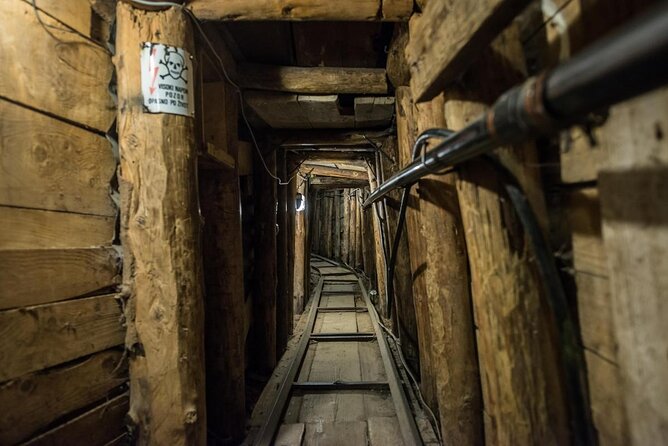
- The Tunnel of Hope is the emotional center: The museum visit lasts about 1 hour and 15 minutes and includes stories and a film.
- Many central landmarks are drive-by stops: City Hall, Markale Market, Sniper Alley, the Presidency Building, and other sites are seen from the vehicle.
- The museum ticket costs extra: Adults pay 20 BAM, while students pay 8 BAM.
- The tour returns to its starting point: It begins at Sarajevo Insider on Zelenih beretki 30 and ends there after the tunnel visit.
Why Sarajevo needs a tour like this
Sarajevo’s wartime story can feel hard to piece together on your own. The city contains ordinary streets, government buildings, markets, hospitals, sports venues, cemeteries, and television stations that became part of a long siege between 1992 and 1995.
This tour helps you connect those places. Instead of seeing the Presidency Building as just another government office, you learn about its wartime role. The Holiday Inn becomes linked with journalists and international reporting. The maternity hospital becomes a place of courage. The Tunnel of Hope explains how Sarajevo maintained a lifeline when normal routes were cut.
I like this approach because it keeps the focus on people and places rather than turning the war into a list of dates. The guide supplies the thread between the stops. That makes the tour particularly useful if you know the siege only from newspaper reports, books, or television images.
The subject is painful. You will hear about civilian suffering, military pressure, and the struggle to keep the city alive. This is not a light sightseeing outing, and you should allow yourself some quiet time afterward.
More war history tours:
- Fall of Yugoslavia, Sarajevo War Tour with Tunnel of Hope Museum and Frontlines
★ 5.0 · 1,314 reviews - ROSES OF SARAJEVO (Official WAR + CITY tour)- Story of a Survivor
★ 5.0 · 770 reviews - Tunnel Museum: Bosnian & Yugoslav Wars Tour with War Veteran
★ 5.0 · 551 reviews
Yellow Fortress and Kovači Cemetery
The tour starts at Sarajevo Insider, at Zelenih beretki 30 in the center. From there, transportation takes you to Yellow Fortress, where you have about 20 minutes.
This is an excellent first stop. From the hillside, you get a wide view over Sarajevo, including the long valley and the surrounding slopes. The view helps explain the city’s wartime geography. Sarajevo was enclosed by hills, and those heights shaped the experience of the siege in ways that are difficult to understand from a flat city street.
The fortress itself also provides a useful link between older Sarajevo and the more recent conflict. The tour is not only about the 1990s. It places the siege within the city’s longer story, then brings the focus back to the war.
The next stop is Kovači Cemetery, a national memorial honoring Bosnia’s defenders from the 1992 to 1995 war. The visit is brief, around five minutes, but the location carries weight. You may want to use this pause for reflection rather than photography.
The short stop means you will not have much time to explore the cemetery in detail. Still, its inclusion gives the tour an important human scale before you continue through the city.
City Hall, Markale, and the Presidency Building
Several central landmarks are viewed as you pass by. These include City Hall, Markale City Market, Trg Djece Sarajeva, and the Presidency Building.
City Hall is especially striking because it links Sarajevo’s architectural identity with wartime destruction and later restoration. You learn about its role during the war and why bringing it back mattered symbolically.
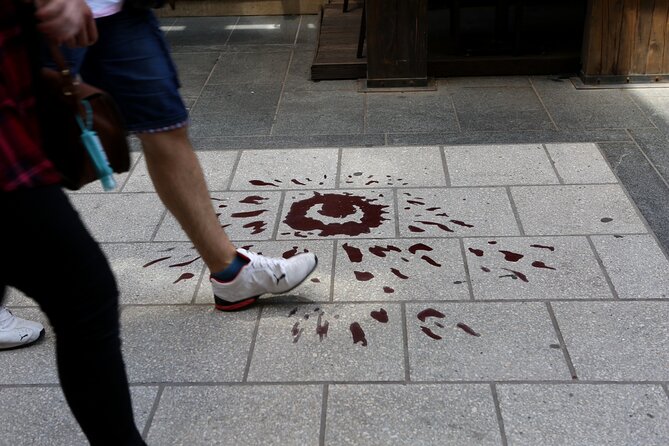
Markale Market carries a darker association. It was an everyday marketplace, yet it became connected with some of the most painful moments of the siege. Seeing the site in its normal city setting can be more affecting than visiting a formal memorial because you are looking at a place built for ordinary life.
Trg Djece Sarajeva, or Children of Sarajevo Square, adds another reminder of the civilian cost of the conflict. The Presidency Building shows where major political decisions were made while the city was under attack.
Because these are pass-by stops, you should not expect to get out and examine each location. The value comes from the guide’s explanation while you see the actual streets and buildings. If you want detailed photographs or long visits at every site, this format may feel rushed.
Olympic Sarajevo meets a city under fire
The tour continues to the Asim Ferhatović Hase Stadium, also known as the Olympic Stadium, along with Hall Zetra. You spend about 10 minutes here.
Sarajevo hosted the Winter Olympics in 1984, a moment that represented modernity, international attention, and optimism. The stadium and Zetra show another side of the city’s identity, one that existed before the siege and survived after it.
The contrast is important. You are not looking at a city defined only by war. Sarajevo was an Olympic host, a cultural center, and a home to families long before the fighting. The tour uses these sites to show how quickly ordinary civic life can be disrupted.
The brief visit does not offer a full Olympic history, so think of it as context rather than a standalone attraction. You see how the same city could be celebrated on the world stage and later forced to endure years of danger.
A few more of this kind worth a look:
- Sarajevo: Mostar, Konjic, Blagaj Tekke, Pocitelj & Waterfall
★ 4.9 · 1,335 reviews - Sarajevo: Mostar, Konjic, Sufi House, Pocitelj & Kravice Falls
★ 5.0 · 1,179 reviews - Sarajevo: Mostar, Konjic, Počitelj, Sufi House, & Waterfalls
★ 4.9 · 572 reviews - Sarajevo: 2 Hours Old Town Walking Tour With Local Guide
★ 5.0 · 505 reviews
The maternity hospital and Sniper Alley
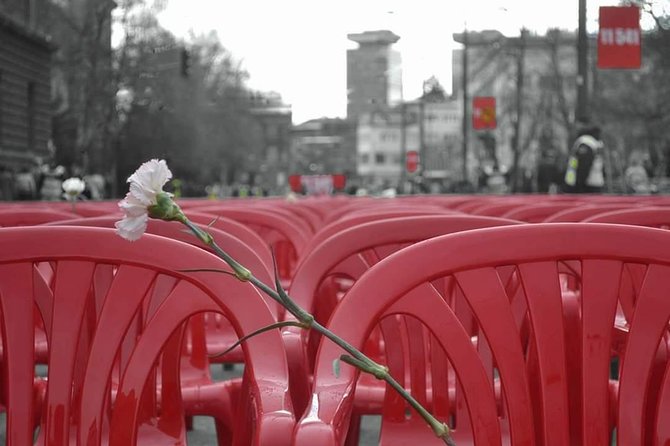
At Sarajevo’s maternity hospital, you spend around 10 minutes learning about the medical staff who worked during the siege. This stop brings the story close to the most basic human needs: childbirth, emergency care, and medical work under extreme conditions.
I find this kind of stop valuable because it shifts attention away from military strategy. The siege was experienced in hospitals, homes, schools, and streets. The staff at the maternity hospital had to keep caring for mothers and newborns while the city itself was under threat.
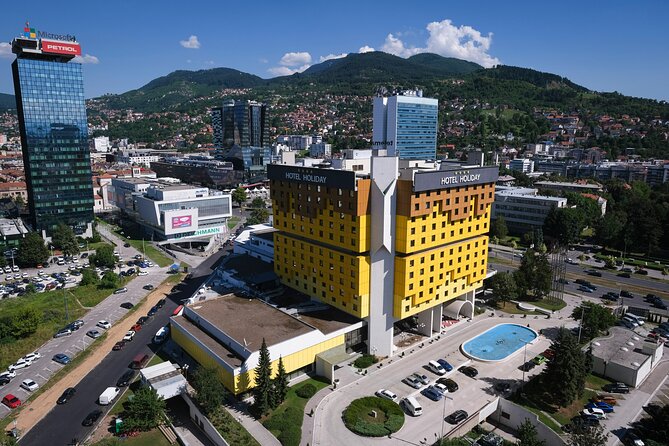
The route also passes Parliament and the Holiday Inn Hotel. The Holiday Inn became associated with journalists reporting from Sarajevo, while Parliament was tied to political decisions during the conflict. You then travel along Sniper Alley, the name given to one of the city’s most dangerous roads during the siege.
Sniper Alley is seen from the vehicle, not explored on foot. That is sensible for a practical tour, but it limits what you can do at the site. The guide’s account and the road itself do the work. You may find the ordinary traffic and buildings unsettling because the street now functions as part of modern Sarajevo.
RTV Dom, the television building, is another pass-by location. It broadcast during important moments of the war, giving residents news and helping the outside world see what was happening. Together, these stops show the siege through several angles: medical care, politics, journalism, and daily movement through the city.
The Tunnel of Hope is the heart of the tour
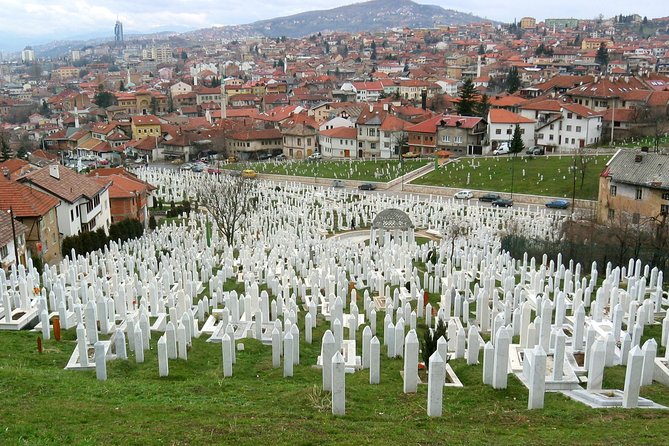
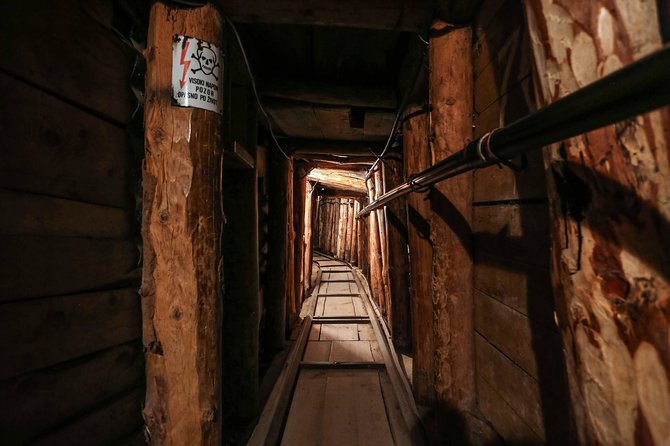
The final major stop is the Sarajevo War Tunnel Museum, usually called the Tunnel of Hope. You spend about 1 hour and 15 minutes here, making it the longest stop of the day.
The tunnel was an underground route connecting Sarajevo with the outside world. Its purpose was practical and urgent. It helped the city maintain a lifeline during the siege, when regular routes were blocked or unsafe.
The museum explains how the tunnel was built, what it was used for, and why it mattered. You also hear personal stories and watch a film about the siege. This combination gives you more than a physical glimpse of an underground passage. It shows how engineering, labor, courage, and sheer necessity came together.
The tunnel visit is also where the tour’s earlier stops begin to make sense. The hills, the dangerous roads, the hospital, the government buildings, and the isolated city all connect here. The tunnel was not an abstract wartime project. It was part of the effort to keep people, supplies, and communication moving.
The museum ticket is not included. Adults pay 20 BAM, listed as about 10.50 euros, and students pay 8 BAM, listed as about 4.50 euros. Add this cost when comparing the tour with other Sarajevo activities.
The tunnel is the most physically confined part of the experience. If enclosed spaces trouble you, keep that in mind before booking. The tour data does not give the exact length open to the public, so you should not assume you will walk through the entire original route.
The guide can shape the whole experience
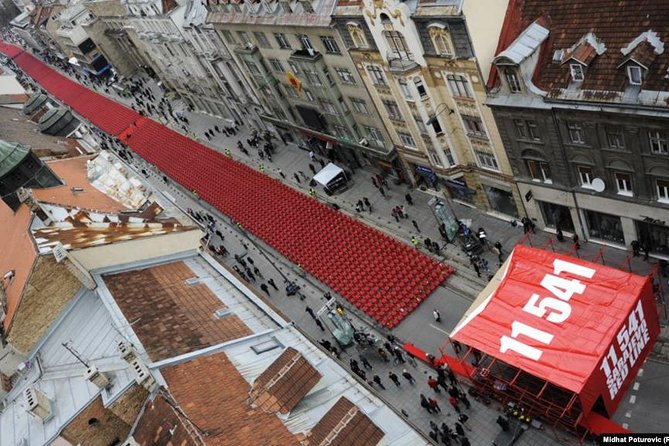
The strongest feature is the guide’s ability to make the history personal without losing the broader context. Nermin is specifically praised for his accounts of living through the war and for his background as a former police officer. His stories have helped people understand events that can otherwise feel distant or overly political.
A personal account does not replace historical facts, but it adds texture. You hear how major events affected streets, families, work, movement, and fear. That is why the guide matters so much on this tour.
The experience can also feel intimate. One booking even had only one participant, with Nermin serving as both driver and guide. That may not happen every time, since the maximum group size is 20, but the group limit is still modest compared with a large coach outing.
The tour is offered in English. A licensed guide and transportation are included, and the activity begins and ends at the same Sarajevo Insider meeting point. Confirmation is provided when you book, and the meeting point is near public transportation.
Is $32.58 good value?
At $32.58, the tour offers a useful amount of content for a half day. You receive roughly three and a half hours of guiding and transportation, with stops spread across Sarajevo and a substantial museum visit at the end.
The price is strongest if you want to cover a wide area without working out the route yourself. Several locations sit outside the compact old center, and driving lets you see more in one outing. It also saves you from trying to understand the city’s wartime geography from a map.
The extra museum charge is reasonable to note. An adult should expect the total to be about $45 or slightly more, depending on exchange rates and the exact payment method. Students pay less for admission.
You are paying for interpretation as much as transport. If you only want to walk around Sarajevo’s old town, this is not the right use of your money. If you want a focused account of the siege with access to the Tunnel of Hope, the cost is fair.
Who should book it?
I would recommend this tour to anyone interested in the breakup of Yugoslavia, recent European history, Sarajevo, or the civilian experience of war. It is also useful if you have read about the siege but still struggle to picture the city itself.
The tour suits you best if you value explanation over independent wandering. It gives you a framework, personal stories, and a set of locations you can revisit later on foot.
I would be more cautious about booking it as a family outing without considering the age and sensitivity of everyone in your group. The material is serious, and the Tunnel of Hope visit can be emotionally heavy.
It is also not ideal if you expect long walks and plenty of free time at each stop. Many places are seen from the vehicle, while Yellow Fortress, Kovači Cemetery, the Olympic sites, the maternity hospital, and the tunnel receive more focused attention.
The tour needs good weather and a minimum number of participants. If poor weather or low enrollment causes cancellation, you are offered another date or experience, or a full refund. You can cancel for a full refund up to 24 hours before the start time, but later cancellations and changes are not accepted.
My verdict on Times of Misfortune
Book this tour if you want Sarajevo’s wartime story explained through real places and personal memory. The itinerary is broad, but the Tunnel of Hope and the guide’s firsthand accounts give it emotional force.
The main compromise is clear: you see many important landmarks only in passing. Still, for $32.58 plus the museum ticket, you get an efficient introduction to a difficult subject, along with the chance to understand how Sarajevo’s streets, buildings, and people were shaped by the siege.
FAQ
How long does the Times of Misfortune tour last?
The tour lasts approximately 3 hours and 30 minutes.
Where does the tour begin?
It begins at Sarajevo Insider, City Tours and Excursions, at Zelenih beretki 30 in Sarajevo.
Where does the tour end?
The activity ends back at the starting meeting point.
Is transportation included?
Yes. Transportation and a licensed guide are included in the tour price.
Is the Tunnel of Hope museum ticket included?
No. Adults pay 20 BAM, and students pay 8 BAM for admission.
What language is the tour offered in?
The tour is offered in English.
How large can the group be?
The maximum group size is 20 people.
Does the tour visit Sarajevo’s wartime landmarks?
Yes. It includes Yellow Fortress, Kovači Cemetery, the Olympic Stadium area, the maternity hospital, and the Tunnel of Hope. City Hall, Markale Market, Trg Djece Sarajeva, the Presidency Building, Parliament, the Holiday Inn, Sniper Alley, and RTV Dom are viewed while passing by.
Can I cancel the tour for a refund?
Yes. You can cancel at least 24 hours before the start time for a full refund. Later cancellations and changes are not accepted.
Just added around Sarajevo
- Srebrenica Genocide Tour from Sarajevo★ 4.5 · 3 reviews
- Mountain Village Lukomir Full Day Adventure Tour★ 5.0 · 3 reviews
- MTB Bjelasnica – Lukomir★ 5.0 · 3 reviews
- Sarajevo Under Siege: A City’s Struggle & Survival Tour★ 5.0 · 3 reviews
- Herzegovina Tour from Sarajevo: Mostar, Počitelj, Blagaj, Kravice★ 5.0 · 3 reviews
- Bosnian Kingdom Capitals: Travnik & Jajce Tour from Sarajevo★ 5.0 · 3 reviews
- Beautiful Bosnia 8 Days Tour Package★ 5.0 · 3 reviews
- Walking Tour in Sarajevo★ 5.0 · 3 reviews
Bosnian War History Tours, compared.

Fall of Yugoslavia, Sarajevo War Tour with Tunnel of Hope Museum and Frontlines
Read our review →
ROSES OF SARAJEVO (Official WAR + CITY tour)- Story of a Survivor
Read our review →
Tunnel Museum: Bosnian & Yugoslav Wars Tour with War Veteran
Read our review →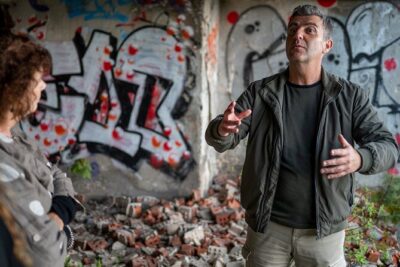
Sarajevo War Tour: A Veteran’s Story of the Siege (fees included)
Read our review →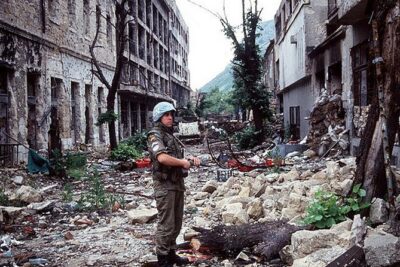
Break-up of Yugoslavia & The War in Mostar: Life Under Siege
Read our review →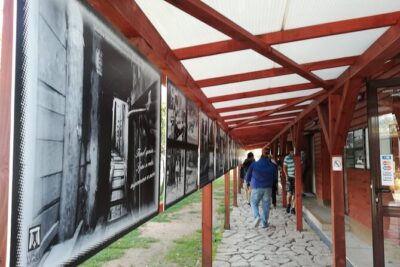
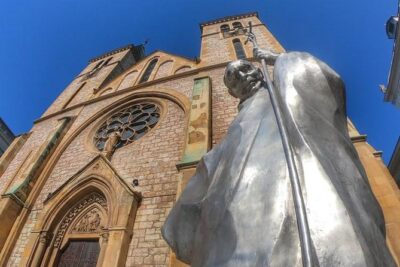
Sarajevo Grand Tour: Old Town, War Tunnel, Olympic Sites & More
Read our review →Browse the lists this tour appears in