
REVIEW · SREBRENICA MEMORIAL TOURS
Sarajevo to Srebrenica: Genocide Study Tour with War Veteran
Some journeys are meant to change your perspective. This full-day trip from Sarajevo to Srebrenica does that through personal testimony, museum exhibits, memorials, and clear background on the breakup of Yugoslavia. I like the small-group format, capped at 12 people, and I appreciate the way the guides, including Adis, Adnan, Omer, and others, connect the history to their own wartime experiences. The main drawback is also the point of the tour: this is an emotionally heavy day, and the amount of information can feel overwhelming.
I also like the practical setup. Hotel pickup, air-conditioned transport, water, and a Bosnian sausage sandwich make the long ride easier, while the route through eastern Bosnia gives you time to absorb the guide’s explanation before reaching the memorial. You should read a little about the Bosnian War beforehand, though. A basic outline will help you follow the many names, dates, political shifts, and military events covered during the drive.
In This Review
- Key points to know before booking
- Why Srebrenica belongs on a Bosnia itinerary
- Starting at 8:00 a.m. in Sarajevo
- The road through eastern Bosnia
- Inside the former UN battery factory
- Potočari Memorial Centre and cemetery
- Srebrenica town and the lunch stop
- The guides make or break the day
- Is $82.84 good value?
- Who should book this experience?
- Practical details before you reserve
- Should you book the Sarajevo to Srebrenica tour?
- FAQ
- How long is the Sarajevo to Srebrenica tour?
- What time does the tour start?
- Is hotel pickup available?
- What food is included?
- How many people are in the group?
- Can I cancel for a full refund?
Key points to know before booking
- Personal wartime testimony: Guides such as Adis, Adnan, and Omer have shared firsthand connections to the conflict and answer difficult questions with care.
- A full day outside Sarajevo: The round trip takes about 10 hours, with roughly two and a half hours of driving each way.
- The former UN battery factory: The tour visits the building used by Dutch UN forces during the war, now home to the Museum of Srebrenica Genocide.
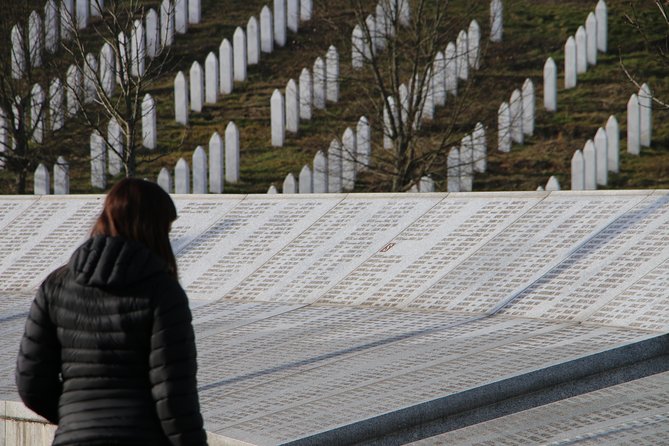
- Potočari Memorial Cemetery: Identified victims are buried here, and the cemetery continues to grow as remains are found and identified.
- A small, manageable group: The advertised maximum is 12 people, and some departures have been smaller.
- A serious, educational experience: This is best for people who want historical context and reflection, not a light sightseeing day.
Why Srebrenica belongs on a Bosnia itinerary
Sarajevo gives you many ways to encounter Bosnia and Herzegovina’s past, from visible war damage to museums and memorials. Srebrenica adds something different. It takes you away from the capital and places you in the area where the 1995 genocide occurred, making the subject less abstract and more immediate.
The tour does not begin with the massacre alone. During the drive, the guide starts with the breakup of Yugoslavia and explains the political and military conditions that led to the war. That background matters. Without it, Srebrenica can seem like an isolated event. With it, you gain a clearer sense of the ethnic divisions, the fall of the enclave, the role of international forces, and the choices that shaped what followed.
I like this approach because the guide has several hours to explain the subject in stages. You are not simply dropped at a cemetery, handed a few facts, and sent home. The presentation continues as you pass through the mountains of eastern Bosnia.
Still, prepare yourself. The subject is painful, and the day includes accounts of killings, displacement, survival, and loss. Some people described the experience as haunting and mentally difficult. That is not a flaw in the tour, but it is a real consideration. You should not book this expecting a relaxed excursion with a few historical stops.
More Srebrenica memorial visits:
- From Sarajevo: Srebrenica Genocide Memorial Study Tour
★ 5.0 · 359 reviews - Understanding Srebrenica Genocide Tour + Lunch with Local Family Included
★ 5.0 · 123 reviews - Understanding Srebrenica Genocide – Day tour from Sarajevo
★ 5.0 · 35 reviews
Starting at 8:00 a.m. in Sarajevo
The usual meeting time is 8:00 a.m. The listed starting point is in front of the Info Bosnia Tourist Information Center on Ferhadija, Sarajevo’s main pedestrian street, near the Sarajevo Meeting of Cultures marker. The formal meeting address is Velika avlija, Laure Papo Bahorete 2.
Pickup is available throughout Sarajevo. If you stay outside the Old Town, hotel pickup and return can be arranged. For a private home, the operator asks for a Google Maps location, which is a useful detail to handle before departure.
The early start is necessary. Srebrenica is about two and a half hours from Sarajevo, and the whole outing lasts approximately 10 hours. You should expect to return in the evening rather than have a free afternoon in the city.
At the beginning, you receive bottled water and a sandwich with traditional Bosnian sausage. A vegetarian option can be requested. The sandwich is described as breakfast, though it also serves as a useful snack during the long drive. Food and drinks beyond the specified items are not included, so do not assume every meal or café stop is covered.
The road through eastern Bosnia
The drive is not dead time. The route passes through a quiet, mountainous part of eastern Bosnia, with long stretches of forest, hills, and scattered settlements. The scenery is peaceful, which creates a sharp contrast with the subject being discussed inside the vehicle.
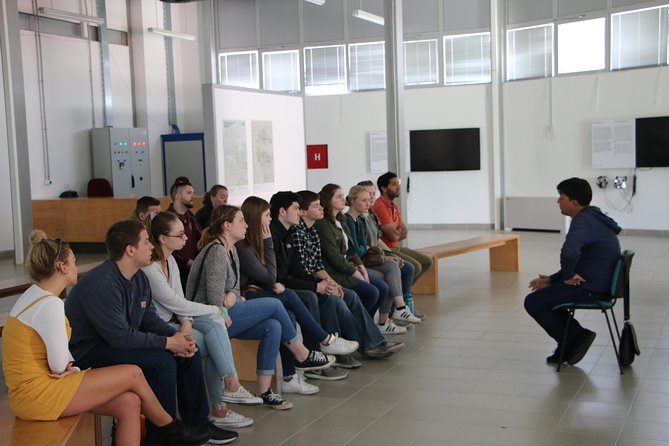
This is where the guide builds the historical framework. The exact style depends on who leads your departure, but the strongest accounts describe guides who explain the story clearly, invite questions, and connect wider events to personal experience. Adis was praised for sharing his own story and for explaining both the 1990s war and present-day political concerns. Adnan was described as an activist who could place Srebrenica within the wider story of Yugoslavia, hate speech, and current regional tensions.
Omer was also singled out for speaking with feeling about Bosnia and for sharing memories of seeing the war as a child in Sarajevo. That personal element is important, but the guide’s role is not simply to tell a wartime story. The best part of the presentation is the combination of personal memory and historical explanation.
You may find that the information comes quickly. One participant said the amount felt almost like a year of school compressed into a few hours. That is a useful warning. Ask questions when you need to, and do not worry about knowing every date before you arrive.
Inside the former UN battery factory
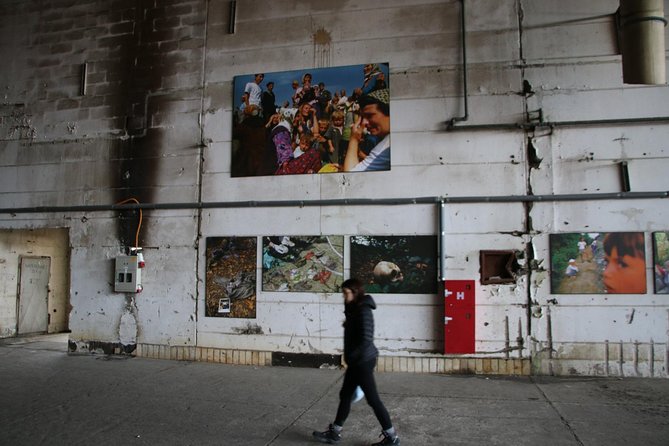
The first major stop is at the former battery factory used as a headquarters by the Dutch UN battalion. The building now contains the Museum of Srebrenica Genocide, described as one of the most modern museums in Bosnia and Herzegovina.
This setting gives the visit unusual force. You are not viewing a distant collection of objects in a conventional city museum. You are entering a place connected directly to the international response during the war and to the fall of the Srebrenica enclave.
The museum uses multimedia displays and films to explain the events that led to the genocide. It also presents personal accounts from people who survived. These individual stories are especially important because statistics alone can flatten human suffering into numbers. Names, family memories, and testimony restore the human scale.
The visit is not only a guided lecture. Several accounts praised having enough time to look around independently, with guides allowing people to browse rather than rushing everyone from one display to the next. That flexibility is valuable in a museum dealing with difficult material. You may need a quiet moment before continuing.
The museum has also been praised for its newer exhibition, particularly its treatment of the events, the victims, and the gravesites. If you have already read about Srebrenica, the personal material and visual presentation can help connect familiar facts to specific lives.
More war history tours:
- Fall of Yugoslavia, Sarajevo War Tour with Tunnel of Hope Museum and Frontlines
★ 5.0 · 1,314 reviews - ROSES OF SARAJEVO (Official WAR + CITY tour)- Story of a Survivor
★ 5.0 · 770 reviews - Tunnel Museum: Bosnian & Yugoslav Wars Tour with War Veteran
★ 5.0 · 551 reviews - Sarajevo War Tour: A Veteran’s Story of the Siege (fees included)
★ 5.0 · 326 reviews
Potočari Memorial Centre and cemetery
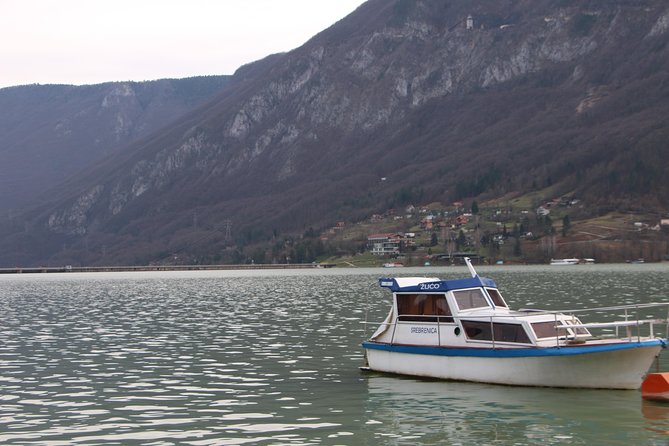
From the museum, the tour continues to the memorial room at Potočari. Here, you hear accounts of victims prepared by a local journalist, along with information about people connected to the massacre.
The memorial area includes material about those responsible as well as those who were killed. That balance matters. Remembering the victims is central, but understanding responsibility is also necessary if you want to grasp how the crime unfolded and why the subject remains politically sensitive.
The cemetery is the quietest and most visually powerful part of the visit. Identified victims are buried there, and the number of graves rises as remains are found and identified. The supplied information gives the figure as 6,575, with that number changing over time.
Expect a respectful atmosphere. This is a place for reflection, not casual sightseeing. Some people have found the cemetery prayer especially moving. You should dress and behave with the same care you would bring to any memorial site, and allow yourself time to take in the rows of white gravestones.
The cemetery visit can be emotionally harder than the museum because it places the scale of the crime in front of you. The museum explains. The cemetery asks you to stand quietly with what you have learned.
Srebrenica town and the lunch stop
After Potočari, the route continues to the town of Srebrenica. Before the war, it was an industrial center and one of the area’s older settlements. Today, it is described as a ghost town, a phrase that conveys the visible effect of population loss and wartime destruction.
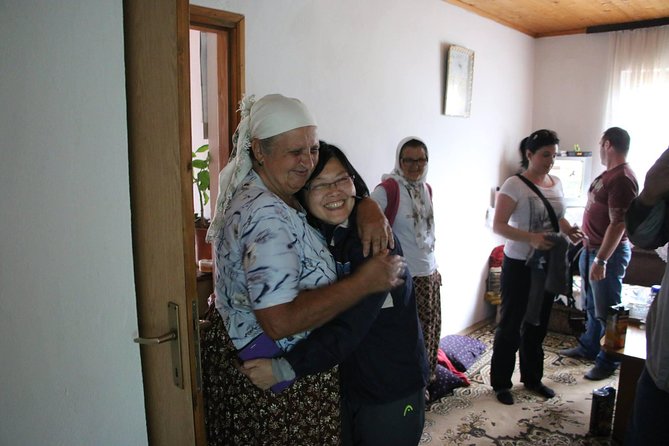
The town is also where lunch takes place, since there are few nearby dining options around the memorial sites. The standard food provision is a sandwich with traditional Bosnian sausage, with a vegetarian option available on request. Some departures have included a homemade Bosnian meal with a local family, followed by a personal account from a woman who returned to Srebrenica after the war. That kind of meal is not clearly guaranteed on every departure, so treat it as a possible variation rather than a promised feature.
If the family visit is part of your day, it can add a very personal layer to the tour. A home-cooked meal and a firsthand account bring the story into the present, showing that Srebrenica is not only a memorial site but also a place where people continue to live, return, and rebuild.
The town itself may feel stark. Do not expect a lively lunch district or a long list of restaurants. The point is to see how the conflict changed a place that once had a larger economic and social role.
The guides make or break the day
The most praised part of this experience is the guiding. Names vary by departure, but Adis, Adnan, Omer, Ibrahim, Danijela, Edin, Kenan, Yasimov, and Adnan have all been associated with highly positive experiences.
The repeated strengths are clear: strong command of the subject, calm answers to difficult questions, personal experience, good English, patience, and a respectful tone. Adis was praised for his honesty, warmth, and sense of humor, qualities that can help people manage a long and serious day without making light of the subject.
Another guide, Edin, was described as a patient teacher. That distinction matters. A guide can know many facts and still be poor at explaining them. Here, the best accounts describe people who adjust to questions and give you time to form your own response.
The experience is also suitable for solo visitors. The small group, pickup service, and return to your accommodation can make the day feel straightforward and secure. The advertised maximum is 12 people, though one small-group departure had only seven participants. Group size can affect how much room there is for questions, so a smaller departure is especially useful on a subject this personal.
Is $82.84 good value?
At $82.84 per person, the price is reasonable for a 10-hour guided trip from Sarajevo. You are paying for a long round trip, an air-conditioned car or minivan, a driver-guide, hotel pickup when needed, hotel return, water, and the Bosnian sandwich.
The value is not mainly in the vehicle. It is in the preparation and interpretation. Getting to Srebrenica independently would still require transport, route planning, and a way to understand the museum and memorial sites. This tour gives you a guide who explains the political background during the drive and helps connect the separate stops.
The small group also adds value. A large coach can make a memorial visit feel distant and impersonal. With up to 12 people, you have a better chance to ask questions and hear the guide clearly.
The price does not cover unspecified meals and drinks, so bring some extra money if you want anything beyond the included sandwich and water. Also remember that the day occupies almost all of your daylight hours. If you have only one free day in Sarajevo, compare this with your other plans before booking.
Who should book this experience?
I would choose this tour if you want to understand modern Bosnia rather than simply photograph its sights. It suits people interested in 20th-century European history, human rights, conflict studies, memorial culture, and the continuing political questions left by the breakup of Yugoslavia.
It is also a strong choice for solo visitors who want a structured day outside Sarajevo. The pickup service, compact group, and English-speaking guide remove much of the practical strain.
I would think twice if you are looking for cheerful sightseeing, have difficulty with accounts of mass violence, or dislike long drives. The road is comfortable, but it is still a long day in a vehicle. You should also be ready for a lot of information.
A little preparation will help. Read a short introduction to Yugoslavia’s breakup, the Bosnian War, and Srebrenica before you go. You do not need a stack of books. Even a basic timeline will make the guide’s explanation easier to follow.
Practical details before you reserve
Confirmation is provided at booking. The experience is offered in English, mobile tickets are accepted, and service animals are allowed. It is near public transportation, and most people can participate.
The tour requires a minimum number of participants. If that minimum is not reached, the operator offers another date or a full refund. You can cancel for a full refund up to 24 hours before the start time, but changes or cancellations inside that window are not accepted.
The listed meeting time is 8:00 a.m., and the activity returns to Sarajevo at the end of the day. Wear comfortable clothing and shoes suitable for walking around museum and memorial grounds. Most important, leave some quiet time after returning. This is not the sort of excursion you easily shake off before dinner.
Should you book the Sarajevo to Srebrenica tour?
Yes, if you want a serious and well-supported introduction to one of Europe’s most painful modern events. The combination of museum material, cemetery, former UN headquarters, mountain road, and personal testimony gives the day unusual weight.
The strongest reason to book is the guiding. Adis, Adnan, Omer, and the other named guides have been praised for making difficult material understandable without stripping away its human cost. The main warning is simple: come prepared for sadness, long hours, and a lot to process.
For many people, this will be one of the most important days of a Bosnia itinerary. It is not easy, but it is worthwhile.
FAQ
How long is the Sarajevo to Srebrenica tour?
The experience lasts approximately 10 hours. Srebrenica is about two and a half hours from Sarajevo by road, so most of the day is spent traveling, visiting the memorial sites, and learning from the guide.
What time does the tour start?
The usual start time is 8:00 a.m. The normal meeting point is near the Info Bosnia Tourist Information Center on Ferhadija, close to the Sarajevo Meeting of Cultures marker.
Is hotel pickup available?
Yes. Pickup and return are available from locations throughout Sarajevo. If you are staying in a private home rather than a hotel, you need to provide a Google Maps location.
What food is included?
A traditional Bosnian sausage sandwich and bottled water are included. A vegetarian sandwich can be requested in advance. Other food and drinks are not included unless specifically provided.
How many people are in the group?
The maximum group size is 12 people. Some departures may be smaller, with one described group including seven participants.
Can I cancel for a full refund?
Yes, provided you cancel at least 24 hours before the local start time. Cancellations or changes made less than 24 hours before departure are not accepted for a refund.
Just added around Sarajevo
- Srebrenica Genocide Tour from Sarajevo★ 4.5 · 3 reviews
- Mountain Village Lukomir Full Day Adventure Tour★ 5.0 · 3 reviews
- MTB Bjelasnica – Lukomir★ 5.0 · 3 reviews
- Sarajevo Under Siege: A City’s Struggle & Survival Tour★ 5.0 · 3 reviews
- Herzegovina Tour from Sarajevo: Mostar, Počitelj, Blagaj, Kravice★ 5.0 · 3 reviews
- Bosnian Kingdom Capitals: Travnik & Jajce Tour from Sarajevo★ 5.0 · 3 reviews
- Beautiful Bosnia 8 Days Tour Package★ 5.0 · 3 reviews
- Walking Tour in Sarajevo★ 5.0 · 3 reviews